How to Teach a Child to Color
Quick answer
To teach a child to color, start with a comfortable crayon grip and large, simple pictures, and color alongside them so they can copy you. Keep it pressure-free — praise effort, not neatness — and let them scribble freely at first, then gradually introduce staying inside the lines as their control grows.
By the TheColoringPages.net team. Reviewed for accuracy, September 2026.
Want to learn about Teach a Child? This guide gives clear, practical steps, drawing on child development and years of hands on coloring.
Coloring comes naturally to children, but a little gentle guidance helps them enjoy it and build skills along the way. Teaching a child to color is less about instruction and more about modeling, encouraging, and offering the right tools at the right time. Done well, it builds not just coloring skills but hand strength, focus, and confidence.
This guide walks through how to teach a child to color at every stage, from the first scribbles to coloring inside the lines, in a way that keeps the activity joyful and pressure free.
Quick answer: Teach coloring by modeling it yourself, offering the right grip and chunky crayons, starting with big simple shapes, and praising effort over accuracy. Build up gradually from scribbling to filling shapes to staying in the lines, at the child’s pace. Keep it playful and pressure free, and let your child explore rather than drilling technique.

Start by modeling
The most powerful way to teach coloring is simply to do it yourself alongside your child.
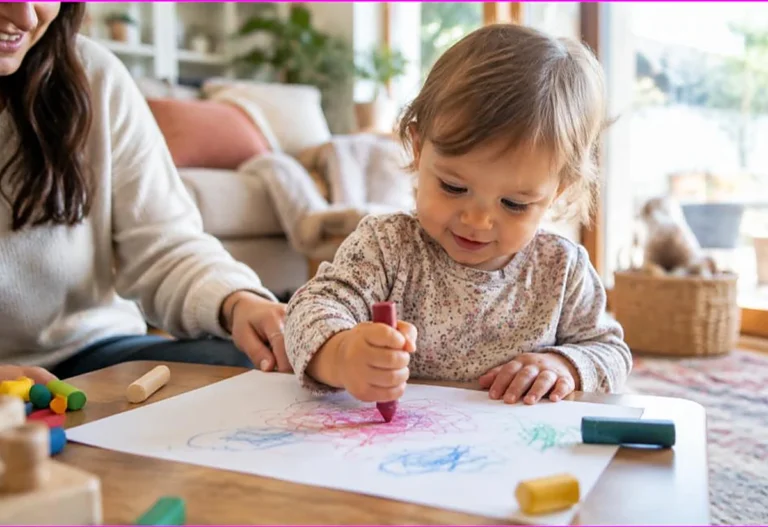
Children learn by watching and copying, so coloring next to your child shows them how it is done without any need for instruction. Pick up a crayon, color a page yourself, and let your child see how you hold the crayon and fill the shapes. They will naturally begin to imitate you, which teaches far more effectively than telling.
Make it a shared, enjoyable activity rather than a lesson. Chat as you color, admire each other’s pages, and keep the mood light. When coloring feels like fun time with you, a child is drawn to join in and copy what you do. This modeling is the foundation of teaching coloring at any age.
Keep your own coloring relaxed and imperfect too. You do not need to color perfectly, and seeing you color freely and enjoyably encourages your child to do the same, without worrying about getting it right. Our guide on coloring and child development covers how children learn through each stage.
Get the grip and tools right
The right crayons and a good grip set a child up to color comfortably and build skills.
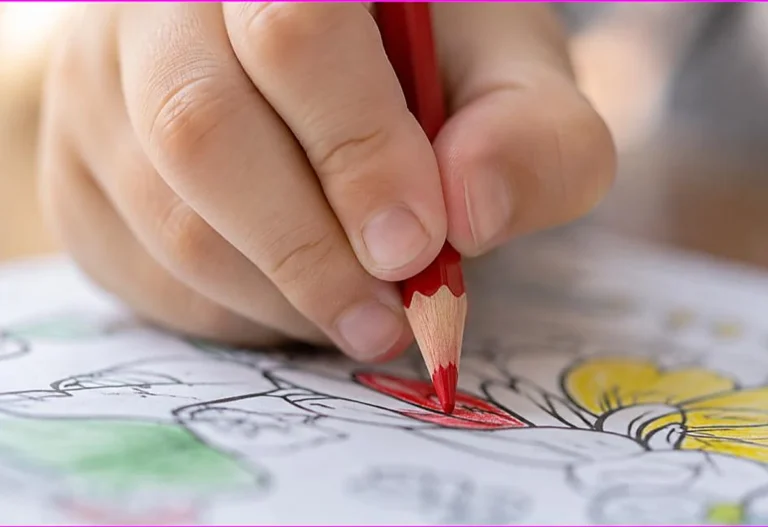
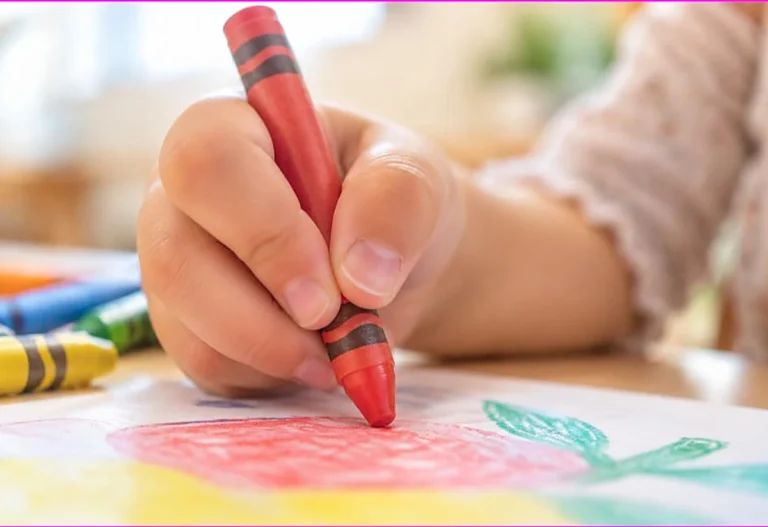
Offer chunky, easy to grip crayons for young children, since these suit small hands and encourage the grip that leads to a good pencil grasp. Broken or short crayons naturally encourage a child to pinch with their fingers, which builds the tripod grasp used for writing. Our guides on the best crayons for toddlers and how to hold a crayon cover this.
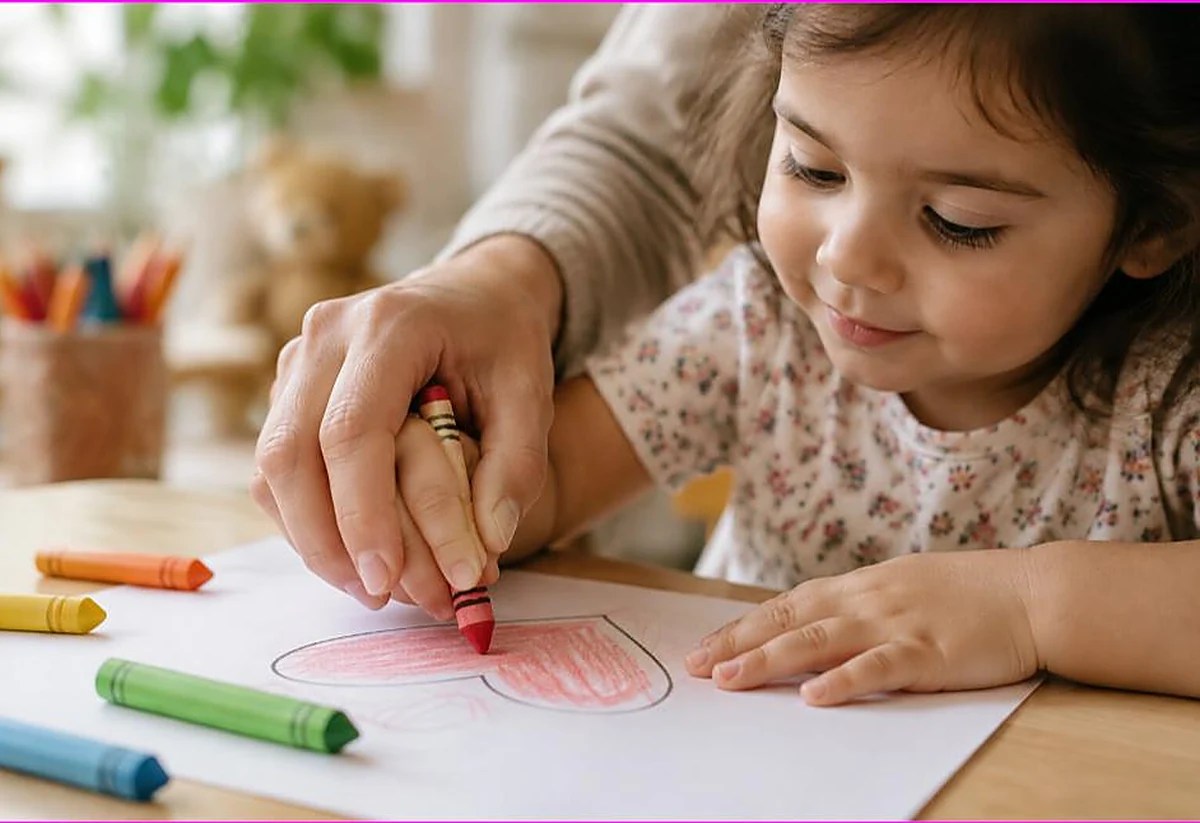
Gently model a good grip without forcing it. You can show your child how you hold the crayon, and gently place it in their fingers, but do not force a grip that is beyond their stage. A young child will use a fisted grip and develop the tripod grasp over time, which is completely normal. Let the grip develop naturally, encouraged by the right tools.
Choose the right paper too. Large sheets or simple pages suit young children who make big marks, while more detailed pages suit older children with more control. Matching the tools to the child’s stage keeps coloring comfortable and successful. Our collection of free printable coloring pages for kids spans simple and detailed designs.
Begin with big, simple shapes
Starting with the right pages makes early coloring a success and builds confidence.
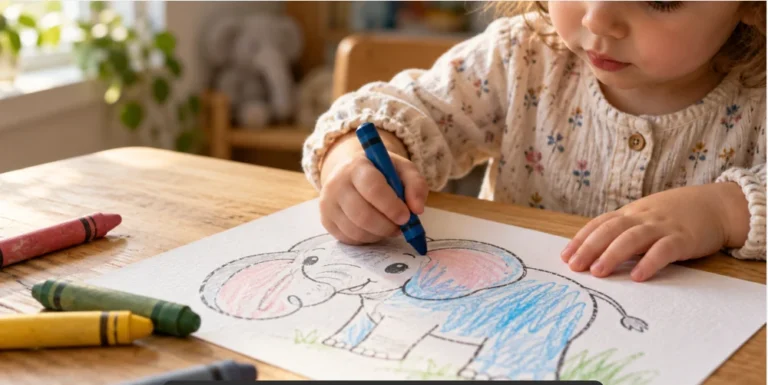
Begin with large, simple pictures that have big shapes and bold outlines. Big areas are easy to fill, and simple designs are not overwhelming for a child learning to color. A single large shape, a friendly animal, or a familiar object gives a young child an achievable, satisfying page.
Avoid detailed pages at first, since small sections and fine lines frustrate a child who is still building control. Starting too complex only leads to discouragement. Build up to more detailed pages gradually, as your child’s control grows and they are ready for the challenge.
Familiar subjects help too. A child engages more with a picture of something they recognize and love, so choosing subjects your child knows keeps them interested and motivated. Success with simple pages builds the confidence and skill to tackle more detailed ones later. Our guide on the benefits of coloring for kids covers how coloring builds skills.

Build up gradually
Coloring develops in stages, and teaching means supporting each stage rather than rushing to the end.
Start where your child is. A young child begins with scribbling, which is exactly right and should be encouraged, not corrected. As their control grows, they move to filling shapes loosely, then to coloring with more intent, and eventually to staying in the lines around 5 to 6 years old. Each stage builds on the last.
Support each stage with suitable pages and gentle encouragement, without pushing your child to the next stage before they are ready. A three year old who scribbles and a four year old who colors roughly are both doing exactly the right developmental work. Pushing neatness too early frustrates a child and can take the joy out of coloring.
Let your child progress at their own pace. Some children move through the stages faster than others, and that is fine. Your role is to offer the right support at each stage and celebrate their coloring, trusting that the more advanced skills will come with time and practice. Our guide on what age kids color inside the lines covers this progression.
Keep it playful and pressure-free
The single most important part of teaching coloring is keeping it enjoyable.
Praise effort and choices, not neatness or accuracy. Encouraging your child’s hard work and color choices builds their confidence and love of coloring, while criticizing their coloring or pushing for neatness does the opposite. There is no wrong way to color, especially for young children, so keep your feedback warm and positive.
Make coloring feel like play, not a lesson. Keep sessions light, follow your child’s interest, and let them color however they like. When coloring is fun and free, a child returns to it willingly, and that regular, enjoyable practice is what builds their skills. Turning coloring into a drill undermines this.
Never force coloring or extend sessions past a child’s interest. A child who is made to color, or corrected constantly, may come to dislike it, which is the opposite of what you want. Keep it a joyful, chosen activity, and your child will color often and grow through it. Our guide on how to keep coloring positive covers this throughout.
Troubleshooting common challenges
A few challenges come up when teaching coloring, and each has a gentle solution.
If a child will not try coloring, do not push. Instead, color yourself where they can see you, make it look fun, and offer again later without pressure. Many children join in when coloring looks appealing and there is no demand. Forcing a reluctant child only creates resistance.
If a child gets frustrated, check that the page and tools suit their stage. A page that is too detailed, or a crayon that is hard to grip, causes frustration. Simpler pages and easier tools remove the difficulty. Remind yourself and your child that there is no wrong way to color, which takes the pressure off.
If a child colors on walls or furniture, gently teach that crayons are for paper, using washable crayons and supervision. This is a normal stage that passes with patient redirection. Keeping your response calm and consistent teaches the rule without turning coloring into a source of conflict. Our guide on coloring for toddlers covers these early challenges.
Making coloring a lasting habit
The goal of teaching coloring is a child who loves it and returns to it willingly.
Keep supplies ready and within reach, so your child can choose coloring in a spare moment. Offer a variety of pages that match their interests and stage, so coloring stays fresh and appealing. Color together regularly, since a child is drawn to an activity a parent enjoys and shares.
Celebrate your child’s coloring by displaying their pages and admiring their work. A child who feels their coloring is valued colors more, which builds their skills and confidence. This positive cycle, of enjoyment leading to practice leading to growth, is what teaching coloring is really about.
Over time, a child who has been taught to color in this gentle, encouraging way develops strong hand skills, good focus, and a genuine love of the activity. They arrive at school with the fine motor skills and confidence that coloring builds, ready for writing and learning. And they carry a calming, creative activity they can enjoy for life. Our collection of free printable coloring pages for kids gives you pages for every age and interest to keep the habit alive.

Teaching coloring in a group
Teaching several children to color at once, in a classroom, daycare, or family setting, takes a slightly different approach.
Model coloring for the group, then let each child work at their own pace and level. Children in a group vary widely in their coloring ability, so offer a range of pages, from simple to more detailed, and let each child choose one that suits them. This lets every child succeed at their own stage rather than struggling with a page that is too hard or too easy.
Keep the atmosphere relaxed and non competitive. In a group, children may compare their coloring, so emphasize that there is no wrong way to color and that everyone’s page is their own. Praising effort and individual choices, rather than singling out the neatest page, keeps every child confident and engaged. Our guide on classroom coloring activities covers group settings.
Give children enough time and space, and let them chat as they color if they like, which makes it a pleasant social activity. A group coloring session, handled with warmth and low pressure, teaches coloring while building the calm, focus, and fine motor skills that benefit every child. Our collection of free printable coloring pages for kids gives you a range of designs to suit a mixed group.
Frequently asked questions about teach a child
How do I teach my child to color?
Teach by modeling coloring yourself, offering chunky crayons and a good grip, starting with big simple shapes, and praising effort over accuracy. Build up gradually at your child’s pace, and keep it playful and pressure free rather than drilling technique.
Should I teach my child to color in the lines?
Not early. Coloring inside the lines develops around 5 to 6 years. Before then, let your child scribble and color freely. Support the developing skill with suitable pages, but do not push neatness, which can frustrate a child.
What if my child won’t try coloring?
Do not push. Color yourself where your child can see you, make it look fun, and offer again later without pressure. Many children join in when coloring looks appealing and there is no demand to perform.
How do I hold the crayon to show my child?
Model a comfortable grip, and gently place the crayon in your child’s fingers, but do not force a grip beyond their stage. Chunky and broken crayons naturally encourage the finger grip that leads to a good pencil grasp.
How do I keep coloring enjoyable while teaching it?
Praise effort and choices rather than neatness, keep sessions light and led by your child’s interest, and never force coloring. When it feels like play rather than a lesson, a child returns to it willingly, which builds their skills.
The takeaway on teach a child
Teaching a child to color is about modeling, encouraging, and offering the right tools, not drilling technique. Color alongside your child, offer chunky crayons and simple pages, and build up gradually from scribbling to staying in the lines at their own pace. Praise effort over accuracy, keep it playful and pressure free, and celebrate their creations. Taught this way, coloring builds hand skills, focus, and confidence, along with a lasting love of the activity.
Ready to color with your child? Browse our free printable coloring pages for kids for every age and stage. Every one is free to download and print. For ready made packs, browse our educational coloring pages.