Benefits of Coloring for Kids (What It Really Builds)
Quick answer
For kids, coloring builds fine-motor skills and grip, teaches colors and shapes, and develops focus, patience, and creativity — all while they play. It’s a calm, screen-free way to express feelings and build the hand control needed for writing, which is why it’s a staple at home and in early education.
By the TheColoringPages.net team. Reviewed for accuracy, September 2026.
This guide to Coloring for Kids gives clear, practical answers, drawing on fine motor skills and years of hands on coloring.
Ask most parents why coloring is good for kids and you hear the same answer: it keeps them busy. That is true, but it sells the activity short. Behind the quiet of a coloring session, a child is building hand strength, focus, and the exact skills that handwriting and school will soon ask for.
This guide explains what coloring actually develops in a child, backed by what educators and therapists observe, so you can see why it is worth more than screen free downtime.
Quick answer: Coloring helps children develop fine motor skills, hand and eye coordination, and a proper pencil grip, while building focus, color recognition, creativity, and confidence. It also prepares the hand and mind for handwriting. These benefits grow as a child moves from scribbling to coloring inside the lines.

Fine motor skills and pencil grip
The clearest benefit of coloring is physical. It builds the small muscles a child needs for nearly every school task ahead.
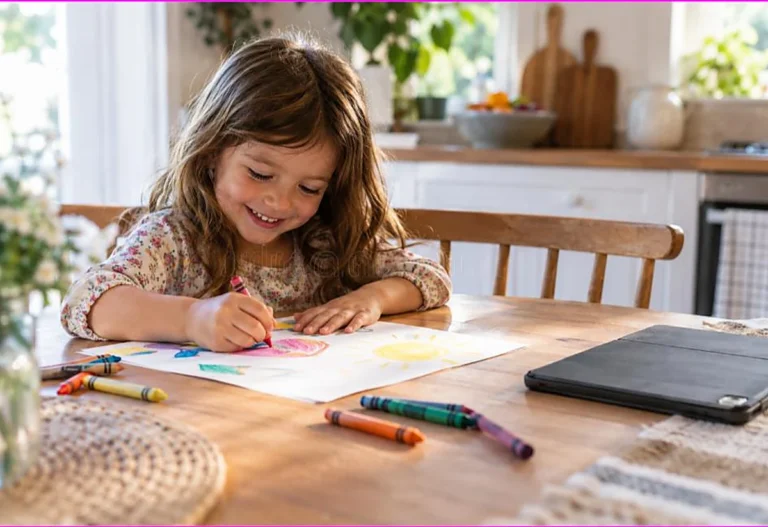
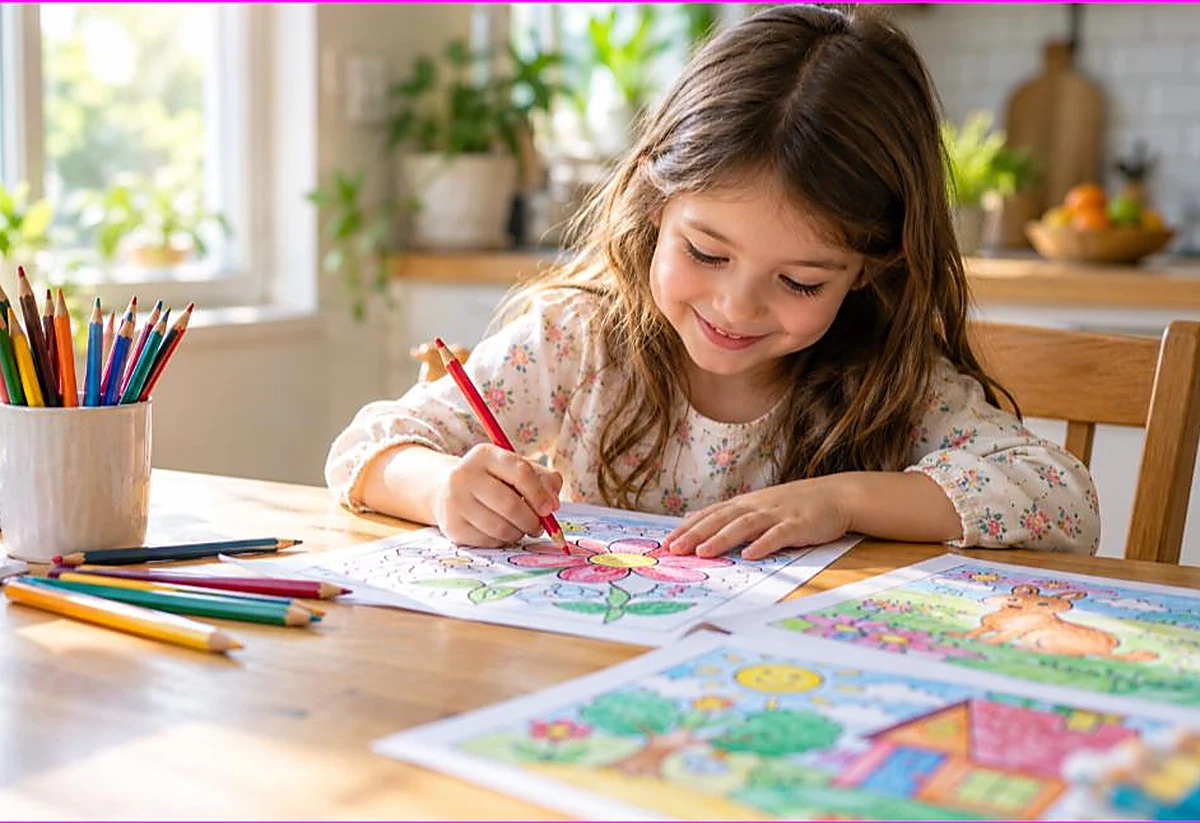
Holding a crayon and moving it across a page works the tiny muscles in the hand and fingers. Filling a shape, changing direction, and controlling pressure all strengthen this fine motor control. Over time, a child moves from a full fisted grip to the mature tripod grasp, using the thumb, index, and middle finger, which is the grip needed for writing.
Occupational therapists lean on coloring for exactly this reason. Sources such as The OT Toolbox describe coloring as a natural way to build the hand strength and control that pre writing and handwriting depend on. Our guide on coloring and fine motor skills goes deeper into this, and our guide on how to hold a crayon covers grip by age.
A small trick helps here. Short, broken crayons force a child to pinch rather than fist, which naturally encourages the tripod grip. So a box of stubby crayons can quietly do developmental work.
Hand and eye coordination
Coloring trains the hand and the eye to work together, a skill that reaches far beyond the page.
To color a shape, a child has to see the outline, plan where the crayon goes, and guide the hand to match. That constant feedback loop, eye guiding hand, is hand and eye coordination. It is the same skill behind catching a ball, tying shoes, and forming letters.
Staying within the lines is the advanced version of this. It asks the eye to track a boundary while the hand keeps the crayon inside it. Young children cannot do this yet, and that is normal. The ability arrives around ages 5 to 6, as our guide on what age kids color inside the lines explains. Every scribble before then is practice building toward it.
Focus, patience, and persistence
Coloring quietly teaches a child to concentrate, which is harder to build than it sounds.
A coloring page is a single task with a clear finish. Working toward that finish asks a child to sit, focus, and keep going, which stretches their attention span a little each time. Completing a page delivers a small sense of achievement that makes the next page appealing.
This matters because focus is a skill, not a fixed trait. The more a child practices settling into one absorbing task, the longer they can hold attention for schoolwork later. Our guide on whether coloring improves concentration in kids looks at this closely.
Coloring also teaches patience. A large page takes time, and seeing it through builds the habit of persistence rather than quitting when something is not instant.
Color recognition and early learning
For younger children, coloring is a gentle first lesson in colors, shapes, and words.
Naming each crayon as a child uses it builds color vocabulary. Talking about what is on the page, a red apple, a blue sky, links colors to real objects. Recognizing and filling different shapes builds early shape awareness. All of this happens naturally through play, without feeling like a lesson.
This makes coloring a simple tool for early education at home and in the classroom. Themed pages can reinforce letters, numbers, and topics a child is learning. Our guide on teaching colors to toddlers with coloring shows how to turn coloring into color learning, and our guide on play based learning and coloring covers the wider teaching side.

Creativity and self expression
Coloring gives children a safe, open way to express themselves and make choices.
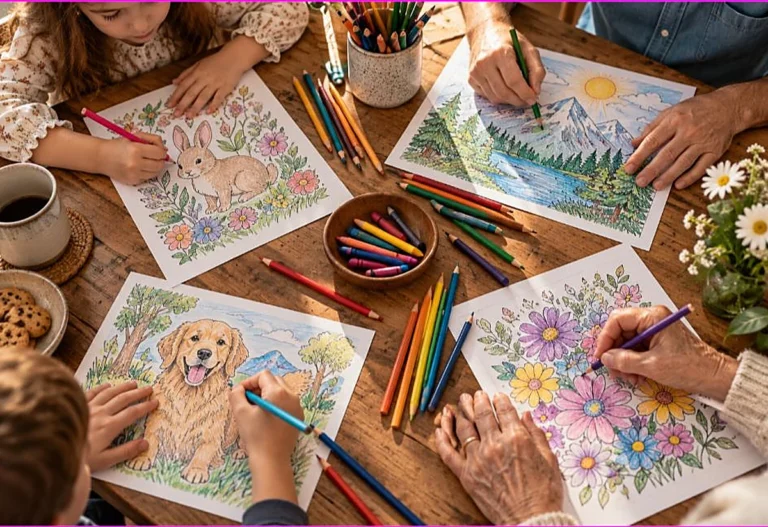
There is no single right way to color a picture. A child chooses the colors, decides where to start, and makes the page their own. Give the same page to ten children and you get ten different results. That freedom builds creativity and a sense of ownership over what they make.
For children who are still learning to put feelings into words, coloring offers another outlet. The colors they choose and the calm of the activity give them a way to settle and express mood. This is part of why coloring works as a calm down tool, which our guide on calming activities for kids explores.
Confidence and emotional regulation
Finishing a coloring page gives a child something concrete to be proud of, and that builds confidence.
Unlike many tasks a young child attempts, coloring is achievable. There is no failing at it. Completing a page, and hearing praise for the effort, tells a child they can start something and finish it well. That small, repeated success grows a belief in their own ability.
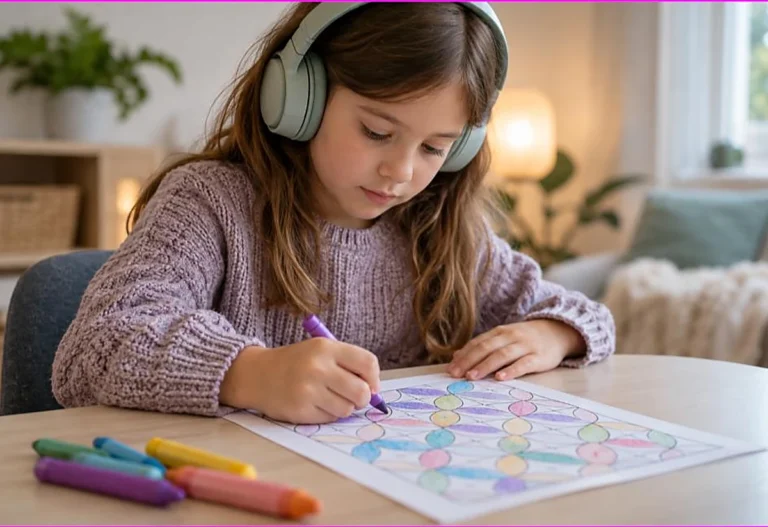
Coloring also helps with emotional regulation. The calm, repetitive motion soothes a wound up child and gives them a way to reset. Many teachers keep coloring pages in a calm down corner for exactly this reason. It is a gentle tool for helping a child move from upset back to steady.
How to get the most benefit, by age
The benefits come more fully when the page matches the child’s stage.
For toddlers, offer big, simple pictures and chunky, washable crayons, and expect scribbles. The goal is grip and enjoyment, not neatness. Our guide on coloring for toddlers covers this age.
For preschoolers, use pages with clear, medium sized shapes that invite filling. This is when hand control grows quickly. For school age children, more detailed pages keep them challenged and extend focus.
At every age, keep it pressure free. Praise the effort and the choices, not how neatly they stayed in the lines. The value lives in the process, and protecting the joy is what keeps a child coming back to build these skills.
How coloring supports learning at school
The skills coloring builds do not stay on the coloring page. They show up in the classroom.
The pencil control a child builds while coloring transfers directly to writing letters and numbers. The focus practiced on a coloring page helps a child sit and attend during a lesson. The patience of finishing a picture becomes the patience to work through a worksheet. Teachers often notice that children who color comfortably tend to handle early writing tasks more easily.
Coloring also supports how children learn content. A page about the alphabet, the seasons, or animals lets a child engage with a topic through their hands, which helps it stick. This hands on angle is why coloring appears so often in preschool and kindergarten classrooms. Our guide on play based learning and coloring covers using coloring to teach.
So when a child colors, they are not taking a break from learning. They are quietly building the physical and mental tools that learning depends on.
Common myths about coloring for kids
A few beliefs about coloring can lead parents astray, so it is worth clearing them up.
The first myth is that a child should stay in the lines early. In truth, coloring inside the lines develops around ages 5 to 6, and pushing it sooner only frustrates a young child. Scribbling is valuable practice, not a stage to rush past.
The second myth is that neat coloring means a smarter or more advanced child. Neatness reflects hand development and age, not intelligence. A messy page from a three year old is exactly right for that age.
The third myth is that coloring is just filler. As this guide shows, it builds real, school ready skills. Treating it as meaningful, and giving a child time and good pages for it, makes the most of that value.

Making coloring a positive habit
How you frame coloring shapes whether a child keeps returning to it.
Praise effort and choices, not neatness. Saying you love the colors a child picked encourages them far more than pointing out where they went outside the lines. This keeps coloring a source of confidence rather than criticism.
Offer variety and choice. Let a child pick the page and the colors, since ownership makes the activity more engaging. A range of pages suited to their age keeps it fresh. Our collection of free printable coloring pages for kids gives plenty to choose from.
Keep supplies handy and expect mess. Washable crayons and a protected surface remove the stress for you, which keeps the activity relaxed for everyone. A relaxed, encouraged child is one who colors often, and that is how the benefits build.
Coloring compared to other early activities
Parents juggle many activities for young children, so it helps to see where coloring fits.
Coloring shares ground with drawing, playdough, and puzzles, and each builds slightly different skills. Playdough builds hand strength through squeezing. Puzzles build problem solving and spatial skills. Drawing builds imagination and planning from scratch. Coloring sits alongside these, building fine motor control, color knowledge, and focus through a task that has a clear structure and finish.
What sets coloring apart is its low barrier and clear result. A blank page can overwhelm a young child, while a coloring page gives a friendly starting point, so a child feels successful quickly. That early success builds the confidence to keep going. Our guide on coloring versus drawing compares the two in detail.
The best approach is variety. Offer coloring alongside drawing, building, and hands on play, and a child gets the full range of early skills. Coloring is one strong piece of that mix, not the whole of it.
Frequently asked questions about coloring for kids
Why is coloring good for children?
Coloring builds fine motor skills, hand and eye coordination, and pencil grip, while growing focus, creativity, and confidence. It also prepares the hand and mind for handwriting, which is why teachers and therapists value it.
Does coloring help with handwriting?
Yes. Coloring strengthens the same hand muscles and grip that writing uses, and staying within the lines builds the control letters require. It is a key pre writing activity for young children.
At what age do children benefit from coloring?
Children benefit from the moment they can grip a crayon, around 12 to 18 months. The type of benefit shifts with age, from grip and enjoyment in toddlers to focus and detail in older children.
Is coloring educational?
Yes. Coloring teaches colors, shapes, and vocabulary, and themed pages can reinforce letters, numbers, and school topics. It delivers early learning through play rather than formal lessons.
Should I make my child stay in the lines?
No, not for young children. Coloring inside the lines develops around ages 5 to 6. Before then, scribbling is healthy practice. Pushing neatness too early can take the joy out of it.
The takeaway on coloring for kids
Coloring builds far more than a quiet moment. It strengthens the hands, sharpens focus, grows creativity, and lays the groundwork for handwriting, all through an activity children enjoy. Match the page to the age, keep it pressure free, and let the benefits build naturally. Few activities give this much back for so little cost or setup, which is why parents and teachers keep coming back to it year after year.
Ready to support your child’s development the fun way? Browse our free printable coloring pages for kids and pick a page for their stage. Every one is free to download and print. For ready made packs, browse our educational coloring pages.