The Proper Way to Hold a Crayon (By Age)
Quick answer
Young children usually start gripping a crayon in a full fist, then progress to a tripod grip — between the thumb, index, and middle fingers — around ages 3–4. Short, broken crayons actually help, because small pieces naturally force the fingertips into that correct tripod position.
By the TheColoringPages.net team. Reviewed for accuracy, September 2026.
Want to learn about Hold a Crayon? This guide gives clear, practical steps, drawing on fine motor skills and years of hands on coloring.
How a child holds a crayon changes as they grow, and each grip is a normal step toward the mature grasp used for writing. Parents often worry when a toddler fists a crayon, but that is exactly right for their age. Understanding how crayon grip develops helps you support your child without pushing a grip they are not ready for.
This guide explains the crayon grip stages by age, why they develop in that order, and how to gently encourage a good grip through coloring.
Quick answer: Crayon grip develops with age. Toddlers use a fisted, or palmar, grasp, preschoolers move to a finger grip, and by ages 4 to 6 most children use the mature tripod grasp, holding the crayon with the thumb, index, and middle finger. Broken or short crayons naturally encourage a better grip. Let the grip develop at the child’s pace rather than forcing it.

Grip stages by age
Crayon grip develops through a predictable sequence, and knowing it helps you set fair expectations.
Around 12 to 18 months, toddlers use a palmar grasp, holding the crayon in a fist with the whole hand wrapped around it. They color with whole arm movements. This is the natural first grip and exactly right for this age. There is no need to correct it.
Around 2 to 3 years, children move toward a digital or finger grip, holding the crayon with their fingers rather than a full fist, though not yet in the mature position. They begin using more wrist and finger movement. This is a transitional stage as control develops.
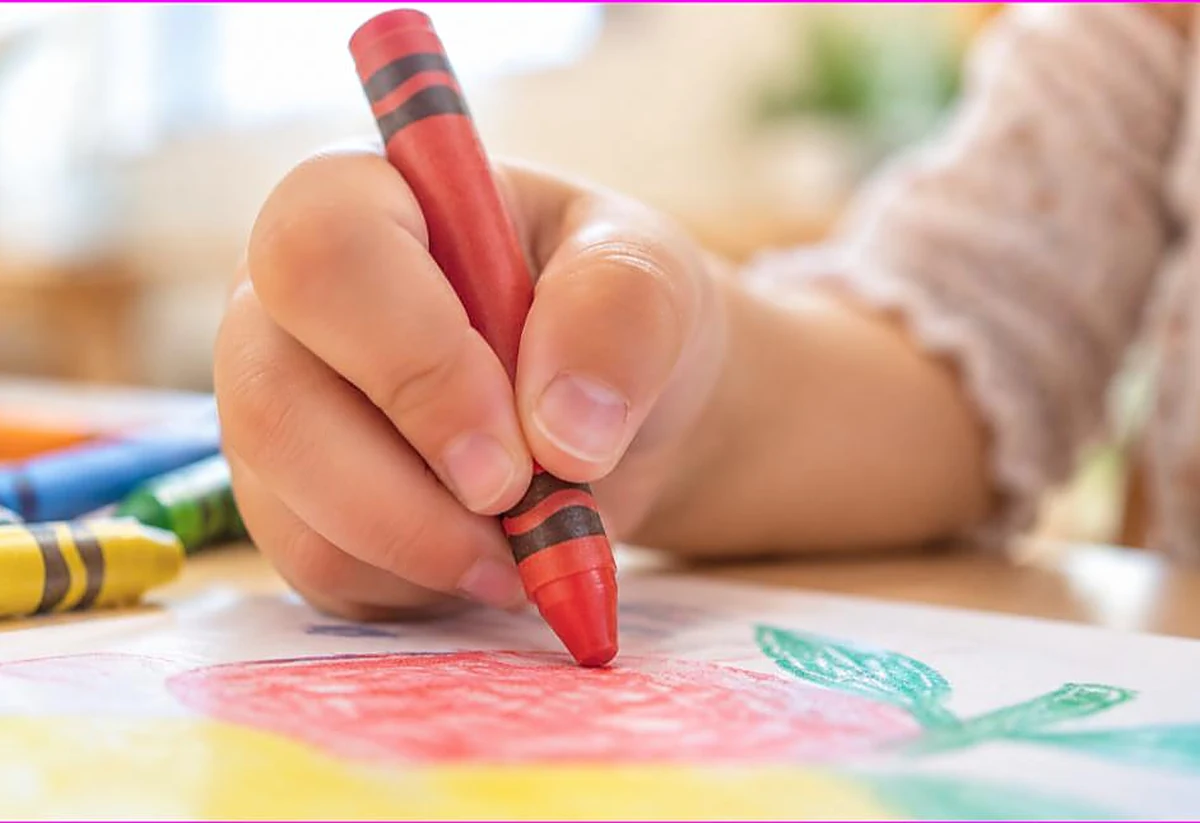
Around 4 to 6 years, most children develop the tripod grasp, holding the crayon with the thumb, index, and middle finger, which is the mature grip used for writing. This grip gives the control needed for detailed coloring and letter formation. Each stage builds on the last, and children progress at their own pace. Our guide on coloring and child development covers the wider development.
Why grip develops in this order
Understanding why grip develops in this sequence helps you be patient with it.
The grip progression follows the development of the small hand muscles and fine motor control. A toddler’s hand muscles are not yet developed enough for the precise tripod grasp, so they use the whole hand in a fist, which is all they can manage. This palmar grasp lets them make marks and begins building the hand strength for later grips.
As the hand muscles strengthen and fine motor control develops, a child gains the ability to hold the crayon with their fingers and, eventually, in the precise tripod position. This takes years of development, built through coloring and other fine motor activities. The grip cannot skip stages, since each depends on the muscle development and control built in the previous one.
This is why forcing a mature grip too early does not work. A young child simply does not have the hand development for the tripod grasp, no matter how they are shown. The grip develops naturally as the hand matures, supported by plenty of coloring practice. Our guide on coloring and fine motor skills covers the muscle development involved.
Encouraging the tripod grasp
While you cannot force a mature grip, you can gently encourage it as a child is ready.
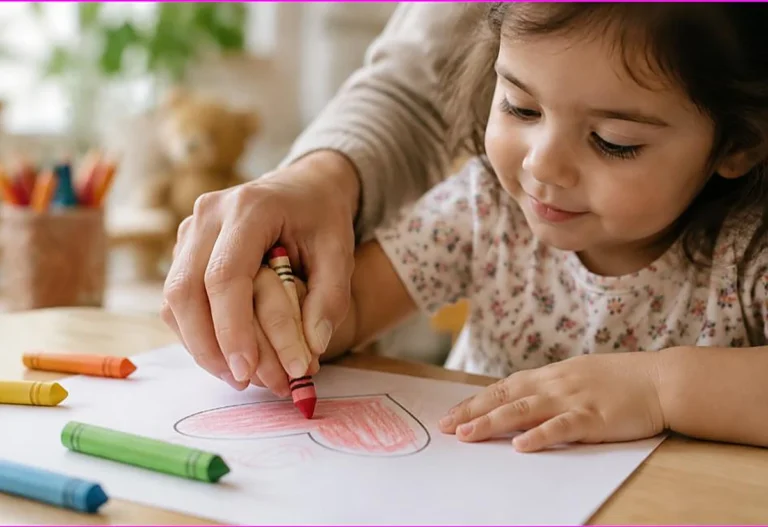
Model the tripod grasp yourself as you color, so your child sees how you hold the crayon. Children learn by copying, so seeing a good grip regularly helps them develop it. You can gently place the crayon in your child’s fingers in the tripod position when they seem ready, but do not force it or make an issue of it if they revert to an easier grip.
Offer the right tools, which naturally encourage a good grip. Chunky crayons suit young hands, while broken or short crayons, covered below, encourage the finger grip. Some children benefit from grip aids, small rubber grips that fit on a crayon or pencil and position the fingers, though these are not necessary for most children.
Above all, be patient and let the grip develop at the child’s pace. Pushing a grip a child is not ready for causes frustration and can take the joy out of coloring. Offering good models and tools, and plenty of coloring practice, supports the natural development of a good grip far better than forcing it. Our guide on how to teach a child to color covers gentle guidance.

The broken crayon trick
One simple trick genuinely helps encourage a good crayon grip: use broken or short crayons.
A short, broken crayon is too small to hold in a fist, so a child is forced to pinch it with their fingers, which encourages the finger grip and eventually the tripod grasp. This is a well known technique among occupational therapists and teachers, since it naturally guides a child toward a better grip without any instruction or pressure.
So rather than throwing away broken crayons, keep them for exactly this purpose. Breaking crayons into short pieces on purpose, for a child developing their grip, is a simple, effective way to encourage the finger positions that lead to a mature grasp. The child colors as normal, and the short crayon does the work of guiding their fingers.
This trick works because it changes the tool rather than instructing the child, which suits how young children learn. It is gentle, requires no pressure, and lets the grip develop naturally through use. Combined with chunky crayons for the youngest children and good modeling, broken crayons are a helpful part of supporting grip development. Our guide on the best crayons for toddlers covers crayon choice.
When to check with an occupational therapist
Most children develop a good crayon grip naturally, but occasionally it is worth seeking advice.
A wide range of grip development is normal, and there is no need to worry if a child reaches the tripod grasp a little later than another child. Some children take longer than others, and grip can vary even day to day as it develops. Patience and plenty of coloring practice suit most children.
That said, if a child is well past the typical age, around 6 or older, and still struggles to hold a crayon with any control, tires very quickly, or shows a grip that seems to cause difficulty, it may be worth mentioning to your pediatrician. An occupational therapist can assess the grip and fine motor skills and provide support if needed. Our guide on coloring in occupational therapy covers this.
For most children, though, grip develops naturally with time and coloring practice, needing no intervention. Offering good models, the right crayons, and plenty of enjoyable coloring supports the natural development of a good grip. Trust the process, keep it pressure free, and let your child’s grip mature at its own pace.
Grip and handwriting readiness
The crayon grip a child develops through coloring is the same grip they will use for writing, which is why it matters.
Handwriting uses the tripod grasp, the mature grip a child develops through coloring and other fine motor activities. So the grip development that happens through coloring directly prepares a child for writing. A child who has developed a good tripod grasp through coloring is ready to hold a pencil to write, while one who has not may struggle. Our guide on coloring and handwriting readiness covers this link.
This is why coloring is such a valuable pre writing activity. It gives a child the practice that develops the writing grip, in an enjoyable form. Every coloring session, especially with tools that encourage a good grip, moves a child toward the grasp writing requires. There is no need for formal grip lessons when coloring builds it naturally.
So supporting your child’s crayon grip through coloring is supporting their writing readiness. Offer good models, the right crayons, and plenty of coloring, and let the grip develop toward the mature tripod grasp that writing needs. When a child is ready to write, the grip developed through coloring makes it far easier. Our collection of free printable coloring pages for kids gives you pages for every stage.
Supporting grip through daily activities
Beyond coloring, everyday activities support crayon grip development, which is worth knowing.
Many activities build the hand strength and fine motor control that a good grip requires. Playdough builds hand strength through squeezing and rolling. Threading beads and using tweezers or tongs build the pincer grip and finger control. Using safety scissors builds hand strength and coordination. These activities, alongside coloring, build the hands well rounded for a good grip.
Offering a variety of these hand strengthening activities supports grip development more fully than coloring alone. A child who colors, plays with playdough, threads beads, and cuts with scissors builds strong, coordinated hands ready for a mature grip and, eventually, writing. These activities are fun and easy to offer at home.
So while coloring is central to grip development, combining it with other fine motor activities gives the best support. Together they build the hand strength and control that a good crayon grip, and later a good pencil grip for writing, depend on. Keep them all playful and enjoyable, and your child builds the hands they need through activities they love. Our guide on coloring and fine motor skills covers complementary activities.

Signs of a good crayon grip
It helps to know what a good, developing crayon grip looks like, so you can recognize healthy progress.
A good developing grip shows the child moving away from a full fist toward using their fingers, with the crayon resting against the hand and controlled by the thumb and first fingers. As the tripod grasp matures, you will see the crayon held between the thumb, index, and middle finger, with the other two fingers tucked in and the wrist in a comfortable position. The movements come more from the fingers and wrist than the whole arm.
Signs that a grip is developing well include growing control over where the crayon goes, the ability to color for longer without the hand tiring quickly, and a comfortable, relaxed hold rather than a tense, white knuckled grip. These show the hand strength and control developing as they should. A relaxed, functional grip matters more than a textbook perfect one, since children vary.
There is no need to obsess over achieving a perfect grip, since a functional grip that lets a child color comfortably is the real goal. Supporting the natural development with good models, the right crayons, and plenty of practice leads to a good grip for most children. Trust the progress you see, and let the grip continue to mature through coloring. Our guide on coloring and fine motor skills covers the hand development behind a good grip.
Frequently asked questions about hold a crayon
What is the proper way to hold a crayon?
The mature grip is the tripod grasp, holding the crayon with the thumb, index, and middle finger. This develops around ages 4 to 6. Before then, toddlers use a fist grip and preschoolers a finger grip, which are normal stages.
Why does my toddler hold the crayon in a fist?
A fisted, or palmar, grasp is the natural first grip for toddlers, around 12 to 18 months. Their hand muscles are not yet developed for a finer grip, so this is exactly right for their age and should not be corrected.
How can I encourage a good crayon grip?
Model the tripod grasp as you color, offer chunky crayons for young hands and broken or short crayons to encourage a finger grip, and provide plenty of coloring practice. Let the grip develop at the child’s pace rather than forcing it.
Does the broken crayon trick work?
Yes. A short, broken crayon is too small to hold in a fist, so a child pinches it with their fingers, which encourages the finger grip that leads to the tripod grasp. It is a simple, effective technique used by therapists and teachers.
When should I worry about my child’s crayon grip?
If a child is well past age 6 and still struggles to hold a crayon with control, tires very quickly, or has a grip that causes difficulty, mention it to your pediatrician, who can advise whether an occupational therapy assessment would help.
The takeaway on hold a crayon
Crayon grip develops through natural stages: a fisted grasp in toddlers, a finger grip in preschoolers, and the mature tripod grasp by ages 4 to 6. Each stage depends on developing hand muscles and control, so it cannot be rushed. Support a good grip by modeling it, offering chunky and broken crayons, and providing plenty of coloring practice, while letting it develop at the child’s pace. The grip a child builds through coloring is the same one they will use for writing.
Ready to support your child’s grip the fun way? Browse our free printable coloring pages for kids for every age and stage. Every one is free to download and print. For ready made packs, browse our educational coloring pages.