Coloring and Handwriting Readiness: The Pre-Writing Connection
Quick answer
Coloring prepares children for handwriting by strengthening the same hand muscles and grip, building the control to stay within boundaries, and developing hand-eye coordination. Coloring and tracing shapes before letters gives kids the fine-motor foundation that makes forming letters much easier.
By the TheColoringPages.net team. Reviewed for accuracy, September 2026.
This guide to Handwriting Readiness gives clear, practical answers, drawing on handwriting and years of hands on coloring.
Long before a child writes their first letter, they need the hand strength and control that writing demands. Coloring is one of the best ways to build these skills. Every time a child grips a crayon and fills a shape, they are developing the exact pencil grip, hand strength, and control that handwriting requires. This is why coloring is considered a key pre writing activity by teachers and occupational therapists.
This guide explains how coloring prepares a child for handwriting, what specific skills it builds, and how to use coloring to support writing readiness.
Quick answer: Coloring is a key pre writing activity that builds the hand strength, tripod pencil grip, and fine motor control children need before they can form letters. Coloring inside shapes practices the same precision handwriting requires. Regular coloring, paired with pre writing lines and shapes, prepares a child’s hand and mind for writing.

Why coloring comes before writing
Handwriting is a complex skill that rests on a foundation of hand abilities, and coloring builds that foundation.
Before a child can write, they need several things: enough hand strength to control a pencil without tiring, a mature pencil grip, the fine motor control to guide the pencil precisely, and hand and eye coordination. These abilities take years to develop, and they must be in place before letter formation is possible. A child cannot write well without them, no matter how they are taught.
Coloring builds all of these abilities. Gripping and guiding a crayon strengthens the hand, refines the grip, and develops control and coordination. So coloring is not a break from writing preparation but a central part of it. A child who colors regularly is building the physical foundation writing depends on.
This is why pushing formal handwriting too early, before these foundations are in place, does not work well. Coloring and other pre writing activities build the foundation first, so that writing comes more easily when the child is ready. Our guide on coloring and fine motor skills covers the hand development involved.
The tripod grip connection
One of the most important things coloring builds for writing is the pencil grip.
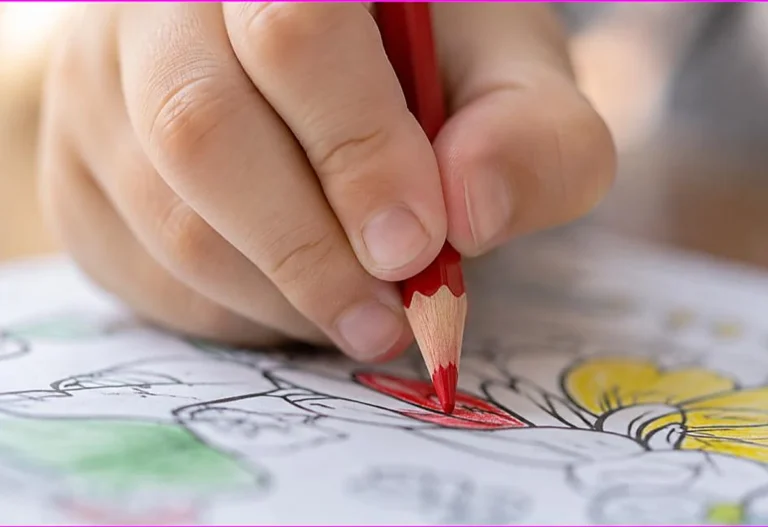
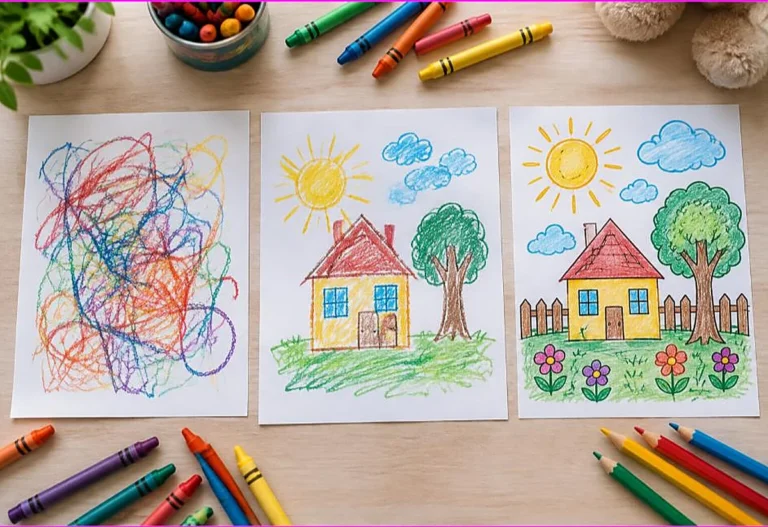
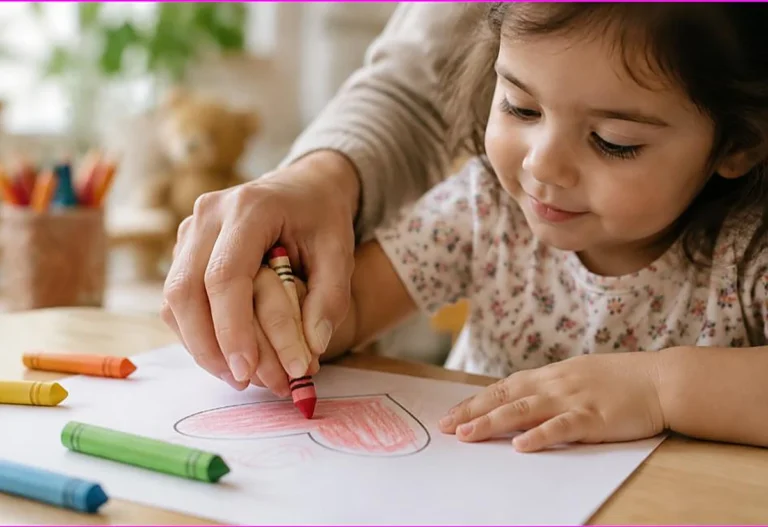
Handwriting uses the tripod grasp, holding the pencil with the thumb, index, and middle finger. This grip gives the control needed to form letters. Children develop the tripod grasp gradually, moving from a fisted grip in toddlerhood to the mature grip around 4 to 6 years old. Coloring gives daily practice that supports this progression.
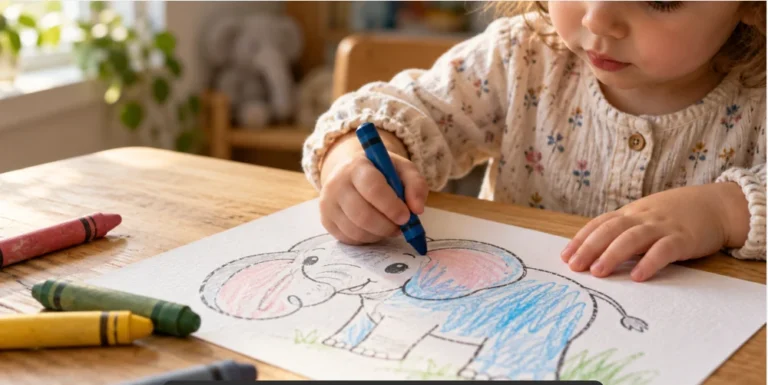
Coloring encourages the tripod grip in a natural way, especially with the right tools. Chunky crayons suit young hands, while broken or short crayons force a child to pinch with their fingers rather than fist the crayon, which encourages the tripod grasp. Our guide on how to hold a crayon covers grip development by age.
So a child who colors regularly develops the pencil grip that writing requires, without any formal instruction. The grip develops through the enjoyable practice of coloring, which is far more effective than trying to teach a grip directly. By the time a child is ready to write, coloring has helped establish the grasp letters need.
Hand strength and control
Beyond grip, coloring builds the hand strength and control that writing endurance requires.
Handwriting requires a child to control a pencil precisely and to keep writing without their hand tiring. Both depend on hand strength. Coloring builds this strength through the pressure a child applies to make color appear. Filling a page exercises the small hand muscles, building the endurance writing needs.
Coloring also builds the fine motor control that letter formation requires. Guiding a crayon along a shape, changing direction, and filling within a boundary all develop the precise control used to form the strokes and curves of letters. Coloring inside shapes, in particular, practices the guided movements that writing within lines demands.
Together, hand strength and control are what let a child write letters clearly and without fatigue. A child who has built these through coloring finds writing physically easier when they begin. Without them, writing is a struggle, which is why building them first, through coloring, matters so much. Our guide on the benefits of coloring for kids covers these gains.

Coloring activities that build writing readiness
Certain coloring approaches build writing readiness especially well, so it helps to know them.
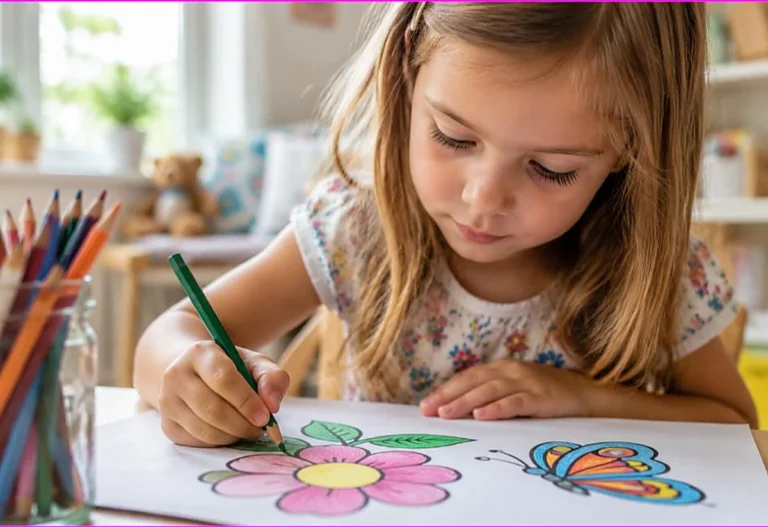
Coloring inside shapes is the most valuable, since it practices the precision and control writing needs. Offering pages with clear shapes to fill, at a level your child can manage, builds the guided movements letters require. As control grows, more detailed pages challenge and refine these skills further.
Coloring within lines, as a child approaches school age, directly practices the control of staying within a boundary, which mirrors writing within the lines on a page. Pages with distinct areas to color encourage this. There is no need to push it before the child is ready, but offering these pages supports the developing skill.
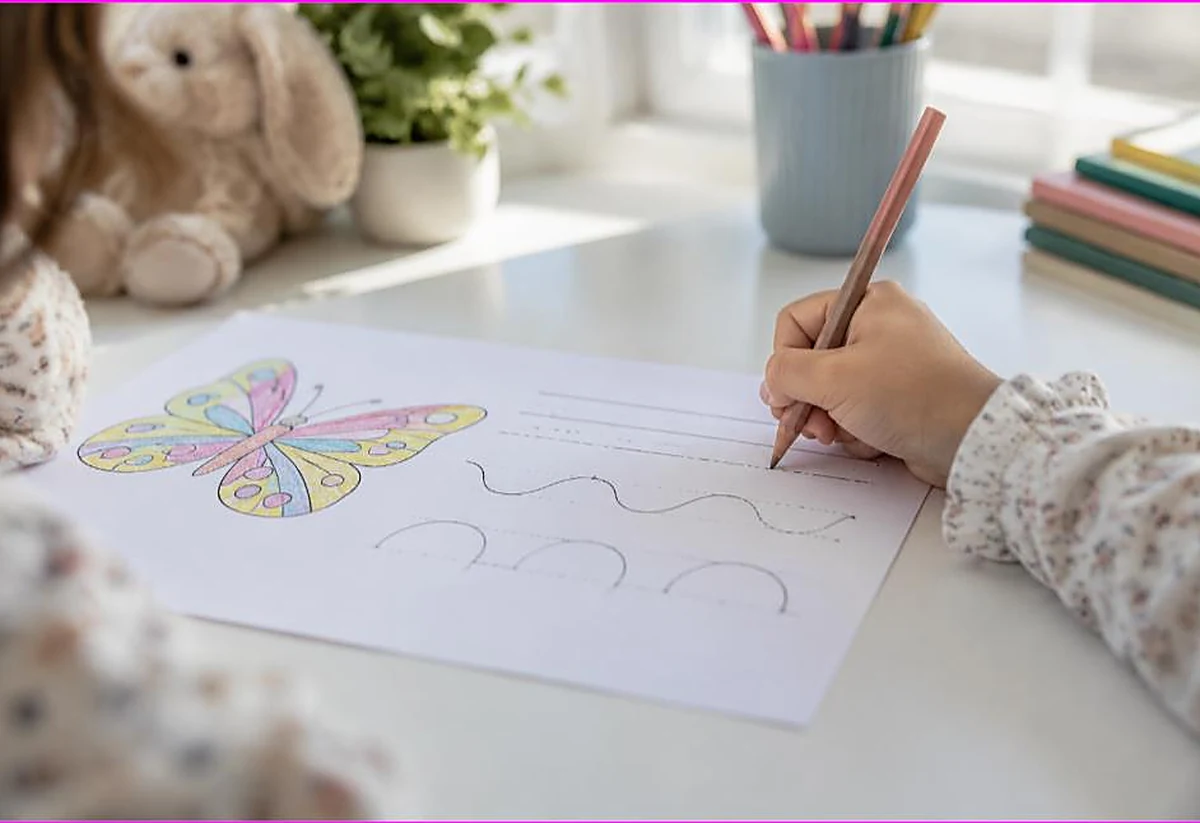
Combining coloring with tracing and pre writing activities builds writing readiness well. After coloring, offering simple pre writing lines, curves, and shapes to trace practices the strokes that make up letters. The playful nature of coloring makes this feel like fun rather than drills. Our collection of free printable coloring pages for kids includes pages that build these skills.
Pairing coloring with pre-writing lines and shapes
A simple, enjoyable way to build writing readiness is to pair coloring with pre writing practice.
Pre writing shapes are the basic strokes that letters are built from: vertical and horizontal lines, circles, crosses, diagonal lines, and curves. Practicing these prepares a child to form letters, which combine these strokes. Tracing and drawing these shapes, alongside coloring, builds the specific control writing needs.
Make it playful by weaving these into coloring activities. A child might color a picture, then trace the lines and shapes around it, or color a page that incorporates pre writing patterns. Keeping it fun and game like, rather than a formal exercise, keeps a child engaged and willing. The coloring makes the pre writing practice feel like part of the play.
This combination, coloring plus pre writing shapes, builds writing readiness more completely than either alone. Coloring builds the general hand strength, grip, and control, while pre writing shapes practice the specific strokes of letters. Together they prepare a child’s hand thoroughly for writing. Our guide on coloring and child development covers the developmental picture.
When children are ready to write
Understanding when a child is ready to write helps you support the journey without rushing it.
Most children are ready to begin forming letters around 4 to 6 years old, once they have developed the hand strength, tripod grip, fine motor control, and coordination that writing requires. These are the same abilities coloring builds, which is why coloring and early writing readiness develop around the same time. Coloring inside the lines, which arrives around 5 to 6 years, is a good sign of writing readiness.
There is no need to rush a child into formal writing before these foundations are in place. A child pushed to write before they are ready may struggle and become discouraged, since the physical abilities are not yet there. Building the foundation first, through coloring and pre writing activities, makes writing come more easily and happily when the child is ready.
So support your child’s writing readiness by providing plenty of enjoyable coloring and pre writing practice, and let the readiness develop naturally. When the foundations are in place, forming letters comes far more easily. Trust the process, keep it fun, and let coloring do its quiet work of preparing your child’s hand for writing. Our guide on what age kids color inside the lines covers the readiness milestone.
Supporting writing readiness at home
You can support your child’s writing readiness at home in simple, enjoyable ways.
Offer plenty of coloring, since it builds the hand strength, grip, and control writing needs. Keep supplies within reach and make coloring a regular, fun part of the day. Choose pages that suit your child’s stage, from simple shapes for young children to more detailed pages as control grows. Regular, enjoyable coloring does much of the work of building writing readiness.
Add other fine motor activities that build the same skills. Playdough, threading beads, using safety scissors, and building with small blocks all strengthen the hands and develop control. A variety of these activities, alongside coloring, builds a child’s hands well rounded for writing.
Keep it all playful and pressure free. The goal is a child who enjoys these activities and returns to them willingly, since that regular, happy practice is what builds the foundation. There is no need for formal drills. Simply providing enjoyable coloring and fine motor play prepares your child’s hand for writing, in a way they love. Our guide on the benefits of coloring for kids covers the wider developmental benefits.

The role of occupational therapists
For some children, occupational therapists play a part in building writing readiness, and coloring is one of their tools.
Occupational therapists specialize in the fine motor and hand skills that everyday tasks and writing require. When a child has difficulty with these skills, a therapist can assess them and provide targeted support. Coloring is often part of this, since it builds hand strength, grip, and control in an enjoyable way. A therapist may suggest particular coloring approaches, tools, or page sizes to build specific skills. Our guide on coloring in occupational therapy covers this.
Most children, though, build writing readiness naturally through everyday coloring and play, with no need for therapy. A wide range of development is normal, and there is no cause for concern if a child reaches a stage a little later than others. Development is not a race, and coloring supports it for every child.
If you do have concerns about your child’s fine motor development or writing readiness, such as difficulty gripping a crayon well past the typical age, it is worth mentioning to your pediatrician, who can advise whether an assessment would help. For most families, simply offering plenty of enjoyable coloring is all that is needed to build the hand skills writing requires. Our collection of free printable coloring pages for kids gives you pages for every stage of this development.
Frequently asked questions about handwriting readiness
Does coloring help with handwriting?
Yes. Coloring builds the hand strength, tripod pencil grip, and fine motor control that handwriting requires. Coloring inside shapes practices the same precision writing needs, which is why coloring is a key pre writing activity.
Why is coloring a pre-writing activity?
Coloring builds the physical foundations writing depends on: hand strength, a mature pencil grip, control, and coordination. A child who colors regularly develops these abilities before they begin forming letters, making writing come more easily.
What age should a child start writing?
Most children are ready to begin forming letters around 4 to 6 years old, once they have developed the hand strength, grip, and control writing requires. These are the same abilities coloring builds, so the two develop around the same time.
How does coloring build a pencil grip?
Coloring encourages the tripod grip through practice, especially with the right tools. Chunky crayons suit young hands, and broken or short crayons force a child to pinch with their fingers, which builds the grip used for writing.
How can I use coloring to prepare my child for writing?
Offer plenty of enjoyable coloring, choosing pages suited to your child’s stage, and pair it with pre writing lines and shapes to trace. Keep it playful and pressure free, and add other fine motor activities to build the hand skills writing needs.
The takeaway on handwriting readiness
Coloring is one of the best ways to prepare a child for handwriting. It builds the hand strength, tripod pencil grip, and fine motor control that forming letters requires, and coloring inside shapes practices the same precision writing needs. Offer plenty of enjoyable coloring suited to your child’s stage, pair it with pre writing shapes, and keep it playful. Through coloring, your child builds the foundation that makes writing come more easily when they are ready.
Ready to build your child’s writing readiness the fun way? Browse our free printable coloring pages for kids for every age and stage. Every one is free to download and print. For ready made packs, browse our educational coloring pages.