How Coloring Builds Fine Motor Skills in Kids
Quick answer
Coloring builds fine-motor skills by exercising the small muscles of the hand and fingers: gripping the crayon, controlling pressure, and guiding strokes within the lines. These are the same muscles and movements children later use for writing, cutting, and buttoning, which is why coloring is a classic early-development activity.
By the TheColoringPages.net team. Reviewed for accuracy, September 2026.
This guide to Fine Motor Skills gives clear, practical answers, drawing on fine motor skills and years of hands on coloring.
Coloring is one of the simplest ways to build a child’s fine motor skills, the small hand and finger movements that writing, buttoning, and countless daily tasks depend on. Every time a child grips a crayon and fills a shape, they are strengthening the exact muscles and control they will need for school and beyond. This is why teachers and occupational therapists reach for coloring so often.
This guide explains what fine motor skills are, how coloring builds them, and how to get the most developmental value from coloring at each stage.
Quick answer: Coloring strengthens the small hand and finger muscles, refines pencil grip, and develops hand and eye coordination and bilateral control, all foundations for handwriting. Regular coloring gives children repeated, low pressure practice of these motor skills through an activity they enjoy, which is why it is a key pre writing activity.

What fine motor skills are
Fine motor skills are the small, precise movements of the hands and fingers, and they matter more than people realize.
These skills involve the coordination of the small muscles in the hands, fingers, and wrists, working together with the eyes. They are what let a child pick up a small object, hold a pencil, use scissors, do up a button, and eventually write. They are different from gross motor skills, which involve large movements like running and jumping.
Fine motor skills develop gradually through the early years, built by practice. A baby grasps with the whole hand, a toddler begins to use fingers more precisely, and by school age a child has the refined control needed for writing and detailed tasks. This development is essential for school, where so much depends on hand control.
Coloring is one of the best activities for building these skills, because it gives repeated practice of gripping and guiding a tool with precision. Understanding this helps you see coloring as the valuable developmental work it is. Our guide on coloring and child development covers the wider picture.
How coloring develops them
Coloring builds fine motor skills in several specific ways, each valuable.
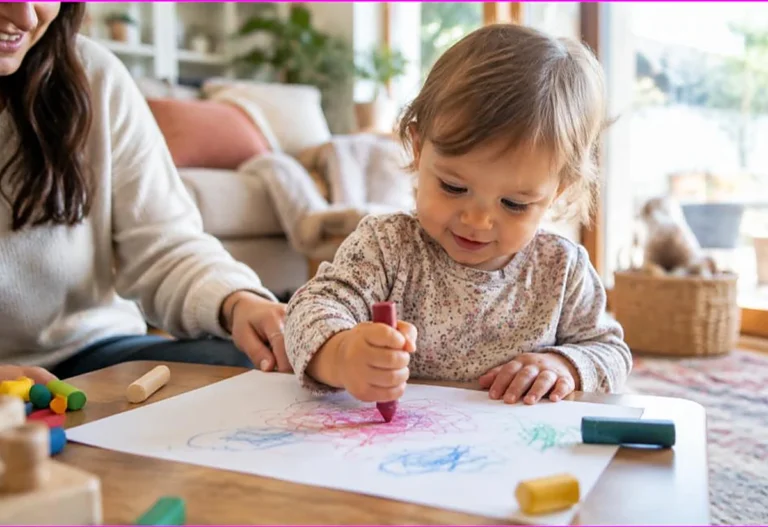
First, gripping and holding a crayon strengthens the small hand muscles. A child must maintain a grip and apply pressure to make color, which exercises the muscles that hold and control a pencil. Over time this builds hand strength, a foundation for all fine motor tasks.
Second, guiding the crayon develops control. Moving the crayon where the child wants it, changing direction, and filling a shape all refine the precise control of the small muscles. This control is what handwriting later depends on.
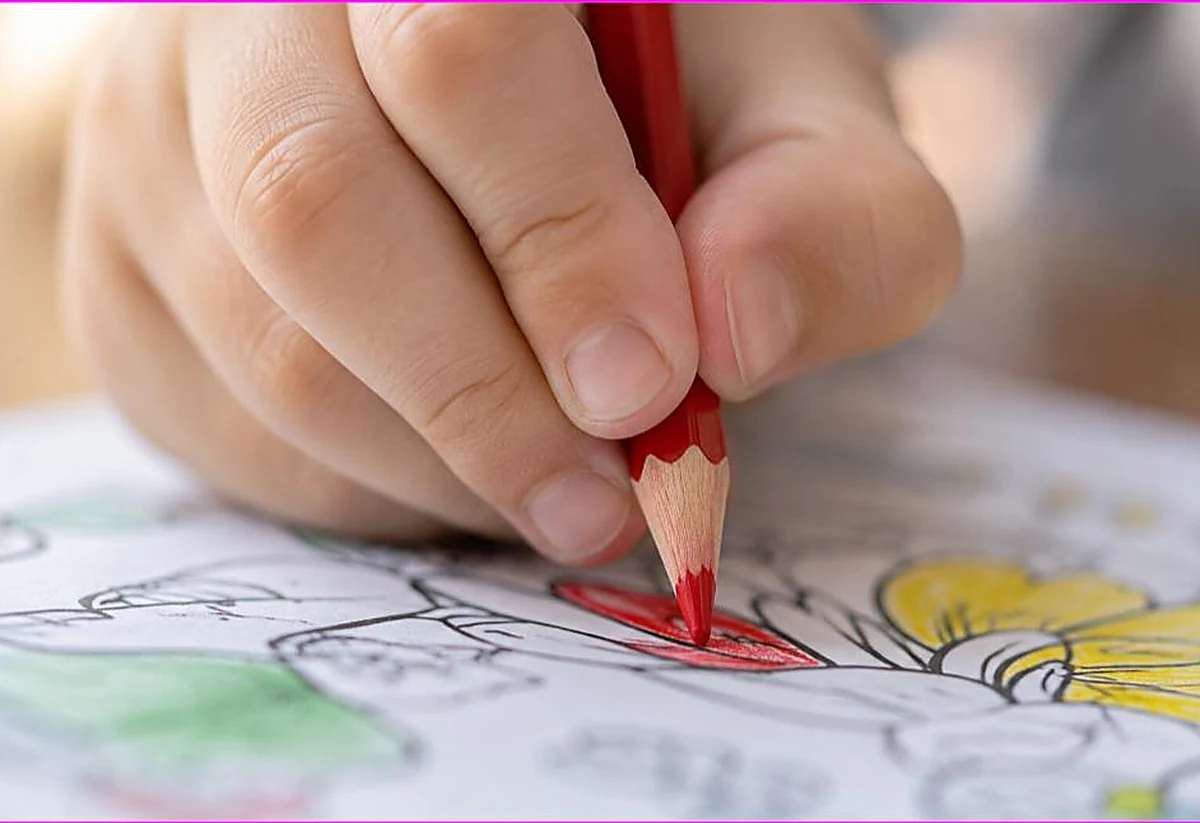
Third, coloring develops the pencil grip. As a child colors more, they move from a fisted grip to the mature tripod grasp, using thumb, index, and middle finger, which is the grip needed for writing. Coloring naturally encourages this progression, especially with the right crayons. Our guide on how to hold a crayon covers grip development.
The link to handwriting
The most important reason coloring matters for fine motor skills is its direct link to handwriting.
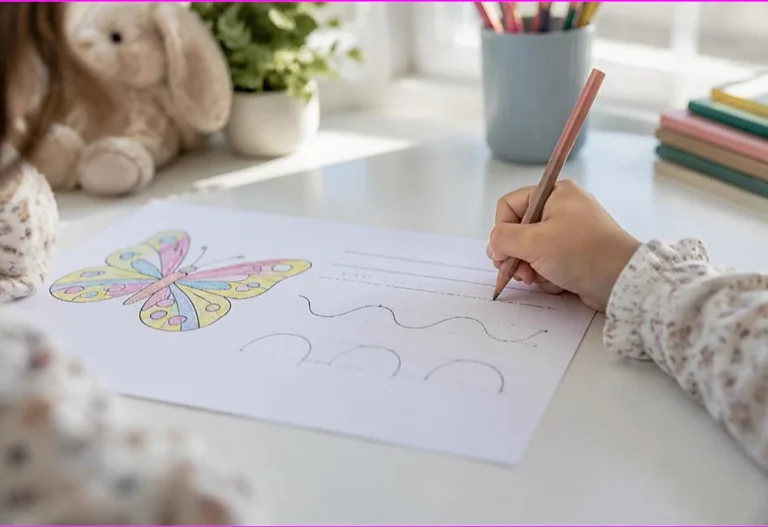
Handwriting requires precise control of the small hand muscles, a mature pencil grip, and the ability to guide a pencil accurately. These are exactly the skills coloring builds. A child who colors regularly develops the hand strength and control that forming letters requires, which is why coloring is considered a key pre writing activity.
Coloring inside shapes, in particular, practices the guided, controlled movements that writing letters needs. Staying roughly within a boundary uses the same precision as forming a letter within its lines. So a child who colors is quietly preparing their hands for writing, well before they pick up a pencil to write.
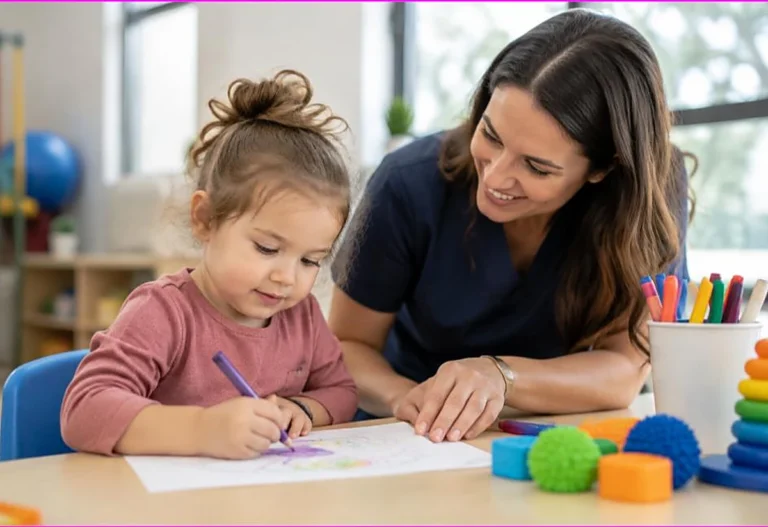
This is why occupational therapists and teachers often prescribe coloring for children building writing readiness. It offers the exact motor practice writing needs, in an enjoyable, low pressure form. Our guide on coloring and handwriting readiness covers this link in depth.
Bilateral coordination and hand strength
Beyond grip and control, coloring builds two more important motor abilities.
Bilateral coordination is the ability to use both hands together in a coordinated way. When a child colors, one hand holds and guides the crayon while the other hand holds and steadies the paper. This teaches the two hands to work together, each doing a different job, which is a key skill for tasks like cutting with scissors, tying shoes, and writing.
Hand strength grows through the pressure a child applies while coloring. Making color appear requires pressing the crayon to the paper, which exercises and strengthens the hand muscles. Strong hands are essential for the endurance writing requires, since a child needs to write without their hand tiring quickly.
Both of these develop naturally through regular coloring. A child who colors often builds coordinated, strong hands ready for the demands of school. These are skills that are hard to build through instruction but develop easily through enjoyable practice like coloring.

Getting the most developmental value
You can make coloring even more valuable for fine motor development with a few simple choices.
Choose the right crayons for your child’s stage. Chunky crayons suit young children building grip, while broken or shorter crayons encourage the finger grip that leads to a good pencil grasp. Our guide on the best crayons for toddlers covers this.
Offer pages that match your child’s ability. Large, simple shapes suit young children, while more detailed pages challenge older children to use finer control. Matching the page to the stage keeps the activity at the right level to build skills without frustration. Our collection of free printable coloring pages for kids spans simple and detailed designs.
Encourage regular coloring, since the skills develop through practice. The more a child colors, in an enjoyable way, the more their fine motor skills develop. Keep it fun and frequent rather than forced, and the developmental benefit builds naturally over time.
Signs to watch for
Coloring can also give you gentle insight into your child’s fine motor development.
Most children develop fine motor skills at their own pace, through coloring and other activities, and a wide range is normal. There is no need to compare your child to others or worry about small differences. Development is not a race.
That said, coloring can highlight areas where a child might need support. If a child well past the typical age struggles to grip a crayon, tires very quickly, or shows significant difficulty with control that seems beyond their stage, it may be worth mentioning to your pediatrician. An occupational therapist can assess fine motor skills and suggest supportive activities. Our guide on coloring in occupational therapy covers this.
For most children, though, coloring simply builds fine motor skills naturally, with no concern needed. Offer plenty of enjoyable coloring, keep it pressure free, and let your child’s hand skills develop through the activity they love.
Fine motor activities to pair with coloring
Coloring works best alongside other activities that build the same skills, giving a child varied practice.
Other fine motor activities complement coloring well. Playdough builds hand strength through squeezing and rolling. Threading beads develops precise finger control and hand and eye coordination. Using safety scissors builds bilateral coordination and hand strength. Puzzles and building blocks develop grip and precision. Each of these works the same small muscles in a different way.
Offering a range of these activities gives a child well rounded fine motor development. Coloring is a central, easy to offer part of this mix, always available and enjoyable, but pairing it with other hands on activities builds the fullest set of skills. A child who colors, cuts, threads, and builds develops strong, coordinated hands.
So value coloring for the fine motor work it does, and combine it with other activities for the best development. Together they prepare a child’s hands for writing and the many fine motor tasks of school and daily life. Our guide on the benefits of coloring for kids covers the wider gains.

How fine motor skills develop by age
Fine motor development follows a rough sequence, and coloring supports it at every stage.
In the toddler years, a child grips a crayon in their fist and makes whole arm movements. Coloring at this stage builds basic hand strength and the beginnings of control. Chunky crayons suit these young hands, and scribbling is the valuable work. As the child moves into the preschool years, they begin using their fingers more precisely and start to develop the tripod grasp, with coloring giving daily practice of this refining grip.
By the early school years, most children have developed the refined control, mature grip, and hand strength needed for detailed tasks and writing. Coloring more detailed pages at this stage challenges and sharpens these skills further. The whole progression, from fisted scribbling to precise coloring, mirrors the development of the hand skills writing requires.
Understanding this sequence helps you offer the right coloring support at each age: chunky crayons and simple pages for toddlers, finer tools and more detailed pages as control grows. Meeting your child at their stage keeps coloring building skills throughout the early years. Our guide on coloring and child development covers the full sequence.
Why coloring beats screens for motor skills
When it comes to building fine motor skills, coloring has a clear advantage over screen time, which is worth knowing.
Swiping and tapping a smooth screen does little for fine motor development. The movements are simple and repetitive, and they do not build the grip, strength, or precise control that coloring does. A child can spend hours on a screen without developing the hand skills that a few minutes of coloring builds. This is one important reason to balance screen time with hands on activities.
Coloring, by contrast, actively works the small hand muscles, refines grip, and builds control through the physical act of gripping and guiding a crayon. It is exactly the kind of hands on practice that develops the hands for writing, which screens cannot provide. Our guide on coloring versus screen time covers this contrast.
So for building fine motor skills, coloring is far more valuable than passive screen time. Offering coloring as a regular alternative to screens gives a child the hand development they need, along with the focus and creativity coloring builds. It is one of the simplest, most effective ways to support the physical skills school requires.
Frequently asked questions about fine motor skills
Does coloring help fine motor skills?
Yes. Coloring strengthens the small hand muscles, refines pencil grip, and develops hand and eye coordination and bilateral control. These are foundations for handwriting, which is why coloring is a key pre writing activity.
How does coloring build hand strength?
Making color appear requires pressing the crayon to the paper, which exercises and strengthens the small hand muscles. Strong hands are essential for the endurance handwriting requires, so coloring builds important writing readiness.
What fine motor skills does coloring develop?
Coloring develops hand strength, pencil grip, fine motor control, hand and eye coordination, and bilateral coordination, using both hands together. All of these support handwriting and everyday tasks like buttoning and using scissors.
How can I make coloring build more fine motor skills?
Choose crayons that suit your child’s stage, offer pages matched to their ability, and encourage regular coloring. Broken or chunky crayons help grip, and frequent, enjoyable coloring builds the skills through practice.
When should I worry about my child’s fine motor skills?
Most children develop at their own pace, and a wide range is normal. If a child well past the typical age struggles significantly to grip a crayon or control it, mention it to your pediatrician, who may suggest an occupational therapy assessment.
The takeaway on fine motor skills
Coloring is one of the best activities for building fine motor skills. It strengthens the small hand muscles, refines pencil grip, and develops hand and eye coordination and bilateral control, all foundations for handwriting. Choose crayons and pages suited to your child’s stage, encourage regular enjoyable coloring, and pair it with other hands on activities. Through the simple joy of coloring, your child builds the strong, coordinated hands that school and life require.
Ready to build your child’s fine motor skills the fun way? Browse our free printable coloring pages for kids for every age and stage. Every one is free to download and print. For ready made packs, browse our educational coloring pages.