Using Coloring to Teach Colors to Toddlers
Quick answer
To teach toddlers colors through coloring, name each color out loud as you use it (“let’s color the sun yellow”), offer just two or three colors at a time to avoid overwhelm, and point out those colors in everyday objects. Repetition and simple, familiar pictures make the names stick.
By the TheColoringPages.net team. Reviewed for accuracy, September 2026.
Want to learn about Teach Colors? This guide gives clear, practical steps, drawing on color and years of hands on coloring.
Learning colors is one of a toddler’s early milestones, and coloring is a natural, enjoyable way to teach them. As a toddler fills a page, naming the colors, matching them to objects, and using single color pages all help color names stick. The hands on, repeated nature of coloring makes it far more effective than flashcards for young children.
This guide explains when toddlers learn colors and how to use coloring to teach them, in a way that is fun and pressure free.
Quick answer: Use coloring to teach colors by naming each crayon as your toddler uses it, matching crayons to objects like a yellow sun, and using single color pages. Repetition and connecting colors to real things help toddlers learn color names, usually by age 2 to 3. Keep it playful, and let learning happen through enjoyable coloring.

When toddlers learn colors
Understanding when toddlers learn colors helps you set fair expectations.
Most toddlers begin to learn color names between 18 months and 3 years, though the age varies widely. A child usually recognizes and matches colors before they can name them, and naming develops through repeated exposure and practice. By around 3, many children can name several basic colors, though some take longer, which is completely normal.
Learning colors is a gradual process built on repetition and real world connection. A toddler learns that the word yellow goes with the color of the sun, a banana, and a duck through hearing it many times in meaningful contexts. This takes time and lots of exposure, so patience is key.
Coloring gives exactly the kind of repeated, meaningful exposure that helps color names stick. Every coloring session is a chance to name colors, match them to objects, and reinforce the learning. So coloring is a natural, effective way to support this milestone. There is no need to rush it, since it develops in its own time with plenty of exposure. Our guide on coloring and child development covers early milestones.
Naming colors as you go
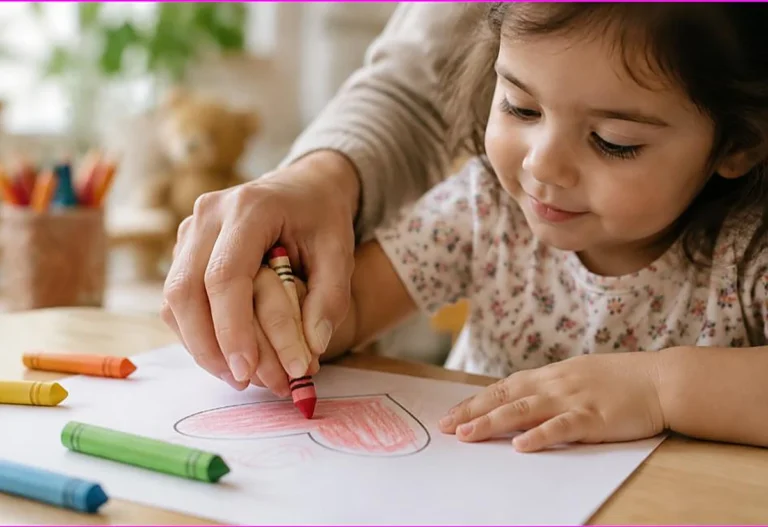
The simplest way to teach colors through coloring is to name each color as your toddler uses it.
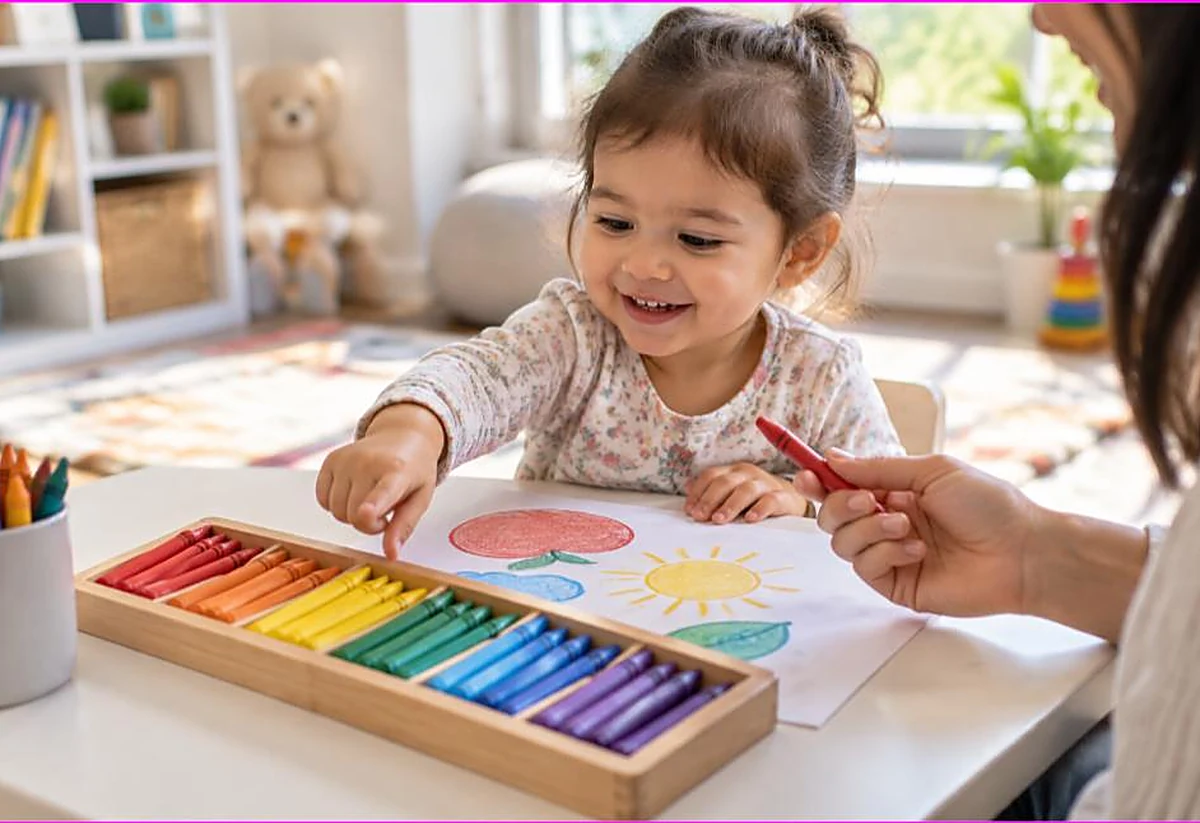
As your child picks up a crayon and colors, name the color: that is red, you are using blue. Hearing the color name paired with the actual color, again and again, helps the word stick. This repeated, meaningful naming is far more effective than abstract teaching, since the child sees and uses the color as they hear its name.
Encourage your toddler to name the colors too, gently and without pressure. You might ask what color they are using, and celebrate any attempt. Over time, a child moves from hearing color names to recognizing them to naming them, through this repeated practice. There is no need to test or drill, just natural, warm naming as you color together.
Keep it light and conversational. Weaving color names into the enjoyable activity of coloring, rather than turning it into a lesson, keeps a toddler engaged and willing. A toddler learns colors best when the learning is fun and embedded in play, which coloring provides perfectly. Our guide on coloring for toddlers covers coloring at this age.
Matching colors to objects
Connecting colors to real objects helps color names stick, and coloring makes this easy.
As you color, link colors to things your child knows: the sun is yellow, grass is green, a strawberry is red. These real world connections give color names meaning and help a toddler remember them. A color is abstract on its own, but tied to a familiar object, it becomes concrete and memorable.
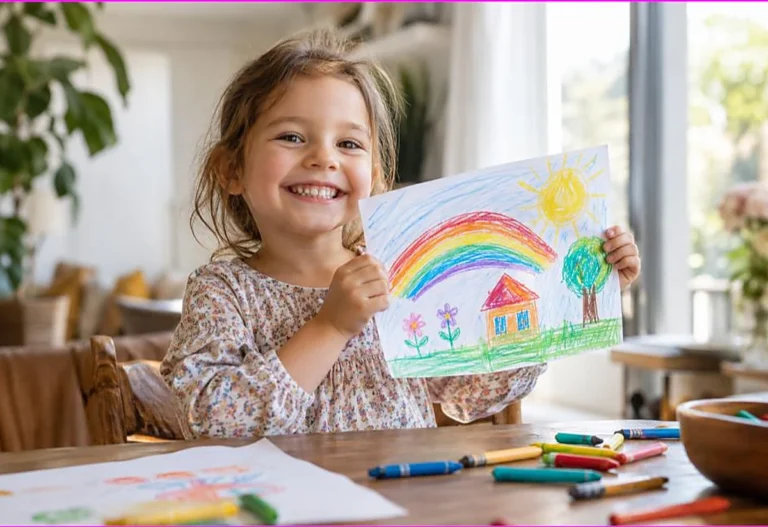
Coloring pages featuring familiar objects are ideal for this. Coloring a page with a sun, grass, and flowers lets you name the colors and connect them to the objects at the same time. You can guide your child to color objects their real colors, which reinforces the connection, while also letting them color freely if they prefer.
This matching of colors to objects builds both color knowledge and vocabulary. A child learns the color word and the object word together, strengthening both. It also builds early understanding of the world, as a child learns what color things are. Our collection of free printable coloring pages for kids includes many familiar objects to color and name.

Single color pages and activities
Focusing on one color at a time can help a toddler learn colors, especially at first.
Single color activities concentrate the learning. You might have a red day, coloring pages of red objects like an apple, a fire truck, and a strawberry, all in red, while naming the color throughout. This focused repetition helps a toddler firmly learn one color before moving to the next, which can be easier than juggling many colors at once.
Color hunting and sorting games extend this. After coloring red objects, you might hunt for red things around the house, or sort crayons by color. These activities reinforce the color through varied, playful practice, helping it stick. Combining coloring with these games gives a toddler rich, multi sensory color learning.
Once a toddler knows a few colors well, you can introduce more and mix them. Building up color by color, with plenty of repetition, suits how toddlers learn. There is no need to rush through all the colors at once. Steady, focused practice through coloring builds solid color knowledge over time. Our guide on play based learning and coloring covers learning through coloring.
Making it a game
Turning color learning into games keeps toddlers engaged and makes the learning stick.
Simple color games work well with coloring. You might ask your toddler to find the red crayon, or to color the flower their favorite color, turning the activity into a playful challenge. Taking turns choosing colors, or making up silly color rules, adds fun that holds a toddler’s interest while they practice color names.
Color by number pages, in a simple form, can introduce color and number learning together for older toddlers, though these suit children a little further along. Our guide on what color by number is covers the format. For younger toddlers, simple naming and matching games are plenty.
The key is to keep the games light and pressure free. A toddler learns best when they are having fun and not being tested. Celebrating attempts, keeping it playful, and following the child’s interest makes color learning enjoyable, which helps it stick. Games turn the repetition that color learning needs into fun rather than drudgery.
Keeping it pressure-free
The most important part of teaching colors through coloring is keeping it enjoyable and free of pressure.
Do not turn coloring into a color test. Constantly quizzing a toddler on colors, or correcting them sharply, can make coloring stressful and take the joy out of it. Instead, weave color learning naturally into the fun of coloring, naming colors and celebrating attempts without pressure. A relaxed toddler learns far better than a pressured one.
Follow your child’s pace. Some toddlers learn colors quickly, others take longer, and both are normal. There is no need to worry if your child is not naming colors as early as another child. Development varies widely, and pushing does not speed it up. Offer plenty of enjoyable color rich coloring, and the learning will come in its own time.
Celebrate every step. Recognizing a color, attempting to name one, or coloring an object its real color are all progress worth celebrating. This positive, encouraging approach keeps a toddler motivated and confident, which helps them learn. The goal is a child who enjoys coloring and gradually learns colors through it, not one who feels tested. Our guide on the benefits of coloring for kids covers coloring’s gentle developmental value.
Beyond colors: other early learning
Coloring teaches toddlers more than colors, which is worth appreciating.
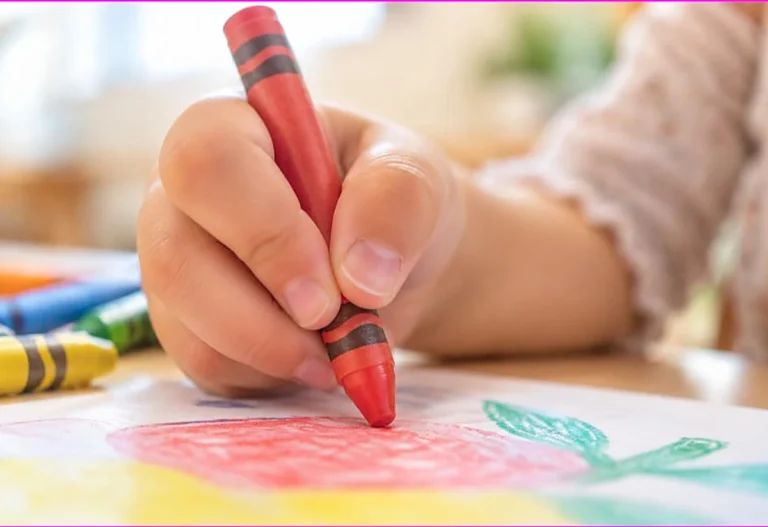
While teaching colors, coloring also builds vocabulary, as a child learns the names of the objects they color. It develops fine motor skills, as gripping and moving the crayon strengthens the hands. It builds focus and hand and eye coordination. And it introduces early concepts like shapes and counting, if you weave these into the activity.
So coloring is a rich early learning tool, teaching colors alongside many other skills. Naming objects, counting things on the page, talking about shapes, and describing what is happening all add learning to the coloring. This makes coloring a valuable, multi purpose activity for a toddler’s development.
The beauty of it is that all this learning happens through play, with no formal lessons. A toddler simply enjoys coloring while absorbing colors, words, and concepts, and building hand skills. Offering plenty of enjoyable, color rich coloring supports a toddler’s whole early development. Our guide on coloring and child development covers the full picture of what coloring builds.

Choosing the right pages for color learning
The pages you choose affect how well coloring teaches colors, so a little thought helps.
Pages with familiar, single objects are ideal for young toddlers learning colors. A page with one clear object, like an apple or a sun, lets you focus on naming its color and connecting it to the real thing, without the page being overwhelming. Simple, bold pages suit little hands and short attention spans, keeping the learning enjoyable.
Pages with several familiar objects work well for slightly older toddlers ready to learn more colors. A scene with a sun, grass, flowers, and a tree lets you name several colors and connect each to its object. This variety builds a range of color words in one page, while still being recognizable and engaging for a toddler.
Avoid pages that are too detailed or busy for a toddler, since these frustrate rather than teach. Big, simple, familiar pictures are best for color learning at this age. Matching the page to your toddler’s stage keeps the activity fun and effective. Our collection of free printable coloring pages for kids includes plenty of simple, familiar designs perfect for teaching colors to little ones.
Frequently asked questions about teach colors
How do I teach my toddler colors through coloring?
Name each color as your toddler uses it, match colors to familiar objects like a yellow sun, and use single color activities. Repetition and real world connections help color names stick. Keep it playful and pressure free.
At what age do toddlers learn colors?
Most toddlers begin learning color names between 18 months and 3 years, though the age varies widely. A child usually recognizes colors before naming them, and naming develops through repeated exposure and practice.
Why is coloring good for teaching colors?
Coloring gives repeated, meaningful exposure to colors as a child sees and uses them while hearing their names. This hands on, playful repetition helps color names stick far better than abstract teaching like flashcards.
Should I make my toddler color objects the right colors?
You can gently guide your toddler to color objects their real colors, which reinforces color learning, but also let them color freely. Forcing correct colors can take the joy out of coloring, so keep it light and encouraging.
What if my toddler is slow to learn colors?
Development varies widely, and some toddlers take longer than others to learn colors, which is completely normal. Offer plenty of enjoyable, color rich coloring, keep it pressure free, and the learning will come in its own time.
The takeaway on teach colors
Coloring is a natural, effective way to teach toddlers colors. Name each color as your child uses it, connect colors to familiar objects, use single color activities, and turn it into games, all while keeping it playful and pressure free. Repetition and real world connections help color names stick, usually by age 2 to 3. Through the simple joy of coloring, a toddler learns colors along with vocabulary, hand skills, and focus.
Ready to teach colors the fun way? Browse our free printable coloring pages for kids, full of familiar objects to color and name. Every one is free to download and print. For ready made packs, browse our educational coloring pages.