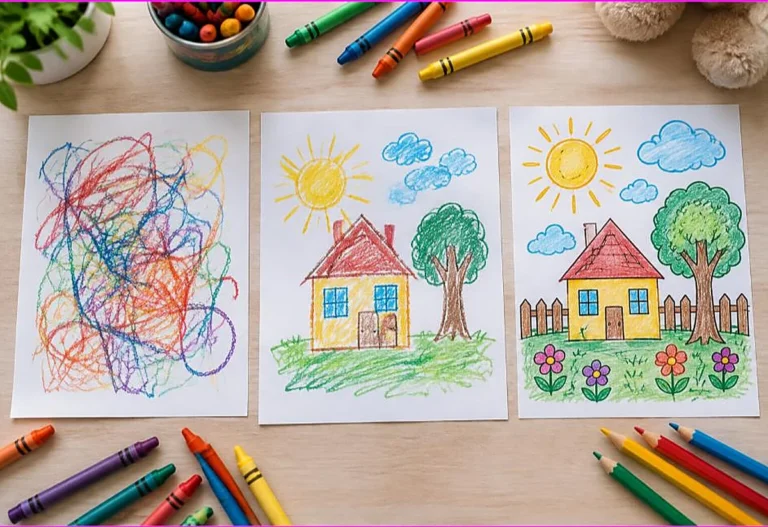
Three children drawings side by side showing coloring progress from toddler scribbles to detailed artwork, developmental milestones of coloring

Developmental Milestones of Coloring (By Age)

Quick answer Coloring develops in predictable stages: toddlers (around 12–18 months) start with random scribbles, 2–3-year-olds make controlled marks and name colors, 3–4-year-olds fill large shapes, and most children color inside the lines fairly well by about 5–6. These are general guides — every child moves at their own pace. By the TheColoringPages.net team. Reviewed…
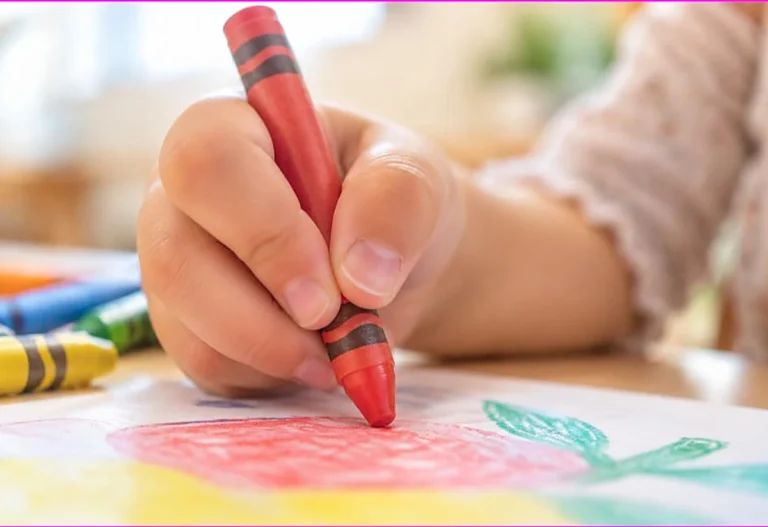
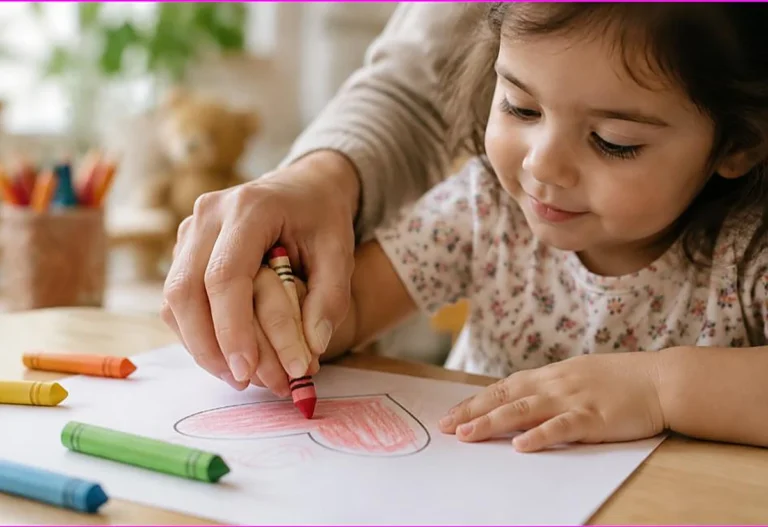
Close-up of a child correct tripod grip on a crayon while coloring, the proper way to hold a crayon

The Proper Way to Hold a Crayon (By Age)

Quick answer Young children usually start gripping a crayon in a full fist, then progress to a tripod grip — between the thumb, index, and middle fingers — around ages 3–4. Short, broken crayons actually help, because small pieces naturally force the fingertips into that correct tripod position. By the TheColoringPages.net team. Reviewed for accuracy,…

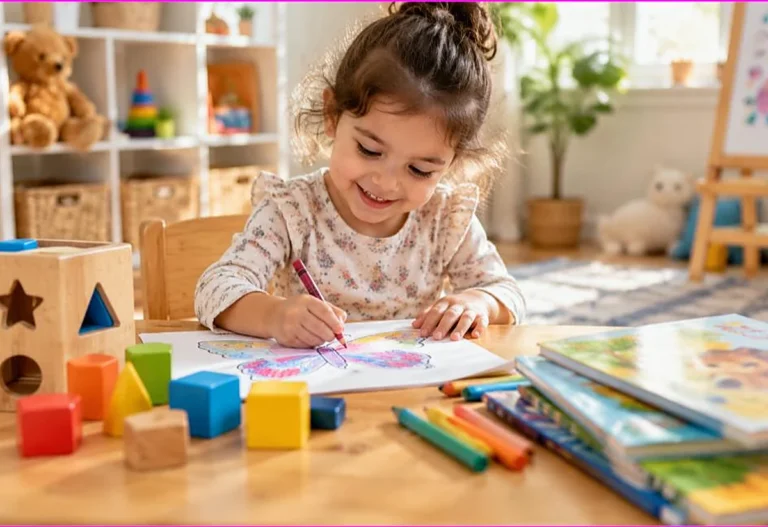
Happy child coloring among learning toys like a shape sorter, blocks and picture books, play-based learning and coloring

Play-Based Learning and Coloring: Teaching Through Fun

Quick answer Play-based learning uses enjoyable, child-led activities like coloring to build skills without pressure. Coloring teaches colors, shapes, focus, and fine-motor control while a child simply plays — which is why it’s a staple in early-years education: children learn best when they’re relaxed and having fun. By the TheColoringPages.net team. Reviewed for accuracy, September…

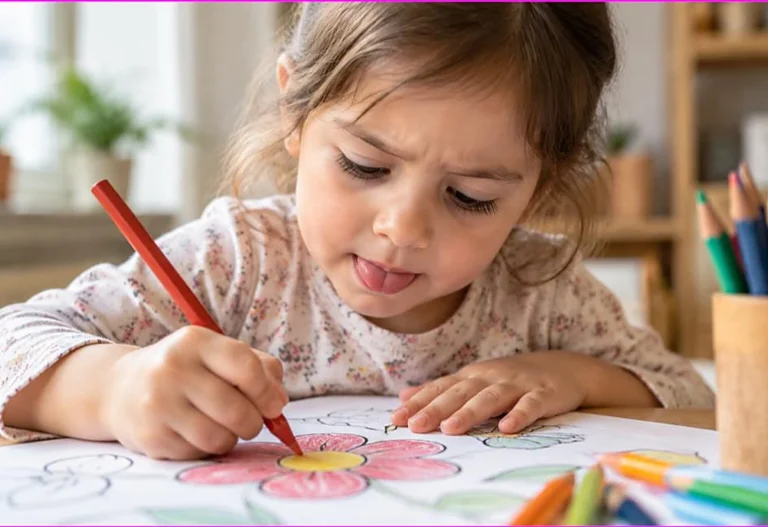
Young child deeply concentrating with tongue out while coloring a flower, coloring improves concentration and focus in kids

Does Coloring Improve Concentration and Focus in Kids?

Quick answer Coloring helps children build concentration because it’s an absorbing, single-task activity with a clear goal. Staying inside the lines and finishing a page trains sustained attention, patience, and self-regulation — skills that carry over to reading and schoolwork. Simple designs suit younger children; detailed ones stretch focus as they grow. By the TheColoringPages.net…

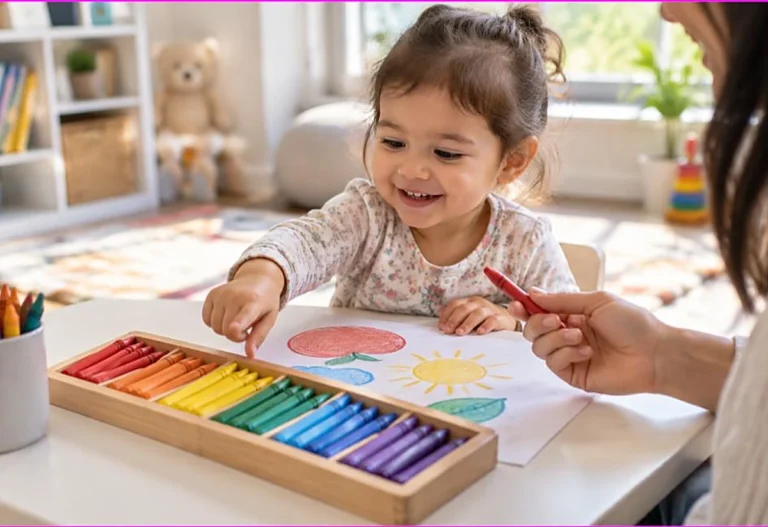
Toddler happily pointing at crayons sorted by color while a parent offers one, using coloring to teach colors to toddlers

Using Coloring to Teach Colors to Toddlers

Quick answer To teach toddlers colors through coloring, name each color out loud as you use it (“let’s color the sun yellow”), offer just two or three colors at a time to avoid overwhelm, and point out those colors in everyday objects. Repetition and simple, familiar pictures make the names stick. By the TheColoringPages.net team….

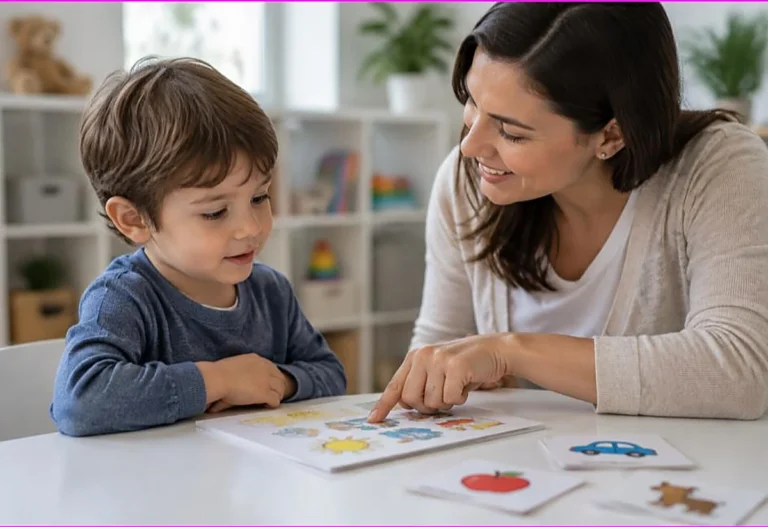
Speech therapist pointing at a colorful picture while a child names it, with picture flashcards, coloring for speech therapy and vocabulary building

Coloring for Speech Therapy and Vocabulary Building

Quick answer Coloring supports speech therapy by creating a calm, shared activity where a child naturally talks — naming colors and objects, following directions, and describing what they’re doing. Therapists use coloring pages to target vocabulary, sentence-building, and turn-taking in a low-pressure, motivating way. By the TheColoringPages.net team. Reviewed for accuracy, September 2026. This guide…

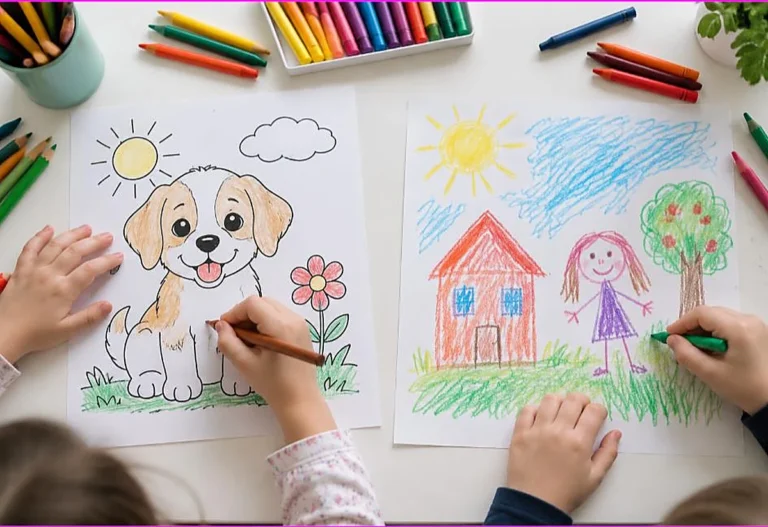
A printed coloring page being filled in beside a child freehand crayon drawing, coloring vs drawing

Coloring vs Drawing: The Difference and Which Is Better

Quick answer Coloring means filling ready-made line art with color, while drawing means creating the lines and shapes yourself. Coloring builds focus, fine-motor control, and color skills with no pressure to “get it right,” which makes it welcoming at any age; drawing adds composition and proportion. Many people use coloring as a relaxing, confidence-building step…

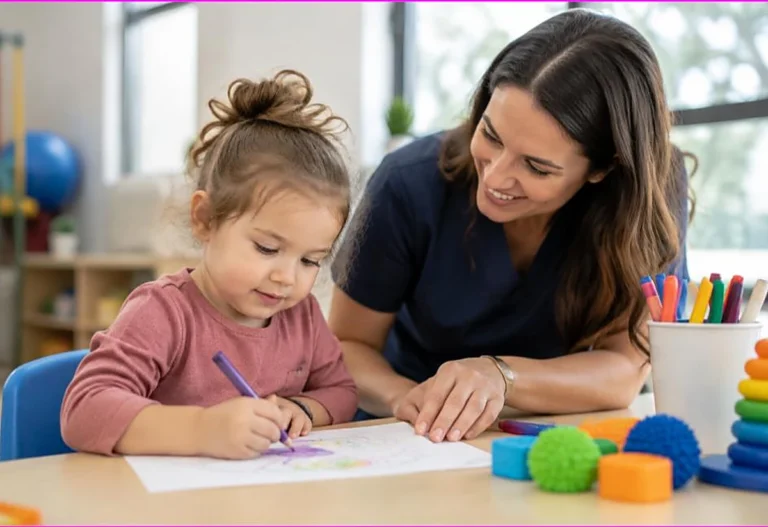
Pediatric occupational therapist encouraging a young child during a coloring activity with therapy tools nearby, coloring in occupational therapy for kids

Coloring in Occupational Therapy for Kids

Quick answer Occupational therapists use coloring to build the fine-motor and visual-motor skills children need for daily tasks and handwriting. Gripping the crayon strengthens hand muscles, staying inside the lines develops control and hand-eye coordination, and the focused activity supports attention and self-regulation. By the TheColoringPages.net team. Reviewed for accuracy, September 2026. This guide to…

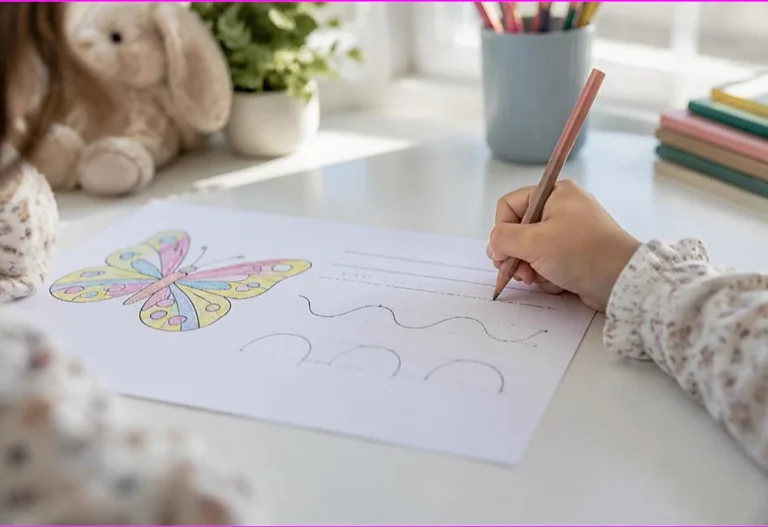
Child tracing pre-writing line and curve strokes with a pencil beside a colored butterfly, coloring and handwriting readiness

Coloring and Handwriting Readiness: The Pre-Writing Connection

Quick answer Coloring prepares children for handwriting by strengthening the same hand muscles and grip, building the control to stay within boundaries, and developing hand-eye coordination. Coloring and tracing shapes before letters gives kids the fine-motor foundation that makes forming letters much easier. By the TheColoringPages.net team. Reviewed for accuracy, September 2026. This guide to…