At What Age Can Kids Start Coloring?
Quick answer
Most children can start coloring around 12 to 18 months, once they can grasp a chunky crayon and make marks on paper. At this age it’s all scribbling — which builds grip and coordination — so choose large, washable, non-toxic crayons, simple pictures, and always supervise.
By the TheColoringPages.net team. Reviewed for accuracy, September 2026.
This guide to Start Coloring gives clear, practical answers, drawing on child development and years of hands on coloring.
Parents often wonder when their child is ready to start coloring. The answer is earlier than many expect. Long before a child can color neatly, they can grip a chunky crayon and make their first marks, and those early scribbles are valuable developmental work. Knowing when and how to start helps you introduce coloring at the right time.
This guide explains the typical age children start coloring, how to tell your child is ready, what coloring looks like at each early stage, and how to make those first sessions a success.
Quick answer: Most children start scribbling with crayons around 12 to 18 months, once they can grip a chunky crayon and make marks. Purposeful coloring develops between 2 and 3 years. Offer large crayons, big paper, and no rules at first, and keep it pressure free. Early scribbling builds the hand skills that later coloring and writing need.

The typical starting age
Children are usually ready to start making marks earlier than parents realize.
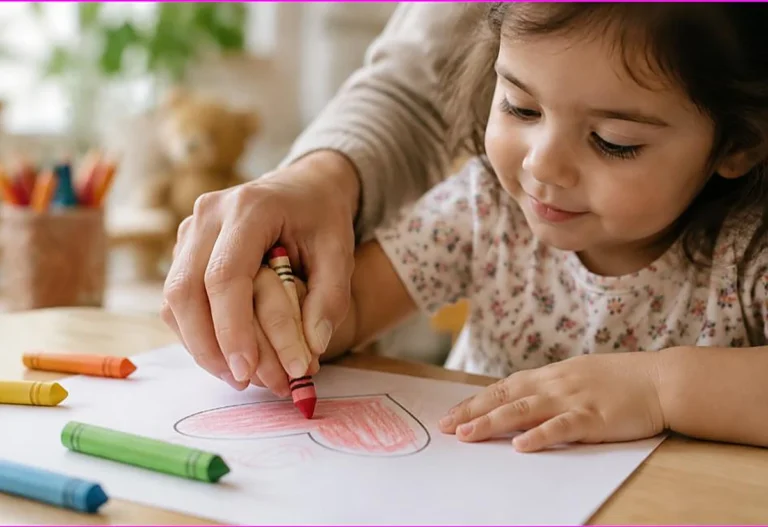
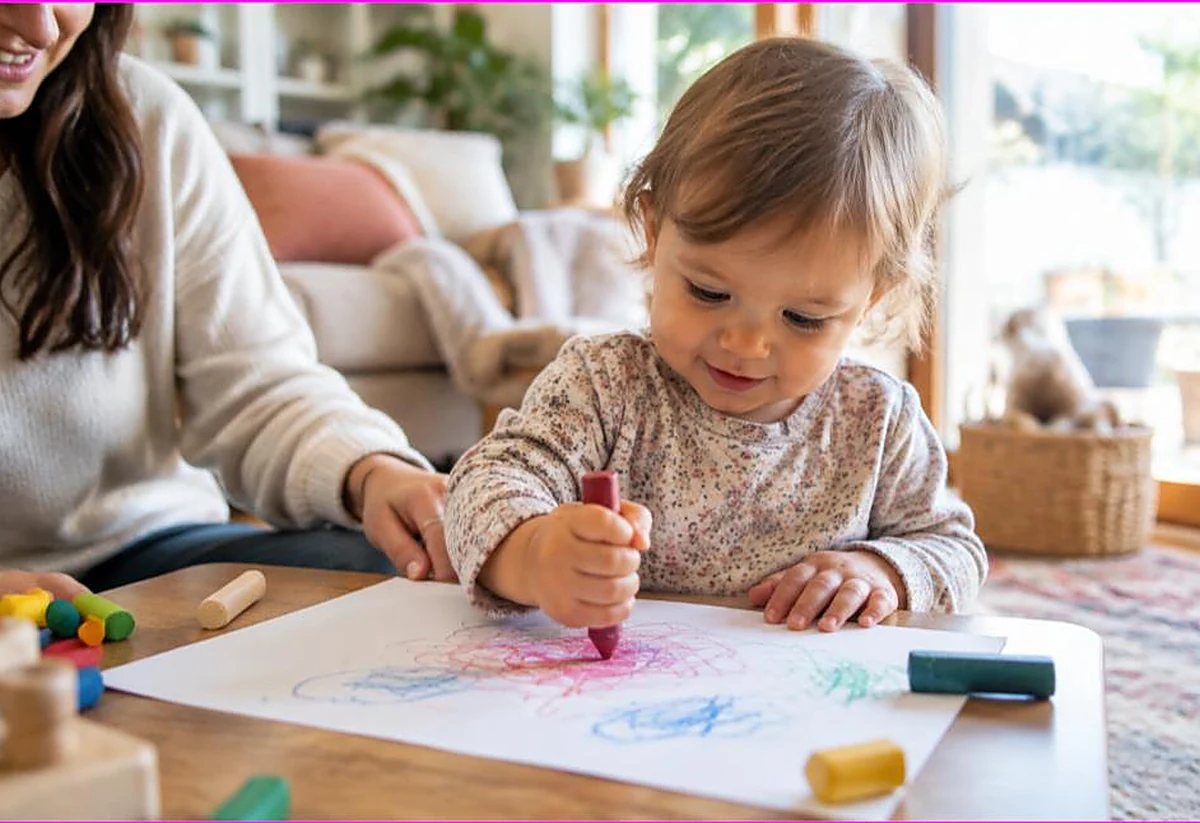
Most children can begin scribbling with crayons around 12 to 18 months. At this age, a child can grasp a chunky crayon in their fist and has learned that moving it makes color appear. Their marks are random, made with whole arm movements, but they are genuine first steps into coloring. Some children start a little earlier, around 12 months, and others a little later, which is all normal.
This early scribbling is not lesser coloring. It is the foundation. It builds the hand strength, coordination, and cause and effect understanding that everything later is built on. So when a toddler grabs a crayon and scribbles, they are right on track, and there is no need to wait for them to be older or more capable before starting.
The key is to start with the right tools and expectations. Chunky, washable crayons and large paper suit this age, and scribbles, not neat coloring, are exactly what to expect. Our guide on the best crayons for toddlers covers the right first crayons.
Signs your toddler is ready
A few signs tell you a child is ready to start coloring.
The first is the ability to grasp and hold a chunky crayon. If your child can pick up and hold a thick crayon in their fist, they have the grip to start. The second is interest, showing curiosity about crayons, markers, or your writing, and wanting to hold and use them. A child who reaches for a crayon is telling you they are ready.
The third is understanding cause and effect, grasping that their action makes something happen. Around this age, children delight in discovering that moving the crayon makes marks appear, which motivates them to keep going. The fourth is the ability to sit, with support, for a few minutes of an activity.
You do not need to wait for all of these to be perfect. If your child can hold a crayon and shows interest, it is worth offering coloring. Keep the first sessions short and relaxed, and follow their lead. Our guide on coloring for toddlers covers getting started.
What coloring looks like at each age
Coloring changes a lot in the early years, so knowing what to expect at each age helps.
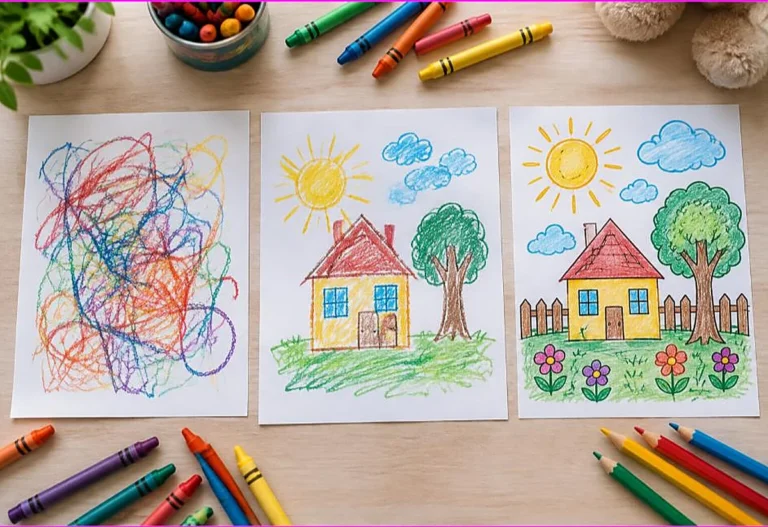
Around 12 to 18 months, expect random scribbling. Marks go anywhere, made with the whole arm and a fisted grip. There is no control, and that is right. Around 2 years, scribbling becomes more controlled, with purposeful back and forth and circular marks as the child gains some control over the crayon.
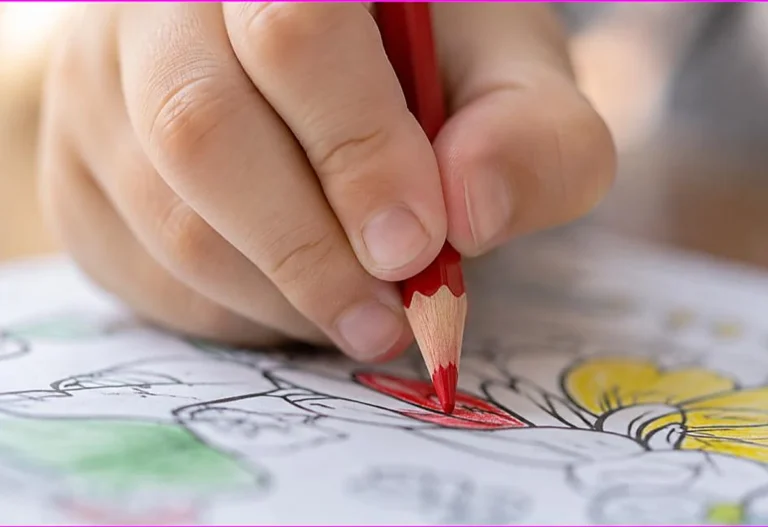
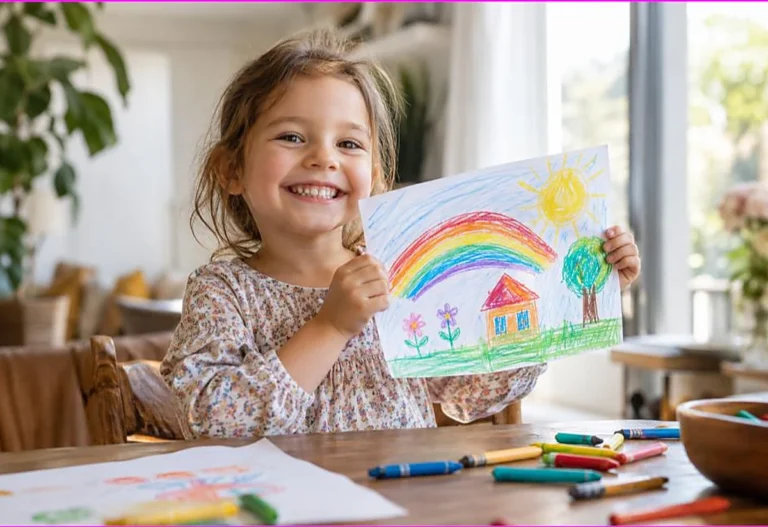
Around 3 years, children begin filling shapes and may name what they have made, though coloring is still loose and goes well outside any lines. Around 4 years, they color with more intent, staying roughly within a large area and choosing colors on purpose. By 5 to 6 years, most can color inside the lines.
Knowing this sequence helps you set fair expectations and avoid frustration. A two year old who scribbles wildly is doing exactly the right thing, and a four year old who colors roughly is too. Our guide on coloring and child development covers the full sequence of stages.

Best first crayons and paper
The right tools make a child’s first coloring a success rather than a frustration.
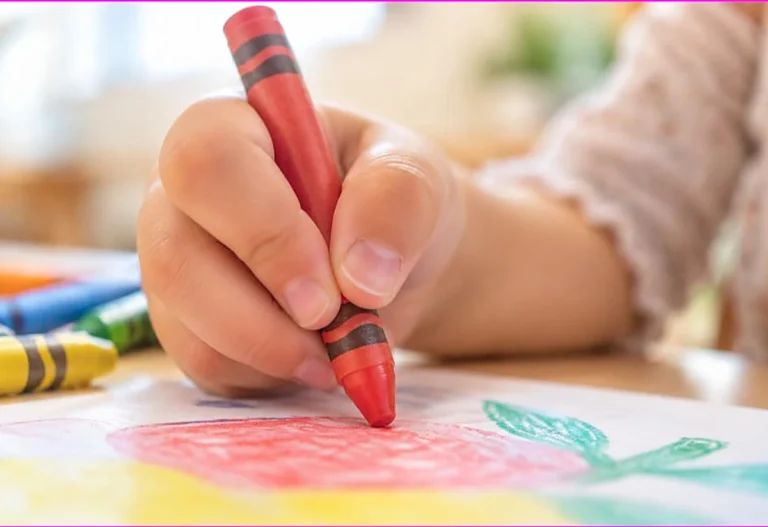
Choose chunky, washable crayons for the youngest children. Thick crayons are easy for a small fist to grip, and washable ones save you from scrubbing walls and clothes. Egg or ball shaped crayons suit the very youngest, who use a palm grip, while jumbo stick crayons suit slightly older toddlers. Our guide on the best crayons for toddlers covers the options.
For paper, use large, plain sheets or simple pages with big shapes. Toddlers make big marks, so they need room, and detailed pages only frustrate them. Big, simple pictures let a child fill space and feel successful. Our collection of free printable coloring pages includes simple designs for little ones.
Keep the tools safe and the setup easy. Non toxic, certified crayons matter at this age, since toddlers mouth everything, and a wipeable surface makes the inevitable mess manageable. With the right crayons, paper, and setup, a child’s first coloring is a happy, successful experience.
Keeping it pressure-free
How you approach these first sessions shapes whether a child comes to love coloring.
At this age, the goal is enjoyment and exploration, not a finished picture or neat coloring. Let your child scribble freely, use any colors, and color however they like. There is no wrong way to color for a toddler, and correcting them only takes the joy out of it. Praise the effort and the colors, not the result.
Keep sessions short, since toddlers have brief attention spans. A few minutes is plenty, and it is fine to stop when your child loses interest. Coloring should feel fun, not like a task, so follow your child’s lead and end on a happy note.
This relaxed, pressure free approach is what builds a lasting love of coloring. A child who enjoys those first sessions returns to coloring willingly, which is how all the developmental benefits build. Start gently, celebrate the scribbles, and let your child discover the joy of making color appear. Our guide on the benefits of coloring for kids covers what those sessions build.
Common first-coloring challenges
A few challenges come up when a child first starts coloring, and each is easy to handle.
Coloring on everything is common. Toddlers do not know that crayons are only for paper, so they may color on walls, furniture, and themselves. Washable crayons help, supervision helps, and gently redirecting to paper teaches the rule over time. This is normal and passes as the child learns.
Eating or mouthing crayons happens too, since toddlers explore with their mouths. Non toxic, certified crayons make this safe, though you should still supervise and gently discourage it. A short attention span means sessions are brief, which is fine, simply follow the child’s interest and stop when they are done.
Frustration can arise if a child cannot make the crayon do what they want. Keep the activity free of goals, so there is nothing to fail at, and offer easy chunky crayons that color with little pressure. With patience and the right tools, these early challenges pass, and coloring becomes a smooth, happy activity. Every one of these hurdles is a normal part of a toddler learning to color, and none of them should discourage you from starting early.
Why early scribbling matters
It is worth understanding why those first messy scribbles are so valuable, since it changes how you view them.
Scribbling builds the physical foundation for coloring and writing. Every scribble strengthens the small muscles in the hand and improves control, laying the groundwork for the finer movements that come later. Without this early practice, a child would not have the hand strength and coordination for controlled coloring and, eventually, handwriting.
Scribbling also teaches cause and effect, a key early learning concept. A toddler discovers that their action, moving the crayon, produces a result, the marks on the page. This delightful discovery motivates them to keep exploring and builds an understanding of how their actions affect the world. It is genuine learning wrapped in play.
Finally, scribbling is a first form of self expression and creativity. Even without control, a child is making choices and creating something of their own, which builds confidence. So when you see a page of toddler scribbles, you are seeing real developmental work. Encouraging it, rather than wishing for neatness, supports your child exactly as they need. Our guide on coloring and child development covers the stages that follow.

How coloring grows with your child
Introducing coloring early sets up a activity that grows richer as your child does.
The coloring you start with a scribbling toddler becomes controlled coloring in the preschool years, then detailed coloring inside the lines at school age. Because you started early, your child builds each stage on the last, developing steadily. The simple crayon and paper you begin with expands into a wider range of tools and more detailed pages over time.
This long arc is part of why starting early matters. A child who colors from toddlerhood has years of practice building their hand skills, focus, and confidence before school. Coloring becomes a familiar, enjoyable activity they return to at every age, each time gaining a little more.
So the coloring you introduce to your one year old is the start of a long, rewarding journey. Offer the right tools and encouragement at each stage, and coloring supports your child’s development for years. Our collection of free printable coloring pages for kids grows with your child, from simple toddler pages to detailed designs for older children.
Frequently asked questions about start coloring
What age can a child start coloring?
Most children start scribbling with crayons around 12 to 18 months, once they can grip a chunky crayon and make marks. Purposeful coloring develops between 2 and 3 years. Early scribbling is valuable developmental work.
Is my toddler ready to start coloring?
If your child can hold a chunky crayon, shows interest in crayons or writing, and understands that moving the crayon makes marks, they are ready. Start with short, relaxed sessions and follow their lead.
What should a toddler’s first coloring look like?
Expect random scribbling at first, made with the whole arm and a fisted grip, with no control over where marks go. This is exactly right for the age and builds the hand skills for later coloring and writing.
What crayons are best for a child starting to color?
Chunky, washable, non toxic crayons are best. Egg or ball shaped crayons suit the youngest, who use a palm grip, and jumbo stick crayons suit slightly older toddlers. Large, simple pages suit their big marks.
Should I teach my toddler to color in the lines?
No. Coloring inside the lines develops around 5 to 6 years. For a toddler, let them scribble freely and color however they like. The goal is enjoyment and grip building, not neatness, which comes much later.
The takeaway on start coloring
Most children can start coloring around 12 to 18 months, once they can grip a chunky crayon and make marks. Those first scribbles are valuable developmental work, building the hand skills for later coloring and writing. Offer chunky washable crayons, big simple pages, and no rules, keep sessions short and pressure free, and celebrate the scribbles. Start gently, and let your child discover the joy of coloring. There is no need to rush or to wait, since offering coloring around the first birthday, with the right tools and a relaxed attitude, gives your child a head start on the hand skills and focus that will serve them for years to come.
Ready to start your little one coloring? Browse our free printable coloring pages, including simple designs for little hands. Every one is free to download and print. For ready made packs, browse our educational coloring pages.