Benefits of Coloring for Seniors (A Simple Activity With Real Value)
Quick answer
For seniors, coloring offers relaxation plus gentle exercise for the hands and mind: it keeps fine-motor skills and hand-eye coordination active, encourages focus, and provides a calming, screen-free hobby. It’s low-cost, social in groups, and easy to adapt with larger print and bold outlines.
By the TheColoringPages.net team. Reviewed for accuracy, September 2026.
This guide to Coloring for Seniors gives clear, practical answers, drawing on cognitive reserve and years of hands on coloring.
Coloring is often seen as a children’s activity, but it suits older adults just as well. For seniors, it keeps the mind active, the hands nimble, and the mood steady, all through something calm and enjoyable. It asks for no special skill and can be shared or done alone.
This guide explains what coloring offers older adults, how to choose pages and supplies that suit aging hands and eyes, and why so many care homes and families keep coloring within reach. Whether the person is fully active or living with health changes, there is a way to make coloring comfortable and rewarding for them.
Quick answer: Coloring helps seniors stay mentally engaged, supports fine motor skills and hand strength, reduces stress, and offers a calming, sociable activity. It gives a sense of accomplishment and works well for older adults of all ability levels. Larger designs with bold outlines and easy grip supplies make it most comfortable.

Keeping the mind engaged
An active mind ages better, and coloring gives older adults a gentle way to stay engaged.
Coloring asks the brain to make small, steady decisions: which color to use, where to start, how to fill a shape. This light mental activity keeps the mind working without pressure or frustration. It is absorbing enough to hold attention, yet calm enough to feel restful, which is a rare and useful balance for older adults.
Finishing a page also gives a clear sense of accomplishment. For a senior whose days may feel less full than before, completing something and seeing the result matters. It offers purpose in a small, achievable form, and that lift in mood and motivation is a real benefit.
Coloring is not a brain training program and does not claim to prevent cognitive decline. What it offers is genuine, enjoyable engagement, the kind that makes a day feel a little richer.
Supporting hand strength and dexterity
Hand strength and fine control naturally fade with age, and coloring gives them regular, gentle exercise.
Gripping a pencil and guiding it across a page works the small muscles of the hand and fingers. This helps maintain dexterity and control, which matter for everyday tasks like buttoning clothes, writing, and handling small objects. Coloring provides this practice in a pleasant form rather than a clinical exercise.
For seniors with arthritis or reduced grip, easy grip pencils and markers make coloring comfortable. Thicker barrels are easier to hold, and softer cores need less pressure. Choosing the right supplies keeps the activity accessible rather than tiring, which we cover further below.
The gentle, repeated motion of coloring is well suited to older hands. It never demands force or speed, so it exercises without strain, which is exactly what aging hands benefit from.
Reducing stress and lifting mood
Coloring calms older adults just as it calms anyone, and the effect is valuable at this stage of life.
The steady, absorbing motion of coloring settles the mind and eases tension. For seniors managing loneliness, worry, or the frustrations that can come with aging, a quiet coloring session offers a soothing escape. It gives the mind a pleasant place to rest.
Completing a colorful page also brings a small sense of joy and pride. Bright colors lift the spirits, and the finished piece can be displayed or shared, which adds to the good feeling. This gentle boost to mood is one of the simplest gifts coloring offers older adults. Our guide on the wider benefits of coloring covers the calming effect across ages.
A calming, social activity
Coloring works alone, but it shines as a shared activity, which matters for older adults at risk of isolation.
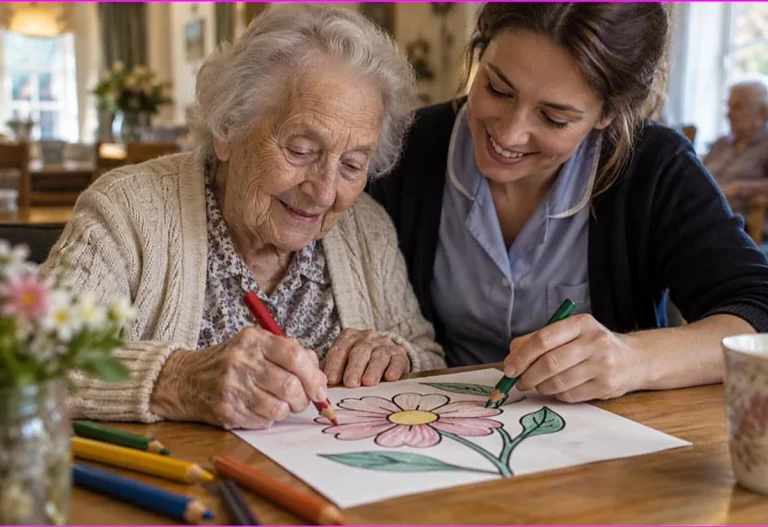
Coloring together, whether with family, friends, or a group at a care home, turns a quiet pastime into a sociable one. People color side by side, chat, and share their finished pages. This connection is as valuable as the coloring itself, since companionship supports wellbeing in later life.
Group coloring sessions are popular in senior centers and care homes for this reason. They are easy to run, need little setup, and bring people together around a calm, shared task. For a family, sitting down to color with an older relative can be a gentle, pressure free way to spend time together, with no need for conversation to carry the whole visit.

Choosing the right pages for seniors
The right page makes coloring comfortable and enjoyable, while the wrong one makes it frustrating.
Choose designs with larger shapes and bold, clear outlines. Big areas are easier to see and fill, and strong lines are simple to follow, which suits aging eyes and hands. Avoid tiny, intricate patterns that demand fine precision, since these can strain the eyes and tire the hands quickly.
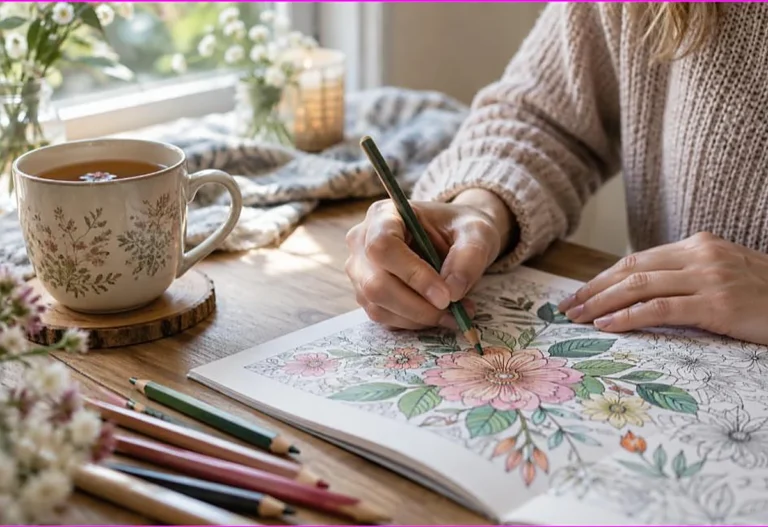
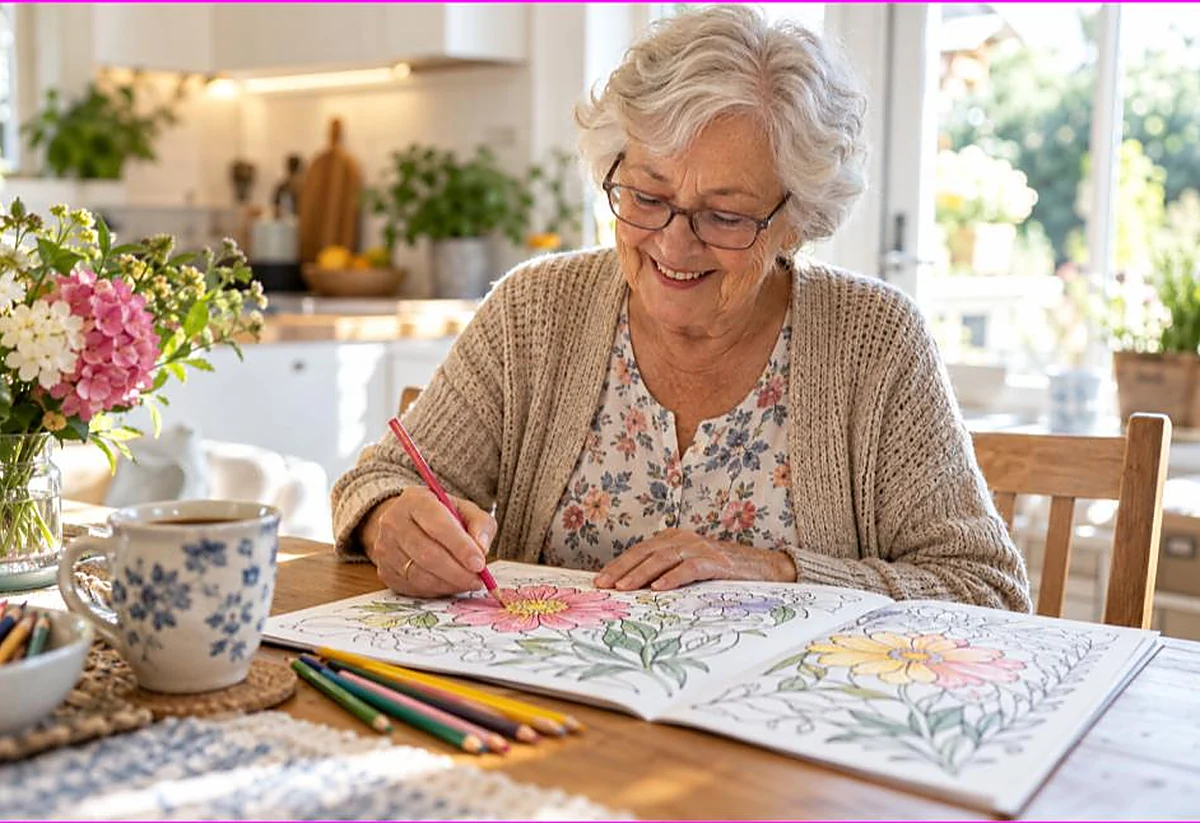
Pick subjects the person enjoys. Familiar and pleasant themes, such as flowers, gardens, landscapes, animals, or nostalgic scenes, are more engaging than random pictures. For someone who once had a hobby or a favorite place, a page reflecting it adds meaning.
Print pages at a comfortable size, and consider slightly larger paper if it helps. Our guide on how to resize a coloring page shows how to enlarge a design for easier coloring.
Best supplies for older hands
The right tools remove the barriers that can make coloring hard for seniors.
Easy grip or thicker barreled colored pencils and markers are kinder to hands with reduced strength or arthritis. They need less pinching pressure and are simpler to control. Markers can be a good choice too, since they lay down color with almost no pressure, which helps weaker hands.
Choose supplies with soft, vivid cores that color smoothly, so little effort produces bright results. This makes the activity satisfying rather than laborious. Good lighting matters as well, so set up coloring near a window or a bright lamp to reduce eye strain.
Keep the setup simple and comfortable: a firm surface at a good height, a supportive chair, and supplies within easy reach. Small adjustments like these make the difference between coloring feeling like a pleasure or a chore.
Coloring for seniors with memory loss
For older adults living with dementia or memory loss, coloring can be especially soothing, with a few adjustments.
Simple designs with bold outlines work best, since they are easy to follow and less likely to overwhelm. The familiar, repetitive motion of coloring can calm restlessness and provide comfort. It also offers a way to express oneself when words become difficult.
The focus should be on the calm and enjoyment of the activity, not the finished result. There is no right or wrong way to color, and that freedom is part of what makes it soothing. Our guide on coloring for dementia patients covers this group in detail, with guidance for caregivers.
Approached gently, coloring gives people with memory loss a peaceful, achievable activity that meets them where they are.
Making coloring part of a senior’s routine
Coloring gives the most benefit when it becomes a regular, easy part of the day rather than a rare event.
Tie it to a time that already exists in the routine, such as after breakfast or in the quiet of the afternoon. A regular slot gives structure to the day, which many older adults value, and it means the person can look forward to it. Keep supplies in a set place within easy reach, so coloring can begin without hunting for pencils or pages.
Variety keeps it fresh. Rotate through different themes and subjects so the activity does not grow stale, and let the person choose the page when they can. Choice adds a welcome sense of control. A small folder of printed pages, refreshed now and then, is enough to keep interest alive over weeks and months.
Above all, keep it relaxed and free of pressure. There is no target to hit and no page that must be finished. Treating coloring as a pleasant pastime, not a task, is what makes an older adult want to return to it. Our collection of free printable coloring pages gives plenty of subjects to rotate through.

Displaying and sharing finished pages
The finished page is part of the reward, so do something with it rather than setting it aside.
Displaying a completed page gives an older adult a real sense of pride and accomplishment. Pin favorites to a board, frame a special one, or arrange a few on a wall. Seeing their own colorful work brightens a room and reminds them of a pleasant afternoon spent creating it.
Sharing pages adds meaning too. A colored page makes a warm, personal card or gift for family, and children and grandchildren often treasure a piece made by an older relative. Mailing a colored page to a distant family member turns the activity into a way of staying connected.
These small acts, displaying and sharing, close the loop on the activity. They turn a quiet pastime into something that produces pride, connection, and a brighter space, which multiplies its value for the person.
Coloring for different ability levels
Older adults have a wide range of abilities, and coloring adapts to nearly all of them.
For active, capable seniors, more detailed designs offer an engaging challenge and a satisfying result. For those with reduced vision, arthritis, or lower energy, simpler pages with large shapes and bold lines keep the activity comfortable and rewarding. The same activity flexes to fit the person, which is part of why it suits such a broad group.
Adjust the setup to match ability too. Larger printed pages, thicker easy grip tools, and good lighting make coloring accessible for those who need it. For someone with more energy and steady hands, a normal page and standard pencils are fine. Meeting each person at their level keeps coloring a pleasure rather than a struggle.
The goal is always comfort and enjoyment. Whatever a person’s ability, there is a version of coloring that fits, and finding it lets everyone share in the calm and satisfaction the activity brings.
Frequently asked questions about coloring for seniors
Is coloring good for the elderly?
Yes. Coloring keeps the mind engaged, supports hand strength and dexterity, reduces stress, and offers a calming, social activity. It gives older adults a sense of accomplishment through something enjoyable and low pressure.
What kind of coloring pages are best for seniors?
Pages with larger shapes and bold, clear outlines are best, since they suit aging eyes and hands. Familiar, pleasant themes like flowers, landscapes, and animals are more engaging than random designs.
What coloring supplies suit older adults?
Easy grip or thicker pencils and markers are kinder to hands with reduced strength or arthritis. Choose supplies with soft, vivid cores that color smoothly with little pressure, and set up good lighting.
Can coloring help seniors with dementia?
Coloring can soothe and engage people with dementia, offering a calm, familiar activity that reduces restlessness. Use simple, bold designs and focus on enjoyment rather than the finished result.
Is coloring a good activity for care homes?
Yes. Group coloring is easy to run, needs little setup, and brings people together around a calm, shared task. It supports both wellbeing and social connection for residents.
The takeaway on coloring for seniors
Coloring gives older adults a calm, engaging activity that keeps the mind active, the hands working, and the mood lifted, whether done alone or shared. Choose larger, bold designs and easy grip supplies, and it becomes a comfortable pleasure rather than a strain. Make it a regular, relaxed part of the day, display or share the finished pages, and adapt it to each person’s ability, and coloring becomes a small but genuine source of purpose and joy in later life.
Ready to share coloring with an older adult in your life? Browse our free printable coloring pages and pick a bold, friendly design. Every one is free to download and print.