Coloring for Dementia Patients: Does It Help?
Quick answer
Coloring can benefit people with dementia by offering a calming, familiar activity that doesn’t rely on memory or “getting it right.” It can ease agitation, encourage focus, and give a gentle sense of accomplishment. Choose simple, larger designs with bold lines, and treat it as relaxed, in-the-moment enjoyment rather than a task.
By the TheColoringPages.net team. Reviewed for accuracy, September 2026.
This guide to Coloring for Dementia gives clear, practical answers, drawing on dementia care and years of hands on coloring.
When a loved one lives with dementia, caregivers look for calm, meaningful activities that meet them where they are. Coloring often comes up, and for good reason. It is gentle, familiar, and free of pressure, and many families and care homes find it soothing for people with memory loss. It is not a treatment, but it can make a difficult day a little easier.
This guide explains how coloring can help people with dementia, how to choose the right pages and supplies, and how caregivers can offer it in a way that comforts rather than frustrates.
Quick answer: Coloring can benefit people with dementia by offering a calming, low pressure activity that supports focus, reduces agitation, and encourages self expression when words are hard. Simple designs with bold outlines work best. It is a supportive activity, not a medical treatment, and the focus should be on enjoyment, not the result.

How coloring supports people with dementia
Dementia changes how a person thinks, remembers, and communicates. Coloring offers something that still feels accessible through those changes.
Coloring is a simple, repetitive activity that does not rely heavily on memory or language, which are often affected by dementia. A person can pick up a pencil and fill a shape in the moment, without needing to recall instructions or plan ahead. This makes it one of the few activities that can remain achievable and enjoyable as the condition progresses.
The activity also provides gentle stimulation and focus. Engaging with colors and shapes gives the mind a pleasant task, which can hold attention and provide a sense of doing something purposeful. For a person who may feel confused or unoccupied, that focus is calming.
Coloring is not claimed to slow or treat dementia. What it offers is comfort, engagement, and a peaceful way to spend time, which are meaningful goals in dementia care.
Calming agitation and restlessness
Agitation and restlessness are common in dementia, and calming activities can help ease them.
The steady, repetitive motion of coloring has a soothing quality. Filling in a design gives restless hands something gentle to do and shifts attention toward a calm, absorbing task. Many caregivers find that offering a coloring page during an anxious or agitated moment can help settle their loved one.
This works best as a redirection rather than a demand. Gently placing pencils and a simple page nearby, and perhaps starting to color yourself, invites the person to join without pressure. The goal is to offer a calming option, not to insist on an activity, which could add stress.
The calming effect is gentle and not guaranteed on every occasion, since dementia varies day to day. But as a low risk, comforting option, coloring is well worth having on hand.
A way to express when words are hard
As dementia progresses, words can become difficult, and coloring offers another way to engage and express.
Choosing colors and filling a page is a form of self expression that needs no speech. A person can make choices, create something, and take quiet pride in it without having to find words. This can be deeply valuable when verbal communication grows frustrating for them.
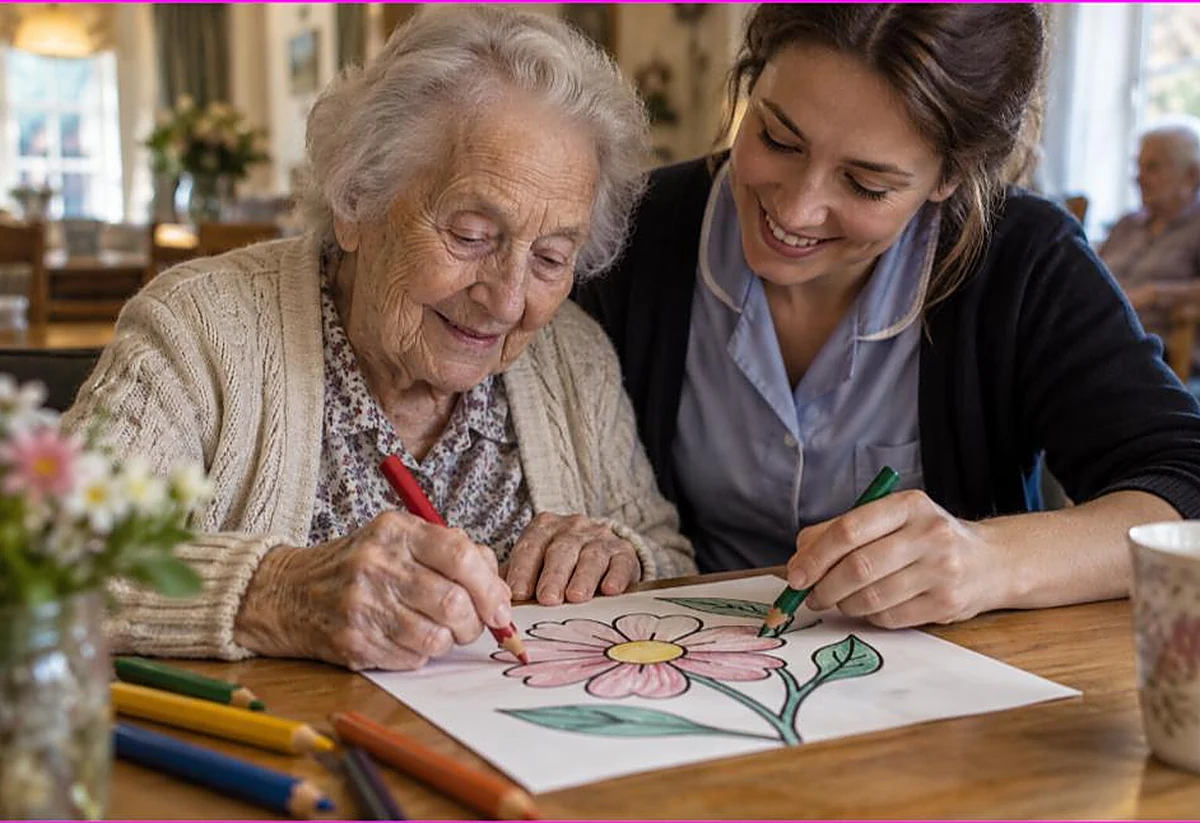
Coloring together also creates a gentle way to connect. A caregiver and their loved one can sit and color side by side, sharing the calm without needing conversation to fill the time. This shared, wordless activity can ease the pressure that visits sometimes carry, and simply being together over a peaceful task can mean a great deal.
Choosing the right pages
The right page makes coloring comforting rather than confusing, so choose with care.
Use simple designs with large shapes and bold, clear outlines. Complex or busy pages can overwhelm someone with dementia, while simple ones are easy to follow and less likely to cause frustration. Big areas to fill suit reduced fine motor control and aging eyes.
Familiar and pleasant subjects work best. Images connected to a person’s past, such as gardens, flowers, animals, or scenes from a hobby or place they loved, can spark recognition and gentle enjoyment. Avoid childish designs, which can feel demeaning to an adult, and instead choose simple but age appropriate images.
Our guide on how to resize a coloring page shows how to enlarge a design so shapes are bigger and easier to fill, which helps many people with dementia.

Best supplies to use
Supplies should be easy to hold, safe, and forgiving, so the activity stays comfortable.
Easy grip, chunky colored pencils or markers suit hands with reduced strength and control. Markers are a good option because they lay down color with almost no pressure, which helps when grip is weak. Washable, non toxic supplies are wise, since safety matters if a person is confused about how to use them.
Keep the choice of colors manageable. A large box can overwhelm, so offering a smaller selection of colors can make choosing easier and less stressful. Good lighting and a comfortable, stable seating setup complete a calm coloring space.
The aim is to remove every barrier, so the person can simply pick up a color and enjoy the motion, without struggling with the tools.
Tips for caregivers
How you offer coloring matters as much as the materials, so a gentle approach helps.
Sit with the person and color alongside them, rather than instructing. Modeling the activity invites them in and makes it feel shared rather than tested. Offer encouragement and warmth, and never correct their choices, since there is no wrong way to color.
Focus entirely on enjoyment and calm, not on finishing or on how the page looks. If the person only colors a little, or in an unexpected way, that is completely fine. The value is in the peaceful, engaged moment, not the outcome.
Watch their response and follow their lead. On some days coloring will soothe and engage, on others it may not appeal, and both are normal. Offer it as one gentle option among several, and let the person’s mood guide whether it is the right activity today.
When coloring may not be the right fit
Coloring helps many people with dementia, but not everyone, and it is worth recognizing that.
Some people may find coloring frustrating or of no interest, particularly if it was never something they enjoyed, or if the condition has advanced to a point where handling supplies is difficult. If it causes frustration rather than calm, gently set it aside and try something else.
Other soothing activities, such as listening to familiar music, handling textured objects, looking through photos, or simple sorting tasks, may suit some people better. Coloring is one tool among many in dementia care, valuable when it fits and easily swapped when it does not.
The guiding principle is comfort. Whatever brings the person calm and gentle engagement is the right choice, and coloring is one good option to have ready.
Fitting coloring into daily care
Coloring works best in dementia care when it fits gently into the rhythm of the day.
Offer it at calm times when the person is rested and settled, rather than when they are already tired or agitated beyond soothing. For some people, a coloring session at the same time each day adds a comforting sense of routine. Watch for the moments when the person seems open to a quiet activity, and offer coloring then.
Keep sessions short and follow the person’s energy. A few minutes may be plenty, and there is no need to complete a page. Ending while the person is still content, rather than pushing until they tire, leaves the experience positive and makes them more likely to enjoy it again.
Have the materials ready so coloring can begin the moment it suits. A prepared tray with a simple page and a few easy grip pencils means you can offer the activity without a fuss, which matters when a calm moment may be brief. Our collection of free printable coloring pages offers simple, clear designs to keep on hand.

Coloring alongside other soothing activities
Coloring is one of several calming activities in dementia care, and it works well beside others.
On days when coloring appeals, it offers focus and calm. On days when it does not, other gentle activities can serve the same purpose. Familiar music, looking through photo albums, handling soft or textured objects, gentle folding or sorting, and time in a garden all provide comfort and engagement in different ways.
Rotating among these keeps care varied and lets you meet the person where they are each day. Some people respond more to music, others to touch, others to the visual calm of coloring. Offering a small range means there is usually something that fits the moment.
Coloring’s strengths are its simplicity, its visual reward, and the wordless expression it allows. Kept as one option among several, it earns a steady place in a gentle, person centered approach to care.
Adapting as the condition changes
Dementia changes over time, and the way you offer coloring can change with it.
In earlier stages, a person may enjoy more detailed pages and color much as they always did, taking pride in the finished result. As the condition progresses, simpler pages with large, bold shapes become more suitable, and the focus shifts fully to the calming motion rather than any outcome. Adjusting the pages to match the person’s current ability keeps the activity achievable and free of frustration.
The tools may need to change too. A person who once used pencils comfortably may later do better with chunky, easy grip markers that need little pressure. Watching how the person manages, and simplifying when needed, keeps coloring within reach for as long as it brings comfort.
Throughout every stage, the guiding aim stays the same: a calm, pleasant, pressure free moment. By meeting the person where they are and adjusting gently over time, coloring can remain a soothing part of care well into the journey. Our guide on the benefits of coloring for seniors covers the wider group of older adults.
Frequently asked questions about coloring for dementia
Does coloring help dementia patients?
Coloring can offer people with dementia a calming, familiar activity that reduces agitation, provides gentle focus, and allows self expression without words. It is a supportive activity, not a treatment for dementia.
What coloring pages are best for someone with dementia?
Simple designs with large shapes and bold outlines work best, since they are easy to follow and not overwhelming. Choose familiar, age appropriate themes like flowers, gardens, or animals rather than childish images.
What supplies should a person with dementia use?
Easy grip, chunky pencils or markers are comfortable for reduced hand strength. Markers help because they need little pressure. Use washable, non toxic supplies and offer a smaller, manageable selection of colors.
How should a caregiver introduce coloring?
Sit and color alongside the person rather than instructing, offer warmth and encouragement, and never correct their choices. Focus on calm and enjoyment, not on finishing or how the page looks.
What if coloring frustrates them?
If coloring causes frustration rather than calm, gently set it aside and try another soothing activity, such as music, textured objects, or photos. Coloring is one option among many, and comfort is what matters.
The takeaway on coloring for dementia
Coloring can be a gentle, comforting activity for people with dementia, offering calm, focus, and a wordless way to express and connect. Use simple, bold, familiar designs and easy grip supplies, keep the mood pressure free, and follow the person’s lead. It is a supportive tool, not a cure, and its value lies in the peaceful moments it creates.
This is a sensitive topic. Coloring supports comfort and engagement but does not treat dementia. For care guidance, speak with the person’s doctor or a dementia care specialist.
Ready to try a calming page with your loved one? Browse our free printable coloring pages and choose a simple, familiar design.