Mindful Coloring: A Beginner’s Guide to Calm
Quick answer
Mindful coloring means coloring slowly and with full attention — noticing the colors, the strokes, and your breathing — rather than rushing to finish. Treating it as a meditation, with no goal of a “perfect” result, is what makes it calming; repetitive designs like mandalas and patterns work especially well.
By the TheColoringPages.net team. Reviewed for accuracy, September 2026.
This guide to Mindful Coloring gives clear, practical answers, drawing on mindfulness and years of hands on coloring.
You can color to pass the time, or you can color to feel calmer. The difference is not the page. It is how you approach it. Mindful coloring turns an ordinary coloring session into a short, restful practice that quiets the mind, and it takes no special skill to start.
This guide explains what mindful coloring is, how it differs from coloring on autopilot, and how to do a simple ten minute practice that leaves you settled. It also covers the best designs to choose, how to bring your breath into the practice, and the small mistakes that get in the way of the calm.
Quick answer: Mindful coloring means coloring slowly and with full attention, focusing on the colors, strokes, and sensations rather than the finished result. Choose a calm space and a simple pattern, breathe steadily, and let go of doing it perfectly. Ten quiet minutes is enough to feel calmer.

What mindful coloring is
Mindfulness means paying gentle, open attention to the present moment. Mindful coloring is simply coloring done that way.
Instead of coloring while your mind wanders to your to do list, you bring your attention to what you are actually doing. You notice the color you chose. You feel the pencil move across the paper. You watch a shape slowly fill. When your mind drifts, as it will, you gently bring it back to the page. That is the whole practice.
The goal is not a beautiful picture. The goal is the calm, focused state that comes from being fully present with a simple task. The finished page is just what is left over. This is why mindful coloring works even if you think you are not artistic. There is nothing to be good at, only attention to give.
How it differs from regular coloring
Most coloring is done on autopilot, and that is fine. But mindful coloring asks for something slightly different.
Regular coloring often runs in the background while you think about other things or half watch a screen. Your hands color while your mind is elsewhere. It is pleasant and can still be relaxing, but the mind is not really resting.
Mindful coloring brings the mind back to the activity. You slow down. You put away distractions. You notice the small sensations of coloring rather than rushing to finish. This shift, from doing while distracted to doing with attention, is what turns coloring into a calming practice rather than just a pastime.
Neither is wrong. But when you want the stress relief that coloring can offer, doing it mindfully is what unlocks it. Our guide on whether coloring is good for anxiety covers the calming effect this creates.
A simple ten minute practice
Here is a short practice to try. It needs only a page, something to color with, and ten quiet minutes.
First, choose a calm spot and remove distractions. Put your phone out of reach and turn off the television. A quiet space helps your attention settle.
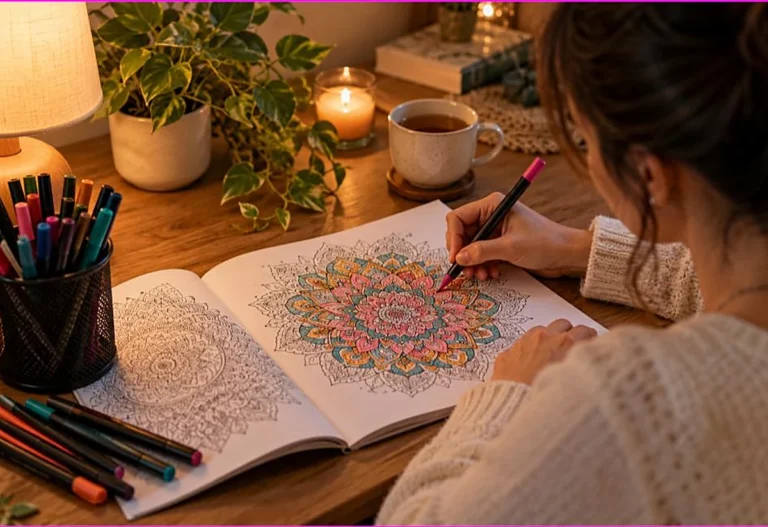
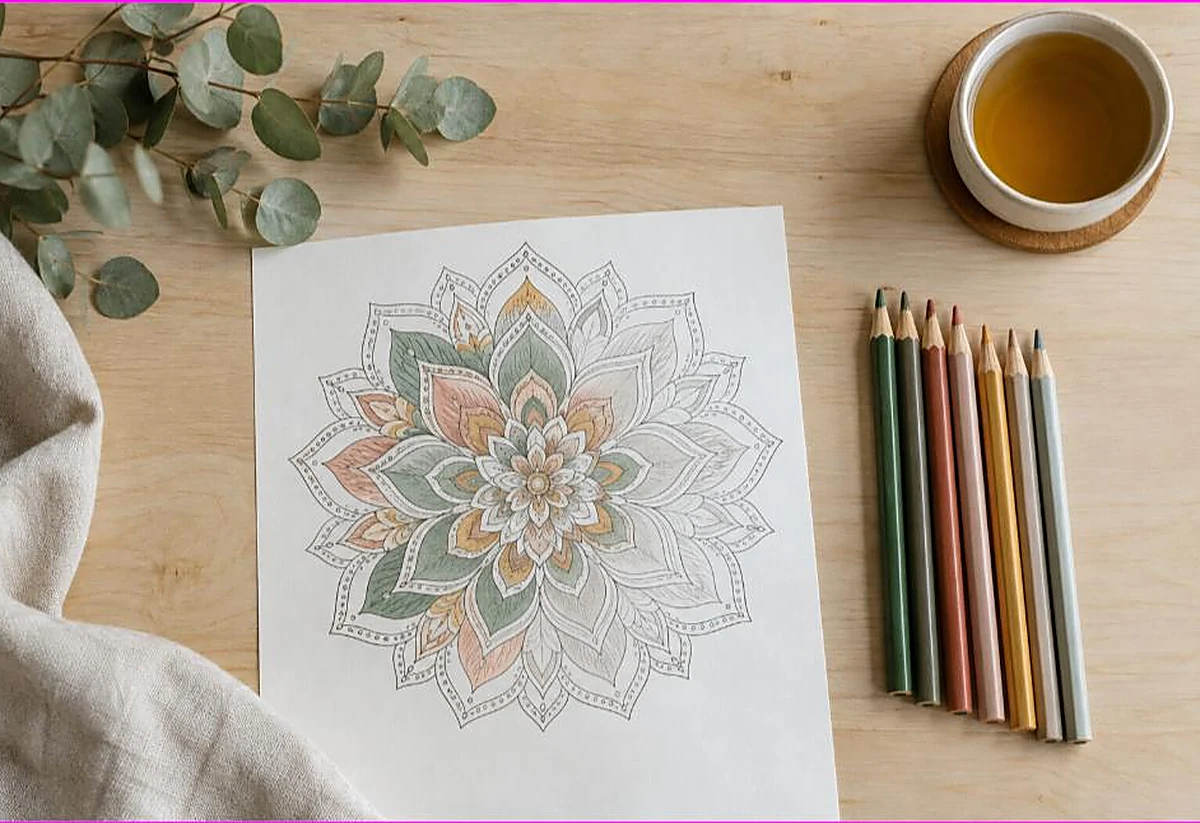
Second, pick a simple design. A mandala or a repeating pattern works best, because it asks for no decisions, only filling. Our guide on the benefits of mandala coloring explains why these suit mindful coloring.
Third, take a few slow breaths before you begin. Breathe in gently, out slowly, and let your shoulders drop. This settles your body before your mind follows.
Fourth, start coloring slowly. Notice the color you chose and why. Feel the tool move. Watch the shape fill. There is no rush and no right way.
Fifth, when your mind wanders to worries or plans, notice it kindly and return your attention to the page. This returning is the practice. It is not a failure when your mind drifts. Bringing it back is the whole point.
After ten minutes, pause and notice how you feel. Most people feel a little calmer and clearer, and that is the practice working. If you have more time, keep going, but never force it. The moment it starts to feel like a chore, you can stop, since the value is in the ease as much as the focus.
Best designs for mindful coloring
The design you choose shapes how easily you settle, so it is worth picking well.
Structured, repeating patterns are ideal. Mandalas, geometric designs, and detailed patterns give the mind a clear framework and a soothing rhythm. You fill one section, then a matching one, and the repetition itself is calming.
Detailed nature scenes work well too, such as flowers, leaves, or gentle landscapes, since they invite slow, absorbed attention. Simpler pages suit beginners or shorter sessions, while intricate designs suit longer, deeper ones.
Avoid busy or high energy designs when your goal is calm. A page full of action or one that asks for many decisions pulls you toward doing rather than resting. Save those for a different mood. Our guide on how to color mandalas covers approaching a pattern in a calming way.

Pairing coloring with your breath
Adding slow breathing deepens the calming effect, and the two fit together naturally.
As you color, breathe in gently for a count of about four, then out for a count of about six. The longer out breath signals your body to relax. Let the rhythm of your breath match the slow rhythm of your coloring.
You do not have to count strictly. The idea is simply to breathe slower and deeper than usual while you color. The coloring holds your attention so your breath can slow without you having to concentrate hard on it. Together, the two quiet the body and the mind at once.
This pairing is especially useful in an anxious moment, when both a racing mind and shallow breathing feed the tension. Slowing both, gently, helps break the cycle.
Common mistakes to avoid
A few habits get in the way of mindful coloring, and they are easy to fix.
Rushing to finish. Mindful coloring is not about completing the page. Slow down and let the process be the point. If you feel hurried, you have slipped back into task mode.
Judging your work. The moment you start critiquing your color choices or neatness, you leave the present and enter judgment. Notice this, let it go, and return to simply coloring.
Multitasking. Coloring while watching a screen or half listening to something splits your attention and removes the calm. Give the activity your full, single focus, even if only for ten minutes.
Expecting instant calm. Some days the mind is loud, and the calm comes slowly or only a little. That is fine. Showing up and returning your attention is the practice, and it works over time.
When to practice mindful coloring
Mindful coloring helps most at certain moments, and knowing them makes it more useful.
The evening wind down is a natural fit. Coloring mindfully before bed replaces late screen time and helps the mind settle for sleep, as our guide on coloring before bed explains. A tense point in the day works too, such as a lunch break in a busy job or a gap between demands, when ten focused minutes can reset you.
It also helps in moments of worry or overwhelm, when the mind is racing and you need somewhere to put your attention. And it suits any time you simply want a quiet pause, no stress required. There is no wrong time. The practice is most valuable whenever your mind feels full and you want to bring it gently back to the present.
Mindful coloring for children
Children can practice a simple version of mindful coloring too, and it helps them settle.
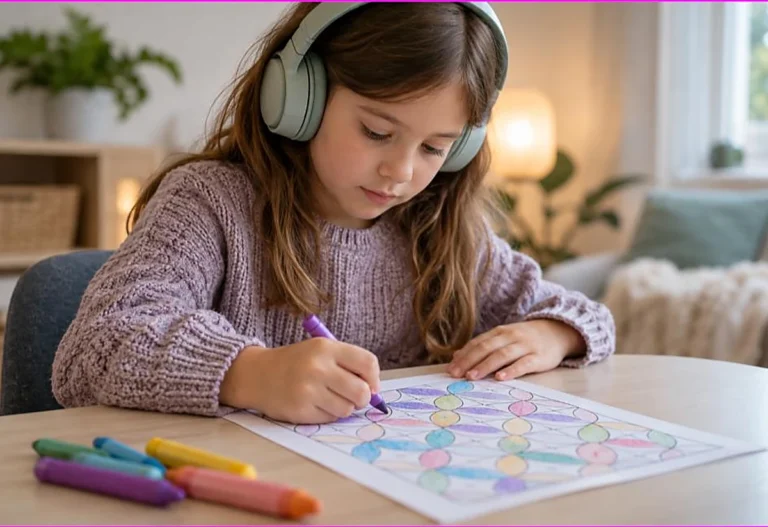
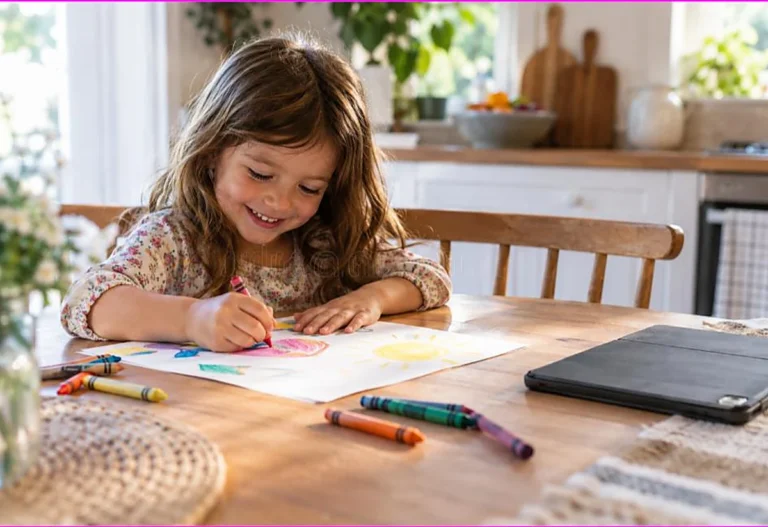
You do not need to explain mindfulness to a child. Just invite them to color slowly and quietly, notice the colors they are using, and take a few deep breaths with you first. Keeping the space calm and screen free lets them sink into the activity. This gives an anxious or wound up child a gentle way to reset, much as it does for adults.
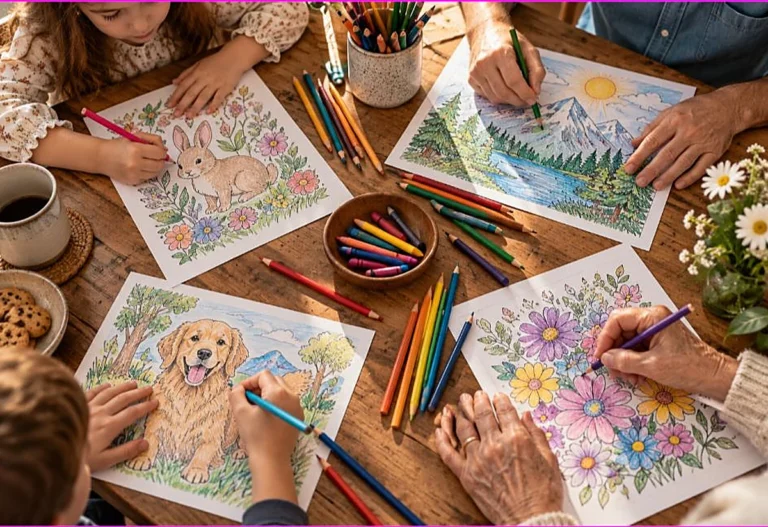
Coloring together mindfully can be a calming shared moment for a parent and child, a few quiet minutes with no goal but to color and breathe. Our guide on calming activities for kids covers using coloring to help children self regulate.
Keep it light. For a child, the point is a calm, pleasant pause, not a formal practice. The habit of slowing down and paying attention grows naturally from there.

Turning it into a lasting habit
Mindful coloring gives the most benefit when it becomes a small, regular practice rather than a one off.
Tie it to a time you will remember, such as the end of the workday or just before bed. Keep your supplies and a few structured pages ready, so starting takes no effort. Aim for short and regular over long and rare, since a ten minute practice most days does more than an occasional hour.
Let go of any pressure to do it perfectly or every single day. Some days your mind will settle easily, others it will stay busy, and both are fine. Showing up and gently returning your attention is the practice, and over time it makes calm a little easier to reach. Our collection of free printable coloring pages has mandalas and patterns ready for your practice.
Supplies that suit mindful coloring
The right tools help you settle into a mindful session, though you need very little.
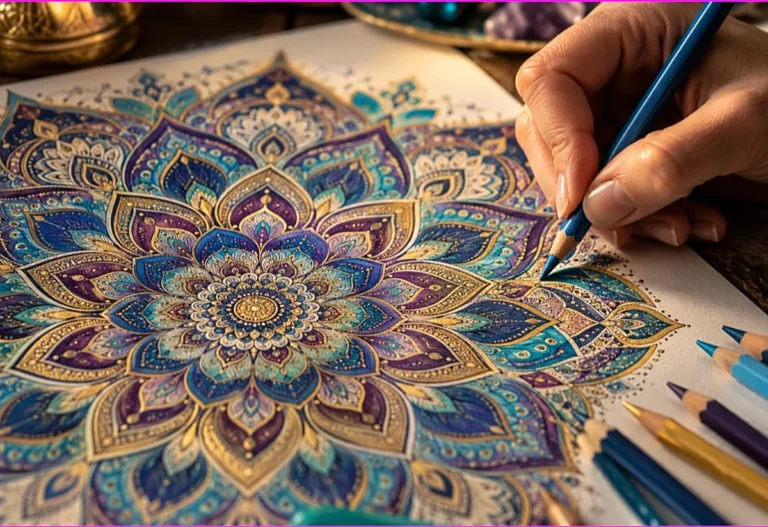
Colored pencils suit mindful coloring well, because they invite slow, steady strokes rather than fast filling. Their quiet, controlled motion matches the calm pace of the practice. Fine markers work too if you prefer smooth, bold color. Choose whatever feels pleasant in your hand, since comfort keeps you present rather than fussing with the tool.
Keep your set simple. A small range of colors you enjoy is better than a huge box that pulls you into decisions, which works against the calm. Good paper helps as well, so pencils glide and markers do not bleed, letting you stay absorbed rather than distracted by the page. Our guide on coloring supplies for beginners covers a simple kit.
The point is to remove friction. When your supplies feel good and are ready to hand, nothing stands between you and the quiet focus that makes mindful coloring work.
Frequently asked questions about mindful coloring
What is mindful coloring?
Mindful coloring is coloring with full, gentle attention on the present, noticing the colors, strokes, and sensations rather than rushing to finish. It turns coloring into a short, calming practice.
How is mindful coloring different from regular coloring?
Regular coloring often runs while your mind wanders. Mindful coloring keeps your attention on the activity itself, slowing down and noticing each moment. That focus is what creates the calm.
What should I color for mindfulness?
Structured, repeating designs like mandalas and patterns work best, since they ask for no decisions and offer a soothing rhythm. Detailed nature scenes also suit slow, absorbed coloring.
How long should a mindful coloring session be?
Ten minutes is enough to feel calmer. You can go longer if you like, but even a short, focused session gives the benefit. Regular short sessions help more than rare long ones.
Do I need to be good at coloring for this to work?
No. Mindful coloring is about attention, not skill or a perfect result. Anyone can do it, and letting go of the finished look is part of the calm.
The takeaway on mindful coloring
Mindful coloring turns a simple pastime into a short, restful practice. Choose a quiet space and a structured design, slow down, breathe steadily, and gently return your attention when it wanders. Ten minutes is enough to feel the calm, and no skill is required.
Ready to try it? Browse our free printable coloring pages, including mandalas and patterns made for slow, mindful coloring. Every one is free to download and print.