Is Coloring Good for Anxiety? What the Research Shows
Quick answer
Coloring can help ease anxiety for many people because its repetitive, focused nature shifts attention away from anxious thoughts, much like a mindfulness exercise. Studies on coloring structured designs such as mandalas have found short sessions can lower anxiety. It’s a helpful self-care tool — though not a replacement for professional care when anxiety is severe.
By the TheColoringPages.net team. Reviewed for accuracy, September 2026.
This guide to Good for Anxiety gives clear, practical answers, drawing on art therapy and years of hands on coloring.
When you feel anxious, your mind races and your body tenses. People reach for many things to calm down, and coloring has become one of the most popular. But does it really help, or does it just feel nice for a moment? The honest answer is that coloring can genuinely ease anxiety, within limits, and researchers have looked at why.
This guide walks through what the studies suggest, why some designs work better than others, and how to use coloring as a practical calming tool without expecting it to do more than it can. The aim is a clear, realistic picture, so you know when to reach for a coloring page and when to reach for more.
Quick answer: Yes, coloring can reduce anxiety, especially structured designs like mandalas. Focusing on a repetitive, low stakes task shifts attention away from worries and brings on a calmer, meditative state. Coloring is a helpful self care tool for everyday anxiety, not a treatment for anxiety disorders.

What the studies say
Coloring has been studied enough to say something useful, even if the research is still young.
Several small studies have measured anxiety before and after short coloring sessions. They generally find that people report lower anxiety afterward. One well known line of research found that coloring a structured design, like a mandala, reduced anxiety more than coloring on a blank page or a free form design. The structure seems to matter.
The effect is modest and short term rather than dramatic and lasting. Coloring for twenty minutes can leave you calmer for a while. It does not rewire anxiety at the root. That is a realistic and still valuable result, the same kind of relief you might get from a short walk or a few minutes of deep breathing.
Major health organizations echo this. Cleveland Clinic and the Mayo Clinic Health System have both noted that coloring can help relax the brain and ease stress by focusing attention. None claim it treats anxiety disorders, and neither do we.
Why structured patterns help most
The finding that mandalas beat blank pages is worth understanding, because it tells you what to reach for.
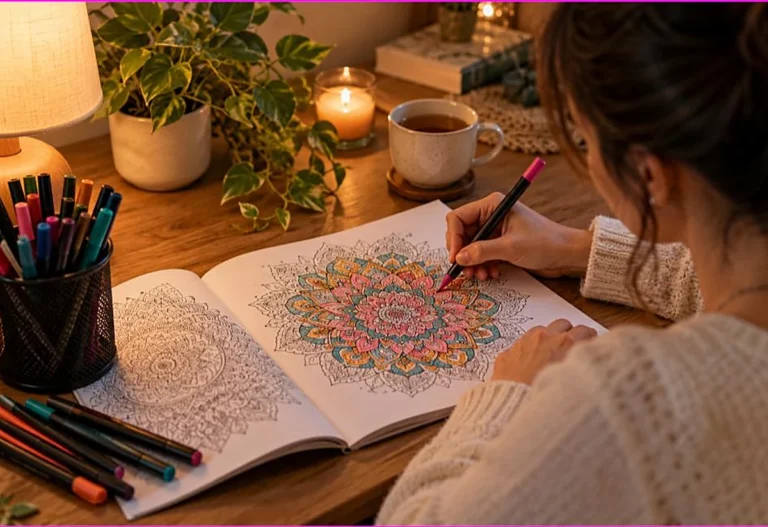
A blank page or a free form design asks you to make decisions and create, which can add a little pressure. A structured pattern, like a mandala with its repeating, symmetrical sections, does the opposite. It gives your mind a clear, gentle framework to follow. You are not inventing, only filling, and that predictability is soothing.
The repetition adds to the calm. Coloring one section, then a matching section, then the next, creates a steady rhythm that settles the mind, much like the repeated motion of knitting or walking. Our guide on the benefits of mandala coloring looks at why these designs are so calming, and our guide on how to color mandalas shows how to approach one.
So when your goal is calm rather than creativity, reach for a structured pattern. It asks less of you and gives more back.
How coloring compares to meditation
Coloring is often called a form of meditation, and the comparison is fair, with one helpful difference.
Meditation calms the mind by focusing attention, usually on the breath or the present moment. Coloring calms the mind the same way, by focusing attention on a simple task. Both pull you out of the loop of anxious thinking and into now.
The difference is the doing. Traditional meditation asks you to sit with your thoughts and gently return your focus, which many anxious people find difficult, because sitting still can make the racing mind louder. Coloring gives your hands and eyes a task, so the focus happens naturally. For people who cannot meditate, coloring is often the way in. Our guide to mindful coloring shows how to bring meditative attention to the activity on purpose.
How to use coloring for anxiety
To get the calming effect reliably, a simple routine helps.
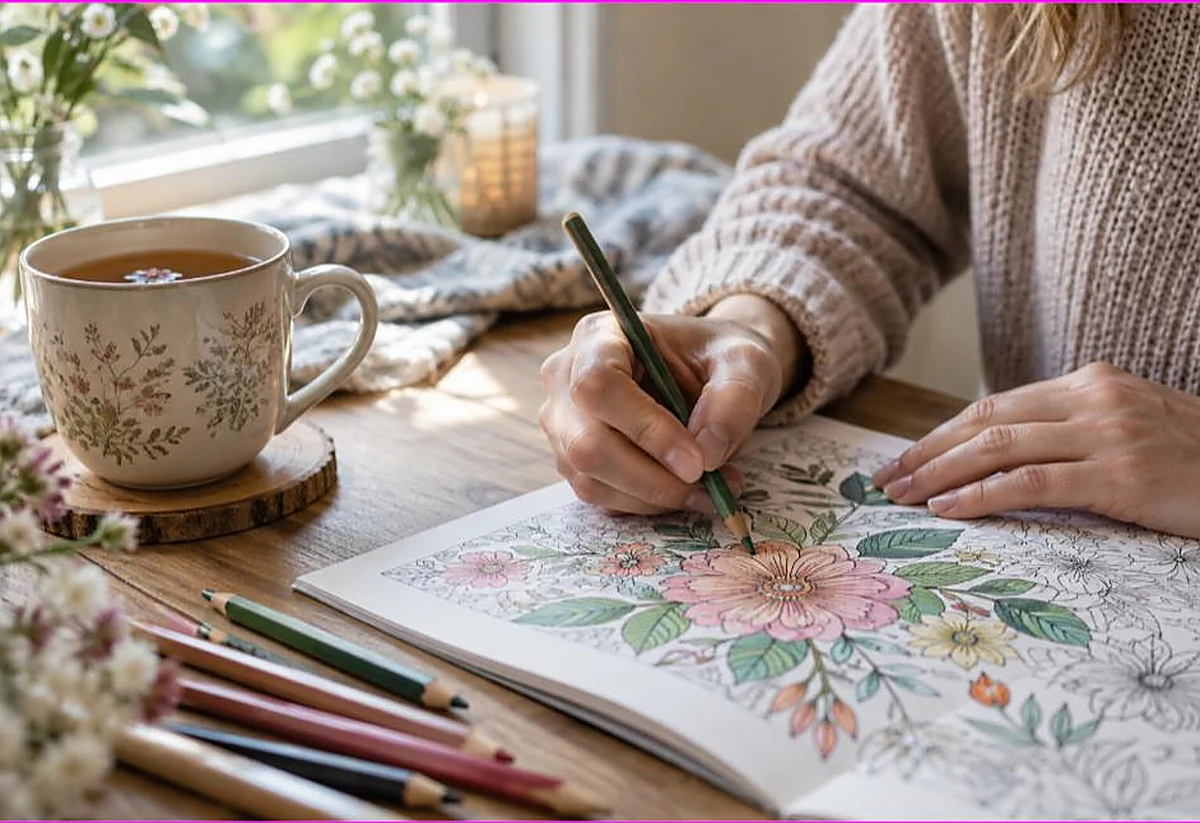
Choose a calm space and a structured design, like a mandala or a repeating pattern. Sit comfortably and give yourself at least ten to twenty minutes, since the calm builds gradually. Let go of any goal for the finished page. The point is the process, not a perfect result.
Pair coloring with slow breathing if you like. Breathe in for a count of four, out for a count of six, while you color. The slower breath tells your body to relax, and the coloring holds your focus so your mind does not wander back to worry.
Keep supplies ready so you can reach for coloring when anxiety rises, not only when you have time to set up. A folder of printed pages and a pencil case within reach turns coloring into a tool you can actually use in the moment.

When coloring helps, and when it is not enough
Being honest about limits makes coloring more useful, not less.
Coloring helps with everyday anxiety and tension, the ordinary stress of a hard day or a nervous wait. In those moments it is a genuine, drug free way to settle. It is portable, cheap, and has no downside, which makes it worth keeping in your toolkit.
Coloring is not a treatment for an anxiety disorder, panic attacks, or persistent, overwhelming anxiety. If anxiety regularly disrupts your sleep, work, or relationships, that calls for professional support, and coloring can sit alongside it rather than replace it. A short session may take the edge off, but it is not therapy.
If you are struggling with anxiety that feels beyond everyday stress, please reach out to a doctor or a mental health professional. Coloring is a helpful companion to real support, not a substitute for it.
Making it part of a calmer routine
Coloring works best when it is one steady habit among several that support your wellbeing.
Build it into your day at a time anxiety tends to rise, such as the evening wind down. Coloring before bed replaces late screen time and helps you settle, as our guide on coloring before bed explains. Keep sessions short and regular rather than rare and long, since the habit is what compounds.
Combine coloring with other simple calming habits: a short walk, steady breathing, time outdoors, decent sleep. No single one carries the whole load, but together they build a calmer baseline. Coloring is a small, reliable piece of that picture, and its ease is exactly why it lasts.
What happens in the body when you color
The calm you feel from coloring is not only in your head. It shows in the body too.
When anxiety rises, the body shifts into a stressed, alert state: faster heart rate, shallow breathing, tense muscles. Calming activities help the body ease back toward a settled state, with slower breathing and looser muscles. Coloring supports this shift by holding your attention on a gentle, repetitive task, which lets the body follow the mind into calm.
This is why pairing coloring with slow breathing works so well. The coloring occupies the mind while the slow breath directly signals the body to relax. Together they nudge both the racing thoughts and the physical tension of anxiety downward at the same time. You are not just distracting yourself, you are helping your body change state.
The effect is gentle and gradual, which is exactly what makes it sustainable. There is no crash afterward, only a calmer few minutes or hours.
Coloring for anxious children
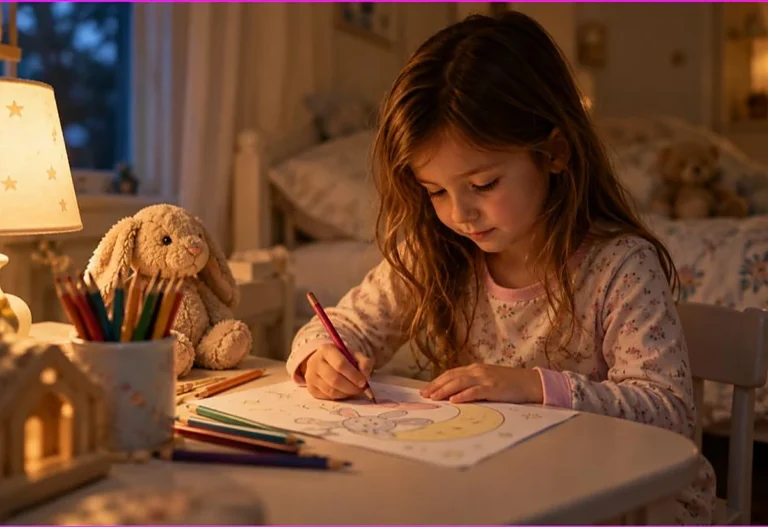
Anxiety is not only an adult experience. Coloring can help children who feel worried or overwhelmed too.
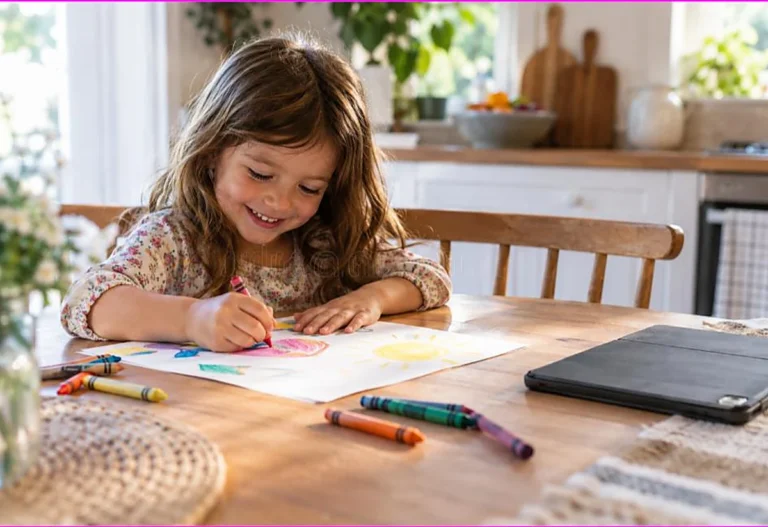
For an anxious child, coloring offers a familiar, low pressure activity that gives their busy feelings somewhere to go. The repetitive motion soothes, and finishing a page gives a small sense of control, which anxiety often takes away. Many teachers keep coloring in a calm down corner for exactly this reason.
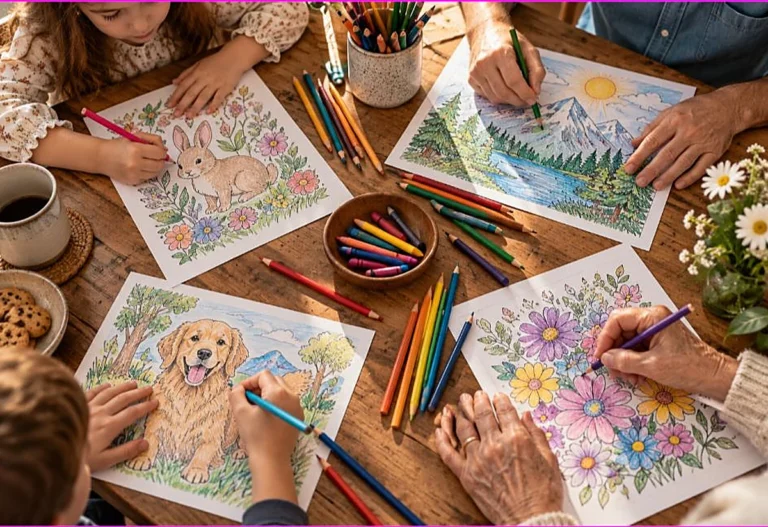
Choose simple, non busy designs for an anxious child, and color alongside them if it helps. The shared quiet can be as calming as the coloring itself. Our guides on calming activities for kids and coloring for kids with autism cover soothing coloring for children with different needs.
As with adults, coloring helps a child with everyday worry, not serious or ongoing anxiety, which calls for support from a doctor or counselor.

Building a calming coloring kit
Anxiety often rises without warning, so having coloring ready to reach for matters.
Put together a small kit you can grab in a tense moment: a folder of structured pages like mandalas, a set of colored pencils or markers you enjoy, and maybe a note reminding you to breathe slowly. Keep it somewhere easy to reach, at home or in a bag, so coloring is available when anxiety strikes, not only when you have time to prepare.
Having the kit ready removes the friction that stops people using calming tools in the moment. When the urge to settle arrives, you want to reach for the page in seconds, not hunt for supplies. Our collection of free printable coloring pages gives you calming designs to fill that kit.
Making coloring a reliable calming habit
Coloring eases anxiety most when it becomes a habit you can lean on, not a rare rescue.
Pick a regular time to color, such as the evening, so your mind learns to expect a calming pause. Keep sessions short and frequent rather than long and occasional, since the steadiness is what builds a calmer baseline over time. Choose designs that match your need for calm, favoring structured patterns over busy scenes.
Combine coloring with other simple habits that lower anxiety, such as slow breathing, a short walk, time outdoors, and decent sleep. Each one helps a little, and together they add up. Coloring’s role is the easy, low effort reset you can reach for when worry rises and you have ten quiet minutes.
The goal is not to color your anxiety away, but to give yourself a dependable way to settle in the moment and, over time, to feel a little steadier. Our collection of free printable coloring pages gives you calming designs to build that habit around.
Frequently asked questions about good for anxiety
Does coloring really help with anxiety?
Yes, for everyday anxiety. Studies show that short coloring sessions, especially with structured designs like mandalas, can lower reported anxiety. The effect is calming and short term rather than a cure.
Why are mandalas better for anxiety than other designs?
Mandalas give the mind a clear, repeating framework to follow, so there is no pressure to create. Their symmetry and repetition are soothing, which research links to a stronger calming effect than blank or free form pages.
Is coloring as good as meditation?
Coloring works much like meditation by focusing attention and quieting anxious thoughts. It is often easier for anxious people, because the task gives the mind something to hold rather than asking it to sit still.
Can coloring treat an anxiety disorder?
No. Coloring is a helpful self care tool for everyday anxiety, not a treatment for anxiety disorders. Persistent or overwhelming anxiety calls for professional support, which coloring can sit alongside.
How long should I color to feel calmer?
Give it at least ten to twenty minutes, since the calm builds gradually. Pairing coloring with slow breathing can help you settle faster.
The takeaway on good for anxiety
Coloring is a real, if modest, tool for easing everyday anxiety. Structured designs like mandalas work best, the effect resembles an easy form of meditation, and pairing it with slow breathing deepens the calm. Use it freely for ordinary stress, and seek professional support for anxiety that runs deeper.
This is a sensitive topic. If you are struggling with anxiety, a doctor or mental health professional can help. Coloring is a supportive habit, not a replacement for care.
Ready to try a calming page? Browse our free printable coloring pages, including mandalas and patterns built for quiet, focused coloring.