Calming Activities for Kids: Coloring for Calm
Quick answer
Calming coloring activities help children settle and manage big feelings. Choose simple, repetitive designs like patterns or mandalas, keep the space quiet with soft lighting, and color alongside them without rushing. The focused, rhythmic motion soothes the nervous system, making it handy before bed or after a busy day.
By the TheColoringPages.net team. Reviewed for accuracy, September 2026.
This guide to Calming Coloring gives clear, practical answers, drawing on emotional self regulation and years of hands on coloring.
When a child is upset, overstimulated, or wound up, coloring is one of the simplest, most reliable ways to help them settle. Its gentle, repetitive, absorbing nature soothes a busy mind and gives an anxious or restless child a calm activity to focus on. This is why so many parents and teachers keep coloring on hand as a calm down tool. It is screen free, needs almost nothing, and genuinely works.
This guide explains how coloring calms children, how to build a calm down corner, which pages soothe best, and how to pair coloring with breathing for the greatest effect.
Quick answer: Coloring is a proven calm down tool. Give an upset child a simple page and crayons in a quiet spot to help them self regulate. The gentle, repetitive activity soothes a busy mind. Pair it with slow breathing and calming designs like mandalas or nature for the best effect. Keep coloring available for moments when a child needs to settle.

Why coloring calms kids
Understanding why coloring soothes children helps you use it well as a calm down tool.
Coloring is gentle, repetitive, and absorbing, which naturally calms a child. The steady motion of filling a page has a soothing, rhythmic quality, much like other repetitive activities that settle the mind and body. Focusing on the simple task of coloring draws a child’s attention away from whatever is upsetting them and into a calm, present activity. This shift of focus is at the heart of how coloring calms.
Coloring also gives a child a sense of control and success when they may feel overwhelmed. Completing a page, or simply making marks, gives a small, achievable accomplishment that steadies a child. There is no pressure and no way to fail, which makes coloring a safe, comforting activity when emotions run high. This gentle, pressure free quality is exactly what an upset child needs.
Because it engages the hands and eyes in a calm task, coloring occupies a child fully without overstimulating them, unlike a screen. It settles rather than excites, which is why it works as a calm down where more stimulating activities would not. Our guide on coloring versus screen time covers this. For these reasons, coloring is a reliable, gentle way to help a child move from upset to calm.
Building a calm-down corner
A calm down corner gives a child a dedicated, comforting space to settle, with coloring at its heart.
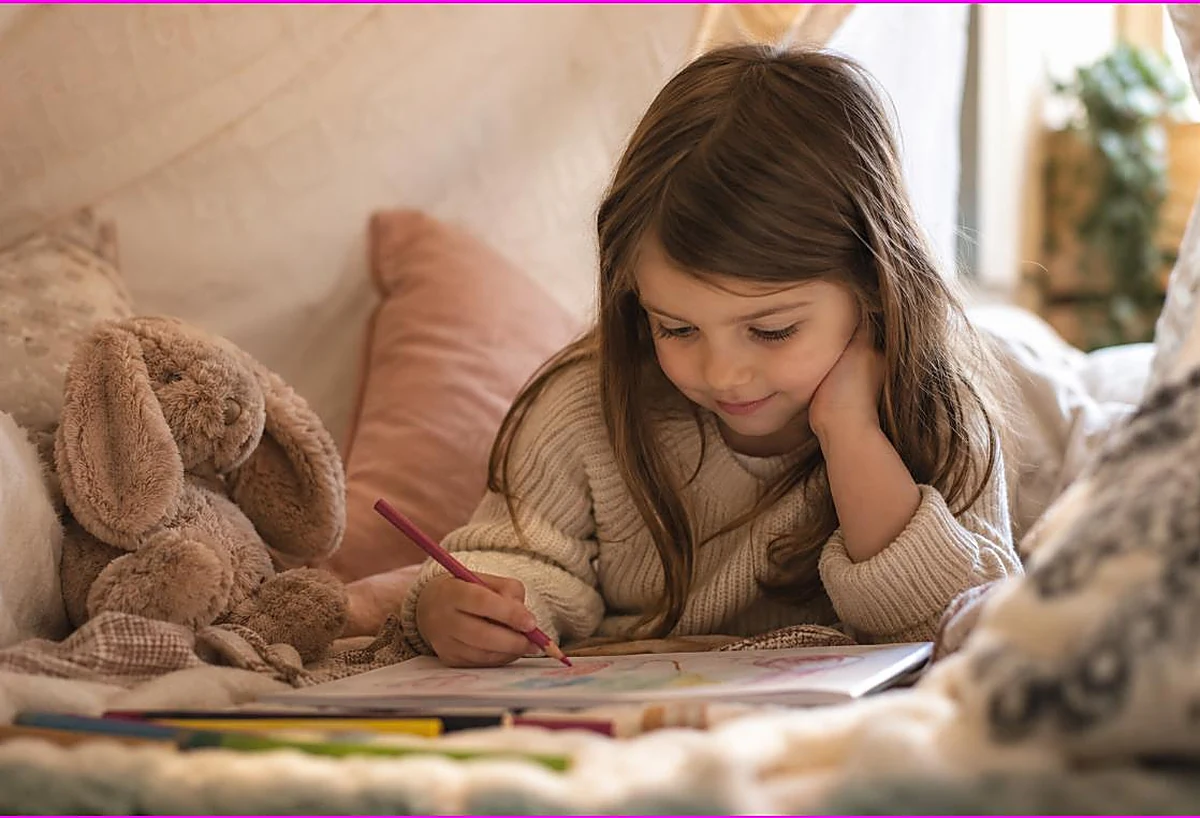
A calm down corner is a quiet, cozy spot where a child can go to settle when upset or overstimulated. Set it up with comfortable seating, soft lighting, and calming items, including coloring pages and crayons. When a child feels overwhelmed, they can go to the corner and color quietly to settle themselves. This gives a child a safe, self directed way to regulate their emotions. Many classrooms and homes use calm down corners for this.
Stock the corner with simple, calming coloring pages and easy to use supplies, ready for a child to use anytime. Keeping the coloring supplies always available in the corner means a child can reach for them the moment they need to settle, without setup. Include other calming items too, like soft toys, a book, or breathing prompts, so the corner offers several soothing options. Coloring is a central, reliable one.
Introduce the calm down corner as a positive, supportive space, not a punishment. A child should feel the corner is a safe place to settle, which they can choose when they need it, not somewhere they are sent as discipline. Framing it positively helps a child use it well to self regulate. A calm down corner with coloring gives a child a dependable, comforting tool for managing big feelings. Our guide on calming activities for kids is this article; see also our guide on the benefits of coloring for kids.
Best pages for calming
The right pages make coloring more soothing, so choose calming designs for a calm down.
Simple, uncluttered pages work best for calming. When a child is upset, a busy, complex page can feel overwhelming, while a simple page with clear, large areas is easy and soothing to color. The gentle, achievable nature of a simple page suits a child who needs to settle. Avoid detailed or high energy pages for calming, and keep the designs calm and manageable.
Mandalas and patterns are especially calming. Their repeating, symmetrical designs give a soothing rhythm to color, drawing the mind into a calm, focused state, much like meditation. For older children, a simple mandala or pattern can be deeply settling. Our guides on the benefits of mandala coloring and how to color mandalas cover these calming designs. Nature scenes, gentle animals, and other peaceful subjects also soothe well.
Match the page to the child’s age and state. Younger children need very simple pages, while older children can handle a little more detail in a calming design. When a child is highly upset, the very simplest pages are best, becoming a little more involved as they settle. Keeping a selection of simple, calming pages ready ensures you have the right one for a calm down. Our collection of free printable coloring pages includes calming mandalas, patterns, and gentle designs.

Pairing with breathing
Pairing coloring with slow breathing deepens the calming effect, helping a child settle faster.
Slow, deep breathing is one of the most effective ways to calm the body, and it pairs naturally with coloring. As a child colors, encourage them to breathe slowly and deeply, perhaps breathing in as they color one stroke and out as they color the next. The coloring gives the child something calm to focus on while the slow breathing directly settles their body, and together they calm both mind and body.
Keep the breathing simple and gentle, especially for young children. You might model slow breathing yourself as you color alongside the child, or use a simple prompt like breathing in slowly and out slowly. There is no need for complex techniques, just slower, deeper breaths than the fast, shallow breathing that comes with being upset. The coloring makes the breathing feel natural rather than forced.
This pairing is especially helpful when a child is very upset or anxious, when both a racing mind and fast breathing feed the distress. Coloring calms the mind while slow breathing calms the body, breaking the cycle of upset. Introducing this gentle pairing gives a child a powerful, simple tool for settling strong emotions. It combines two proven calming methods into one soothing activity. Our guide on mindful coloring covers coloring with focused, calm attention.
When to use coloring for calm
Knowing when to offer coloring for calm helps you use it effectively.
Offer coloring when a child is upset, overstimulated, restless, or anxious, and needs to settle. It works well after an upsetting event, when a child is wound up from too much activity or stimulation, before a stressful situation, or as part of winding down. The gentle, absorbing nature of coloring suits all these moments, helping a child move toward calm. Recognizing when a child needs to settle, and offering coloring, is the key.
Offer coloring gently, as an invitation rather than a command. A very upset child may not want to color at first, so offering it calmly, perhaps starting to color yourself, invites them without pressure. Once a child begins, the coloring often draws them into calm. Forcing coloring on an upset child can add stress, so a gentle, patient offer works best. Following the child’s readiness is important.
Coloring also works as a preventive calming routine, not just a response to upset. A regular calm coloring time, such as after school or before bed, helps a child unwind and regulate before they become overwhelmed. Our guide on coloring before bed covers this. Using coloring both to respond to upset and to build calm into the day gives a child steady support for their emotional wellbeing. It is a versatile, gentle tool for calm.

Coloring for children with extra calming needs
Coloring is especially valuable for children who need extra support with calming and regulation.
For children who are easily overstimulated, anxious, or who have sensory needs, coloring offers a reliable, gentle way to settle. Its predictable, repetitive, low pressure nature suits children who find the world overwhelming, giving them a calm activity they can control. Many children with extra calming needs find coloring soothing and grounding. Our guide on coloring for kids with autism covers coloring for children with sensory and regulation needs.
For these children, keep coloring simple, predictable, and pressure free, and let them color in their own way. Following the child’s preferences, for particular subjects, tools, or ways of coloring, makes it most calming for them. Some children color the same thing repeatedly, which is comforting and completely fine. Meeting the child where they are is key to coloring calming them effectively.
Coloring can be part of a wider calming toolkit for children who need extra support, alongside other soothing activities and strategies. It is one reliable, accessible tool among several. For any child who struggles with big emotions or overstimulation, having coloring available as a calming option gives them, and you, a gentle, effective way to help them settle. Every child is different, so an occupational therapist or your child’s care team can advise on what suits your child best. Our collection of free printable coloring pages offers calming designs for every child.
Frequently asked questions about calming coloring
How does coloring calm kids down?
Coloring is gentle, repetitive, and absorbing, which soothes a busy mind. Focusing on the calm task draws a child’s attention away from what is upsetting them, and completing a page gives a sense of control and success. This helps a child move from upset to calm.
What is a calm-down corner?
A calm down corner is a quiet, cozy spot where a child can go to settle when upset or overstimulated, stocked with calming items including coloring pages and crayons. It gives a child a safe, self directed way to regulate their emotions, with coloring at its heart.
What coloring pages are best for calming?
Simple, uncluttered pages work best, since busy pages can overwhelm an upset child. Mandalas and patterns are especially calming for their soothing rhythm, and gentle nature scenes soothe well too. Match the page to the child’s age and state.
How do I use coloring and breathing together?
As a child colors, encourage slow, deep breathing, perhaps breathing in on one stroke and out on the next. The coloring focuses the mind while the breathing calms the body. Keep it simple and gentle, modeling slow breathing yourself if helpful.
When should I offer a child coloring to calm down?
Offer coloring when a child is upset, overstimulated, restless, or anxious and needs to settle, or as a preventive calm routine like before bed. Offer it gently as an invitation, not a command, and follow the child’s readiness rather than forcing it.
The takeaway on calming coloring
Coloring is a simple, reliable calm down tool for children. Its gentle, repetitive, absorbing nature soothes a busy mind and gives an upset child a calm, controllable activity. Set up a calm down corner stocked with simple, calming pages like mandalas, pair coloring with slow breathing for the greatest effect, and offer it gently whenever a child needs to settle. For children with extra calming needs, coloring is especially valuable, offering a predictable, controllable, soothing activity they can return to whenever the world feels overwhelming. Keep it available, and you have a screen free, effective way to help children manage big feelings and find calm. Few tools for a child’s emotional wellbeing are as simple, accessible, and gentle as a coloring page and a box of crayons.
Ready to help your child find calm? Browse our free printable coloring pages, including soothing mandalas and gentle designs. Every one is free to download and print. For ready made packs, browse our educational coloring pages.