
Ways to Use Coloring Pages in the Classroom (Beyond Free Coloring)
Quick answer
Teachers use coloring pages for calm-down time, early-finisher activities, lesson reinforcement, and seasonal fun. Tie the design to the topic (a labeled diagram, vocabulary scene, or holiday theme), use them as a quiet transition between lessons, and keep a stack on hand for brain breaks that still build focus.
By the TheColoringPages.net team. Reviewed for accuracy, September 2026.
This guide to Coloring Pages in Classroom gives clear, practical answers, drawing on education and years of hands on coloring.
A coloring page can be far more than something to color freely. With a few simple twists, teachers turn coloring pages into worksheets, quizzes, prompts, and games that teach across subjects. This makes coloring a low prep, engaging teaching tool that children genuinely enjoy. If you have only used coloring pages for quiet time, these ideas will open up their teaching potential.
This guide covers specific ways to turn coloring pages into learning activities, from color by number math to labeling, prompts, and quizzes, so you can teach through coloring.
Quick answer: Turn coloring pages into learning activities with a few twists: use color by number for math and spelling, labeling and diagram pages for vocabulary, story and writing prompts, coloring quizzes where children color the correct answer, and themed pages for any subject. This makes coloring a low prep teaching tool across the curriculum.

Color-by-number for math and spelling
Color by number pages turn coloring into practice for math, spelling, and more.
In its basic form, color by number practices number recognition and following a key, as children match numbers to colors. This suits early math and builds the skill of following instructions. But the format extends far beyond numbers. Our guide on what color by number is covers the format.
For math practice, use color by number pages where children solve a sum to find which color goes in each area, so coloring the page requires doing the math. This turns math practice into an engaging coloring activity. Similar pages can practice number bonds, times tables, and more, making math fun and hands on.
For spelling and phonics, color by letter or color by sound pages have children color areas based on letters, sounds, or spelling, reinforcing literacy through coloring. This versatile format, coloring based on a code the child must work out, turns coloring into practice for almost any skill with a right answer. It is one of the most powerful ways to teach through coloring, combining engagement with real learning.
Labeling and diagram pages
Coloring pages can double as labeling and diagram activities, building vocabulary and knowledge.
A coloring page showing a subject, a plant, an animal, a map, a diagram, can be turned into a labeling activity. Children color the page and label its parts, learning the vocabulary and structure of the subject. Coloring a plant and labeling its roots, stem, leaves, and flower, for example, teaches plant parts while children color, making the learning hands on and memorable.
Diagram coloring works across subjects. In science, children color and label body parts, life cycles, or the water cycle. In geography, they color and label maps. In any subject with a diagram or labeled structure, a coloring page becomes a learning tool. Coloring helps children engage with and remember the diagram, and labeling reinforces the vocabulary.
This use turns coloring into content learning. Rather than just coloring, children are engaging with and labeling real subject matter, which builds knowledge and vocabulary. It suits older children who are learning specific content, and it makes that content more engaging. Coloring and labeling together are an effective, low prep way to teach subject knowledge. Our collection of free printable coloring pages covers many subjects to label.
Story and writing prompts
Coloring pages make excellent springboards for story and writing prompts.
A coloring page can prompt a story. Children color a scene or character, then write or tell a story about it: what is happening, what happens next, who the character is. The coloring engages them with the image and sparks ideas, making the writing task more appealing and concrete. This turns coloring into a creative writing activity.
Coloring pages also prompt descriptive and other writing. Children might describe what they colored, write about a character’s feelings, or use the page as the basis for a specific writing task. The visual, personal nature of their colored page motivates writing, especially for reluctant writers who find a blank page daunting. The colored image gives them something to write about. Our guide on coloring for speech therapy covers building language through coloring.
This use connects coloring to literacy in a creative, engaging way. Coloring first, then writing, gives children a concrete, personal starting point that makes writing more appealing and productive. It suits building narrative, descriptive, and other writing skills. Coloring as a writing prompt is a simple, effective way to make writing tasks more engaging, especially for children who need a visual anchor. It turns a coloring page into a creative springboard.

Coloring quizzes
Coloring pages can become quizzes and comprehension checks, testing knowledge through coloring.
In a color the answer quiz, children color based on correct answers. For example, a page might ask questions, and children color the areas containing the right answers, or color a picture only if a statement is true. This tests knowledge while children color, making assessment engaging rather than dry. It works across subjects with right answers.
Comprehension coloring checks understanding of a text or lesson. Children might color a scene to match a story they read, showing they understood it, or color characters or elements based on comprehension questions. This assesses understanding in a hands on, enjoyable way, which suits younger children and reluctant learners especially well.
These quiz uses turn assessment into an engaging activity. Rather than a plain test, children demonstrate knowledge through coloring, which is less intimidating and more enjoyable, while still showing you what they know. This suits low stakes checks, review, and reinforcement. Coloring quizzes are a gentle, engaging way to assess and reinforce learning, and children often do not even realize they are being tested. It makes review fun rather than stressful.
Themed pages for any subject
Themed coloring pages let you bring coloring into any subject or topic you teach.
Whatever you are teaching, a themed coloring page can support it. Teaching about the ocean, insects, space, historical periods, community helpers, festivals, or any topic, a matching coloring page engages children with the subject. Coloring a topic helps children absorb and remember it, and it gives a hands on, enjoyable way to engage with content. Our guide on play based learning and coloring covers this.
Themed pages also tie coloring to your curriculum flow. As you move through topics and units, matching coloring pages reinforce each one, adding engagement and a hands on element. This makes coloring a flexible tool that fits your teaching throughout the year, rather than a standalone activity. A stock of varied themed pages lets you support almost any lesson.
Pairing themed coloring with discussion, reading, or a related task deepens the learning. Coloring a topic, then talking about it or completing a related activity, reinforces the content while children enjoy coloring. This combination of engaging coloring and connected learning is effective and low prep. Themed coloring pages make coloring a versatile teaching tool for any subject. Our collection of free printable coloring pages covers a wide range of educational themes.
Practical tips for teaching with coloring
A few practical tips make teaching with coloring pages smooth and effective.
Prepare pages in advance for your lessons and activities. Having the right themed or activity pages ready, printed and organized, makes teaching with coloring smooth. A well organized stock of pages, sorted by subject, theme, and type, lets you reach for the right one when you need it. A little preparation makes coloring a reliable teaching tool.
Pair coloring with clear instructions and connected learning. For activity pages, clear instructions ensure children know what to do, whether solving math for color by number, labeling a diagram, or writing from a prompt. Connecting the coloring to discussion or a related task deepens the learning. This turns coloring from a standalone activity into integrated learning.
Keep it engaging and appropriately challenging. Match pages to your students’ level, keep the activities varied, and maintain the enjoyment that makes coloring effective. A coloring activity that is too hard frustrates, and one that is too easy bores, so pitch it right. Keeping coloring enjoyable and well matched ensures children engage and learn. With these tips, coloring becomes a smooth, effective, versatile part of your teaching. Our guide on classroom coloring activities covers the wider classroom uses.
Adapting for different ages
Adapting these coloring activities for different ages makes them effective across your students.
For younger children, keep activities simple: basic color by number with small numbers, coloring and naming objects, coloring to match a simple story, and simple themed pages. The activities should build early skills, letters, numbers, vocabulary, through coloring, at a level young children can manage. Our guide on coloring for toddlers covers early coloring, though most classroom activities suit school age children.
For older children, use more advanced activities: color by number with math problems, detailed labeling and diagrams, writing prompts, comprehension coloring, and content rich themed pages. These engage older students with real subject content and skills through coloring, suiting their greater ability and knowledge. The coloring keeps the learning engaging while the content challenges them appropriately.
Matching the activity to the age keeps every child engaged and learning. The same underlying ideas, color by number, labeling, prompts, quizzes, themed pages, adapt across ages by adjusting the content and complexity. This flexibility lets you teach through coloring at any grade level. Adapting well ensures coloring activities are effective and enjoyable for all your students. A varied stock of pages at different levels supports this. Our collection of free printable coloring pages spans simple to detailed designs.

Coloring games and interactive activities
Coloring pages can become games and interactive activities, adding fun and engagement to learning.
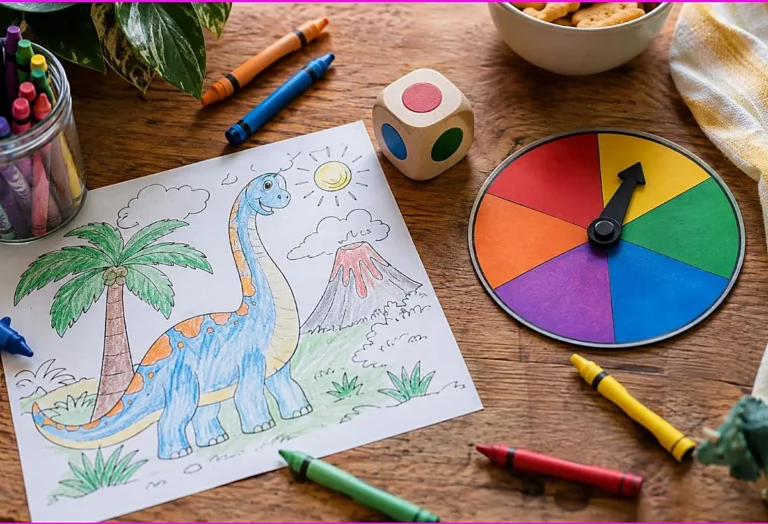
Coloring games turn coloring into play with a learning element. In a roll and color game, children roll a die and color a section based on the result, adding chance and turn taking to coloring. In a coloring race or challenge, children complete a coloring task within a time or in a certain way, adding excitement. These games make coloring active and social while still building skills. Our guide on coloring games covers more ideas.
Interactive coloring activities involve movement, teamwork, or response. Children might hunt around the room for clues that tell them how to color a page, work in teams on a collaborative coloring task, or color in response to questions or instructions. These active, interactive uses suit children who need movement and engagement, turning coloring into a lively group activity.
These game and interactive uses add variety and energy to classroom coloring. Rather than only quiet, individual coloring, games and interactive activities make coloring social, active, and exciting, while still teaching. This suits different learning styles and keeps coloring fresh. Adding coloring games to your repertoire gives you engaging, low prep activities that children love. They combine the benefits of coloring with the energy of a game. Our collection of free printable coloring pages gives you pages to build games around.
Frequently asked questions about coloring pages in classroom
How can I use coloring pages to teach?
Turn coloring pages into learning activities: color by number for math and spelling, labeling and diagram pages for vocabulary, story and writing prompts, color the answer quizzes, and themed pages for any subject. This makes coloring a low prep teaching tool across the curriculum.
Can coloring pages teach math?
Yes. Color by number pages practice number recognition, and advanced versions have children solve sums to find which color goes where, turning math practice into coloring. This works for number bonds, times tables, and more, making math engaging and hands on.
How do I use coloring pages for writing?
Have children color a scene or character, then write or tell a story about it, or describe what they colored. The colored image gives them a concrete, personal starting point, which makes writing more appealing, especially for reluctant writers.
Can I assess students with coloring pages?
Yes. Color the answer quizzes have children color based on correct answers, and comprehension coloring checks understanding of a text or lesson. This tests knowledge in an engaging, low stakes way that children enjoy, while still showing you what they know.
Are coloring page activities suitable for older students?
Yes. Older students can do color by number with math problems, detailed labeling and diagrams, writing prompts, comprehension coloring, and content rich themed pages. Adjusting the content and complexity makes coloring activities effective at any grade level.
The takeaway on coloring pages in classroom
Coloring pages are a powerful, low prep teaching tool when you go beyond free coloring. Use color by number for math and spelling, labeling for vocabulary, story prompts for writing, color the answer quizzes for assessment, and themed pages for any subject. Adapt the content and complexity for your students’ age, pair coloring with clear instructions and connected learning, and keep a well organized stock of pages. Used this way, coloring teaches across the curriculum while children genuinely enjoy it.
Ready to teach through coloring? Browse our free printable coloring pages across many subjects and themes. Every one is free to download and print. For ready made packs, browse our educational coloring pages.