Coloring Pages for Homeschool (A Practical Guide)
Quick answer
Coloring pages are a flexible homeschool tool: use them to reinforce lessons (letters, numbers, animals, history, science), give hands-on breaks, and build fine-motor and focus skills. Pair a themed page with the topic you’re teaching, and let younger children color while you read aloud to keep everyone engaged.
By the TheColoringPages.net team. Reviewed for accuracy, September 2026.
This guide to Homeschool gives clear, practical answers, drawing on homeschooling and years of hands on coloring.
Coloring pages are a homeschool parent’s friend. They support unit studies, teach concepts through play, provide independent quiet work, build fine motor and writing skills, and add hands on art with almost no prep or cost. Free printable pages let you match coloring to any lesson or topic. Whether you are a new or experienced homeschooler, coloring pages are a versatile, budget friendly tool worth using well.
This guide covers how to use coloring pages in your homeschool, from unit studies and independent work to skill building and art, so you can make the most of them.
Quick answer: For homeschoolers, coloring pages support unit studies across subjects, provide independent quiet work, build handwriting readiness and fine motor skills, and add hands on art with no prep. Free printable PDFs let you match pages to any lesson or topic. Coloring is a versatile, budget friendly tool that engages children while supporting learning.

Coloring in unit studies
Coloring pages are ideal for unit studies, engaging children with any topic you cover.
In a unit study, you explore a topic across subjects, and coloring pages bring a hands on, engaging element to the topic. Studying animals, the ocean, space, a historical period, a country, or any theme, a matching coloring page lets children engage with the subject visually and through coloring. This helps them absorb and remember the topic while enjoying the activity. Our guide on play based learning and coloring covers teaching through coloring.
Coloring pages tie a unit together and give a tangible, hands on component. Children can color pages related to the topic as part of their learning, building a sense of engagement and creating work to keep or display. Free printable pages let you find coloring pages for almost any unit study topic, matching your curriculum easily and at no cost.
This makes coloring a flexible, valuable part of unit studies. It adds engagement, hands on learning, and a creative element to any topic, without requiring prep beyond printing. Pairing themed coloring with reading, discussion, and activities on the same topic creates a rich, multi sensory unit study. Coloring pages help make unit studies engaging and memorable for homeschoolers. Our collection of free printable coloring pages covers many topics for unit studies.
Independent quiet work
Coloring pages give homeschoolers a valuable option for independent quiet work.
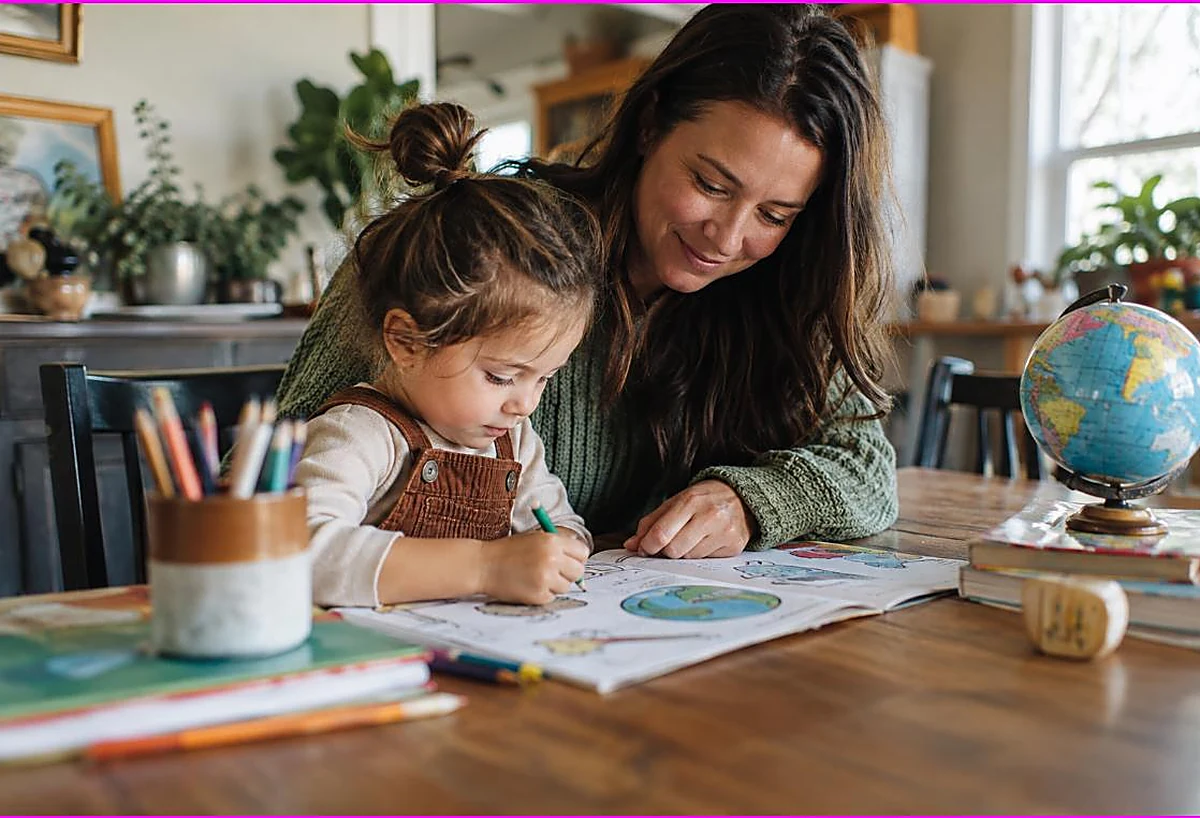
Homeschool days include times when a parent needs children to work independently, whether to teach another child, handle a task, or give structure to the day. Coloring pages provide a calm, engaging independent activity that keeps a child productively occupied without needing constant attention. This is especially useful in homeschools with multiple children of different ages.
Independent coloring also builds a child’s ability to focus and work on their own. Sitting to color a page teaches a child to concentrate and complete a task independently, which is a valuable skill for homeschool learning and beyond. The calm, absorbing nature of coloring makes this independent work enjoyable rather than a chore. Our guide on whether coloring improves concentration covers building focus.
So coloring pages solve a common homeschool challenge: giving children productive, calm independent activity. This helps the homeschool day run smoothly, especially with several children, while also being beneficial rather than mere time filling. Keeping a stock of coloring pages ready for independent work is a simple, effective homeschool strategy. It gives you flexibility and gives children a valued, calm activity. Our collection of free printable coloring pages gives you plenty for independent work.
Building handwriting and fine motor skills
Coloring pages are a natural fit for building the handwriting and fine motor skills homeschoolers work on.
Coloring builds the hand strength, pencil grip, and control that handwriting requires, making it a key pre writing activity. For homeschoolers teaching handwriting, coloring gives children the fine motor practice that supports letter formation, in an enjoyable form. A child who colors regularly develops the hand skills that make handwriting easier. Our guide on coloring and handwriting readiness covers this link.
For younger homeschoolers, coloring builds the foundational fine motor skills that all writing and many tasks depend on. Gripping and guiding a crayon strengthens the hands and develops control, preparing a child for writing. Coloring is one of the best, most enjoyable ways to build these skills at home. Our guide on coloring and fine motor skills covers the development.
So coloring pages support the fine motor and handwriting goals central to early homeschool learning. Pairing coloring with pre writing lines and shapes, and later with handwriting practice, builds writing readiness in an enjoyable, low pressure way. This makes coloring a valuable part of a homeschool literacy program, especially in the early years. It builds essential skills while children enjoy the activity. Our collection of free printable coloring pages for kids supports these skills.

Art without prep
Coloring pages give homeschoolers an easy, no prep way to include art in the school day.
Art is valuable but can feel like extra work to plan and prepare. Coloring pages offer a simple, ready made art activity: just print a page and provide crayons or pencils. This lets you include creative, hands on art with no planning or mess beyond coloring supplies, which is a relief for busy homeschool parents. Art becomes as easy as printing a page.
Coloring also builds real art skills. As children color, they learn about color, develop technique, and express creativity through their color choices. Older children can learn blending, shading, and color theory through coloring, developing genuine art skills. Our guides on coloring techniques for beginners and color theory for coloring cover these skills.
So coloring pages let you include meaningful art in your homeschool without the prep, planning, and mess of many art activities. This makes art achievable on busy days and ensures children get regular creative, hands on experience. Coloring is a reliable, enjoyable, low prep art option that builds real skills. It ensures art has a place in your homeschool even when time and energy are short. Our collection of free printable coloring pages gives you endless art activities ready to print.
Building a themed coloring library
Building a library of coloring pages makes coloring a smooth, ready resource for your homeschool.
Over time, collect coloring pages organized by subject, theme, and type, so you have the right page ready for any lesson or need. A well organized coloring library, sorted into folders by topic and purpose, lets you quickly find pages for unit studies, independent work, skill building, and art. This preparation makes coloring a reliable, smooth part of your homeschool.
Free printable pages make building this library easy and free. You can gather pages for the topics you cover, the skills you teach, and the seasons and holidays through the year, all at no cost. Keeping both digital folders of PDFs and printed pages ready gives you flexibility. Our collection of free printable coloring pages is a rich source for building your library.
A themed coloring library pays off across the homeschool year, giving you a ready resource for countless needs. Rather than searching for pages each time, you reach into your organized library for the right one. This saves time and makes coloring a dependable tool. Investing a little time in building and organizing your coloring library makes coloring one of the most useful, flexible resources in your homeschool. It grows more valuable over time.
Coloring for multiple ages
Homeschools often span several ages, and coloring pages suit them all, which is a real advantage.
Coloring pages work for every age in a homeschool. Younger children color simple pages, building fine motor skills and having fun, while older children color detailed pages, learning technique and engaging with content. The same topic can be covered with age appropriate pages for each child, letting everyone participate in a unit study at their level. Our guide on coloring and child development covers age appropriate coloring.
This makes coloring a valuable activity for multi age homeschooling. While you teach one child, others can color independently at their level. During a shared unit study, each child colors pages suited to their age. Coloring gives every child a calm, engaging, beneficial activity, whatever their age, which helps a multi age homeschool run smoothly.
Coloring together across ages also builds connection. Siblings coloring side by side, or the whole family coloring during a unit study, is a calm, shared activity that suits mixed ages. This social, connected coloring adds to family homeschool life. Coloring pages, suiting every age and bringing children together, are especially valuable for the multi age reality of many homeschools. Our collection of free printable coloring pages spans simple to detailed for all ages.

Coloring for calm and routine in homeschool
Beyond learning, coloring supports the calm and routine that make homeschool days work well.
Homeschool days benefit from calm transitions and settled children, and coloring provides both. A coloring activity can start the day calmly, bridge between subjects, or wind down after intense work. The soothing nature of coloring helps children settle and refocus, which supports learning and keeps the day running smoothly. Our guide on calming activities for kids covers coloring for calm.
Coloring can also be a reliable part of the daily routine. A regular coloring time gives structure to the homeschool day and something children can look forward to. It offers a calm, screen free break that refreshes children between lessons, supporting their focus and wellbeing. Building coloring into the rhythm of your homeschool day adds valuable calm.
For children who find learning stressful or who need to regulate, coloring is a gentle, self directed tool to settle and reset. Keeping coloring available for these moments supports children’s emotional wellbeing alongside their learning. This calming role makes coloring valuable beyond its educational uses, contributing to a peaceful, well functioning homeschool. A calm child learns better, and coloring helps provide that calm. Our guide on coloring versus screen time covers coloring as a calm, screen free choice.
Frequently asked questions about homeschool
How can I use coloring pages in homeschool?
Use coloring pages for unit studies across subjects, independent quiet work, building handwriting and fine motor skills, and hands on art with no prep. Free printable pages let you match coloring to any lesson or topic, making it a versatile homeschool tool.
Are coloring pages educational for homeschool?
Yes. Coloring builds fine motor and handwriting readiness skills, and themed pages engage children with any subject in unit studies. Paired with discussion and related activities, coloring supports real learning across the curriculum, not just quiet time.
How does coloring help with homeschool handwriting?
Coloring builds the hand strength, pencil grip, and control that handwriting requires, making it a key pre writing activity. Regular coloring, paired with pre writing practice, develops the fine motor skills that make handwriting easier for homeschoolers.
Can coloring pages work for multiple ages?
Yes. Coloring pages suit every age: simple pages for younger children, detailed pages for older ones. The same topic can be covered with age appropriate pages for each child, letting everyone participate in a unit study at their level.
How do I organize coloring pages for homeschool?
Build a library of pages organized by subject, theme, and type, in digital folders and printed sets. This lets you quickly find the right page for unit studies, independent work, skill building, and art. Free printable pages make building this library easy and free.
The takeaway on homeschool
Coloring pages are a versatile, budget friendly homeschool tool. They support unit studies across subjects, provide independent quiet work, build handwriting and fine motor skills, and add hands on art with no prep. They suit every age, letting all your children participate at their level. Build an organized library of themed pages, pair coloring with connected learning, and use free printable PDFs to match any lesson. Coloring engages children while supporting learning, making it a valuable part of any homeschool.
Ready to bring coloring into your homeschool? Browse our free printable coloring pages across many subjects, themes, and levels. Every one is free to download and print. For ready made packs, browse our educational coloring pages.