How to Color Mandalas (A Beginner’s Approach)
Quick answer
To color a mandala, start at the center and work outward, coloring matching sections the same color to keep the symmetry. Choose a palette of three to five colors first, then repeat it around each ring for a balanced look. Work slowly from light shades to dark — the repetition is what makes coloring mandalas so relaxing.
By the TheColoringPages.net team. Reviewed for accuracy, September 2026.
Want to learn about Color Mandalas? This guide gives clear, practical steps, drawing on the mandala and years of hands on coloring.
Mandalas are among the most rewarding and calming designs to color, but their intricate, symmetrical patterns can feel intimidating at first. The secret is that mandalas are actually beginner friendly once you know a simple approach: plan your colors, use the symmetry, and work in a steady rhythm. Done this way, coloring a mandala is relaxing, meditative, and produces a beautiful, balanced result.
This guide walks through how to color a mandala, from planning your palette to working with the symmetry, so you can enjoy the calming, satisfying process and create a lovely finished piece.
Quick answer: Color a mandala by starting from the center and working outward, or the reverse, keeping matching sections the same color to use its symmetry, and choosing a palette of 3 to 5 colors before you begin. Repeating colors around each ring creates the classic balanced look. Work in a steady rhythm and focus on the calm, not perfection.

Why mandalas are beginner-friendly
Mandalas may look complex, but they are surprisingly approachable, which is worth understanding.
A mandala’s intricate pattern is built from repeating, symmetrical sections radiating from a center. This structure means you are never coloring something entirely new, just filling sections that repeat around the design. You color one section, then its matching sections the same way, which makes the whole intricate design manageable. The symmetry does much of the design work for you.
Because the pattern is provided and symmetrical, there are no hard decisions about what to draw or where colors go, just filling the sections in a balanced way. This removes the pressure that a blank page or a complex scene can bring, making mandalas relaxing rather than daunting. You simply follow the pattern and repeat your colors, which is calming and achievable.
So do not be put off by a mandala’s intricate appearance. Its structure and symmetry make it beginner friendly, and the repetitive filling is exactly what makes it so calming. With the simple approach in this guide, anyone can color a mandala beautifully. Our guide on the benefits of mandala coloring covers why mandalas are so soothing.
Plan your palette first
The single most helpful step in coloring a mandala is choosing your colors before you start.
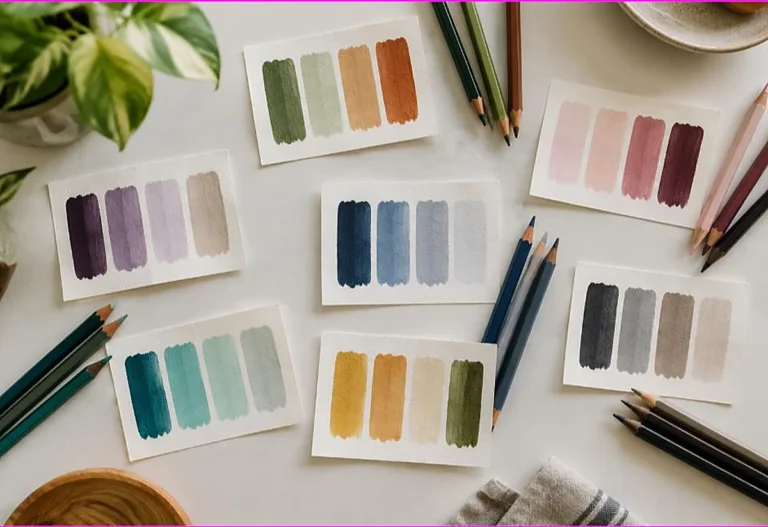
Select a palette of about 3 to 5 colors that work well together before you begin coloring. Choosing your colors ahead of time removes decisions as you go, which keeps the process calm and flowing, and it ensures the finished mandala looks harmonious and intentional rather than a random jumble. A planned palette is the key to a beautiful mandala.
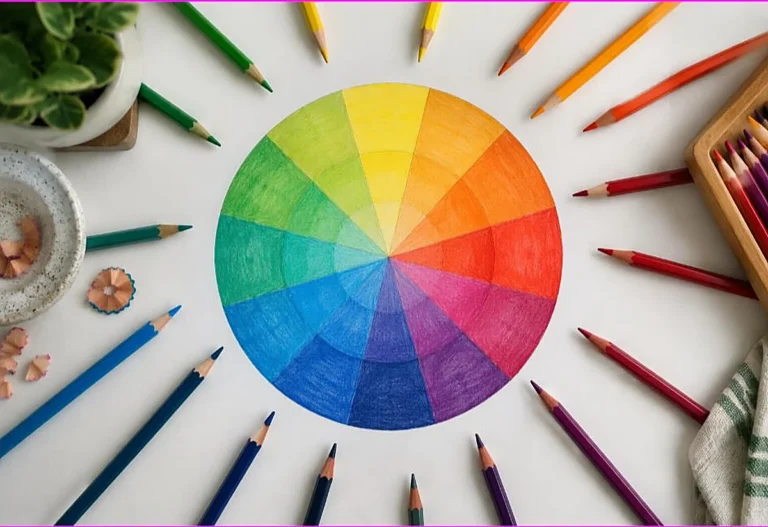
Choose colors that harmonize using simple color theory. Analogous colors, neighbors on the color wheel like blue, teal, and green, give a calm, cohesive mandala. Complementary colors, opposites like blue and orange, give a bold, striking one. A palette of a few harmonious colors, perhaps with a neutral, gives the most pleasing result. Our guide on what colors go together helps you choose.
With your palette chosen, you can relax into the coloring, knowing your colors will work together. You simply decide which of your few colors goes in each ring or section, using the symmetry to guide you. This planning takes only a moment and transforms both the process, calmer and more flowing, and the result, harmonious and balanced. It is the foundation of a beautiful mandala.
Work center-out or edge-in
A simple approach to the order of coloring makes mandalas flow smoothly.
Many colorists work from the center outward, coloring the central section first, then each ring of the pattern moving outward. This follows the mandala’s natural structure, radiating from the center, and gives a satisfying sense of the design building outward. It is a natural, calming way to work through a mandala.
Others prefer to work from the outside in, coloring the outer ring first and moving toward the center. Both approaches work well, so choose whichever feels natural to you. Some colorists also work by color, coloring all the sections of one color across the mandala, then moving to the next color. This can help keep the color placement balanced.
Whichever order you choose, working ring by ring or color by color in a systematic way keeps the mandala balanced and the process flowing. Avoid jumping around randomly, which can make the color placement uneven. A steady, systematic approach, whether center out, edge in, or color by color, gives a balanced result and a calming rhythm. Find the order that feels most soothing to you.

Use the symmetry
Using the mandala’s symmetry is the key to its classic, balanced look.
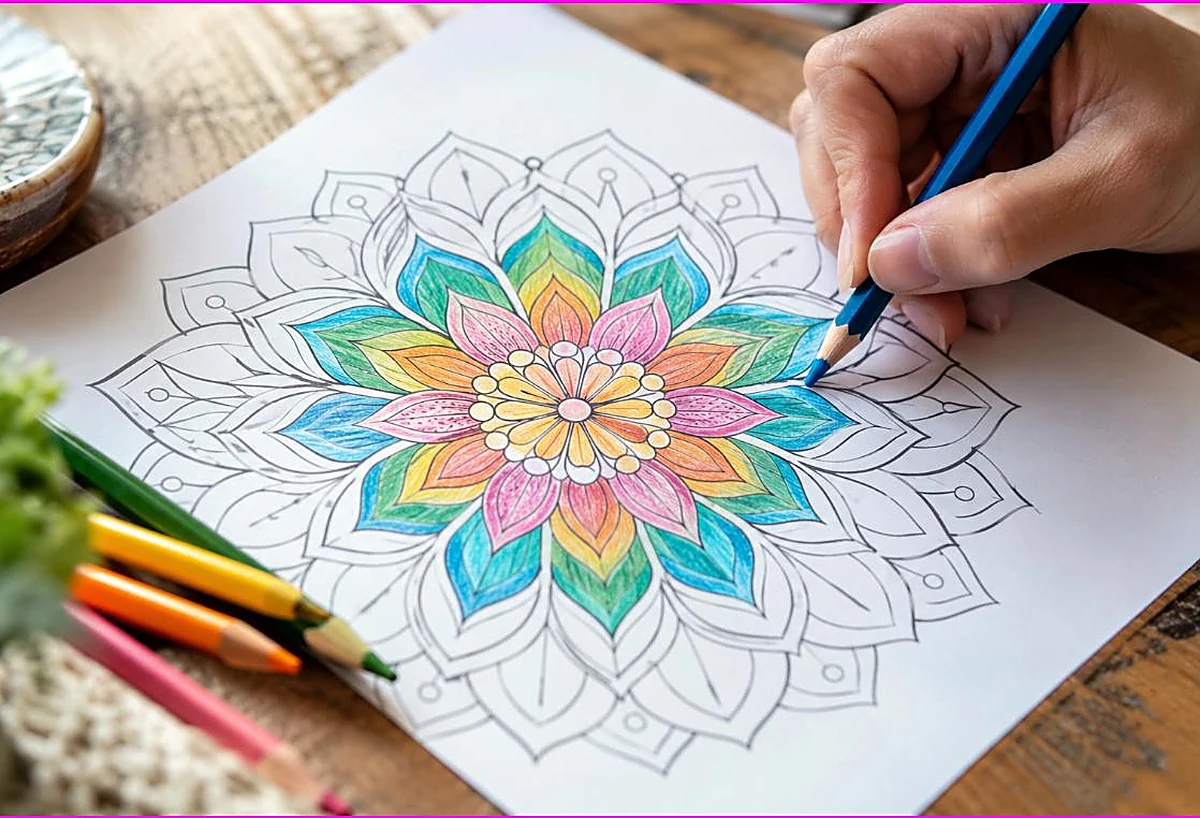
A mandala’s sections repeat symmetrically around the center, so coloring matching sections the same color creates the balanced, harmonious look mandalas are known for. Rather than coloring each section a random color, color each ring or set of matching sections in a consistent way, repeating your colors around the design. This symmetry of color is what makes a mandala look right.
For example, in a ring of eight matching petals, you might color all eight the same color, or alternate two colors around the ring. In the next ring, use another color or pattern from your palette, again repeated around the ring. This creates concentric bands of color that follow the mandala’s structure and look beautifully balanced. The repetition is both visually pleasing and calming to do.
Using the symmetry also makes coloring easier, since once you decide how to color one section, you simply repeat it around the ring. You are not making new decisions for every section, just following your pattern. This is part of what makes mandalas so soothing and achievable. Embracing the symmetry, coloring matching sections consistently, gives the classic mandala look and a calming, meditative process.
Adding blending and shading
Once you are comfortable with the basics, blending and shading can make a mandala stunning.
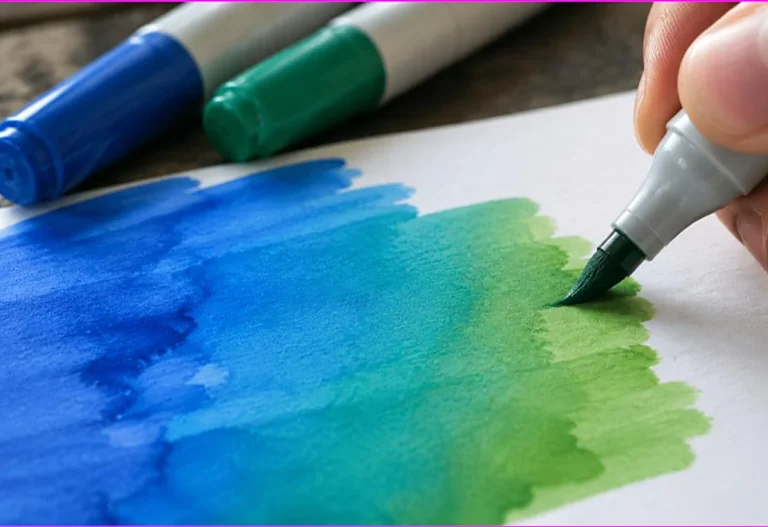
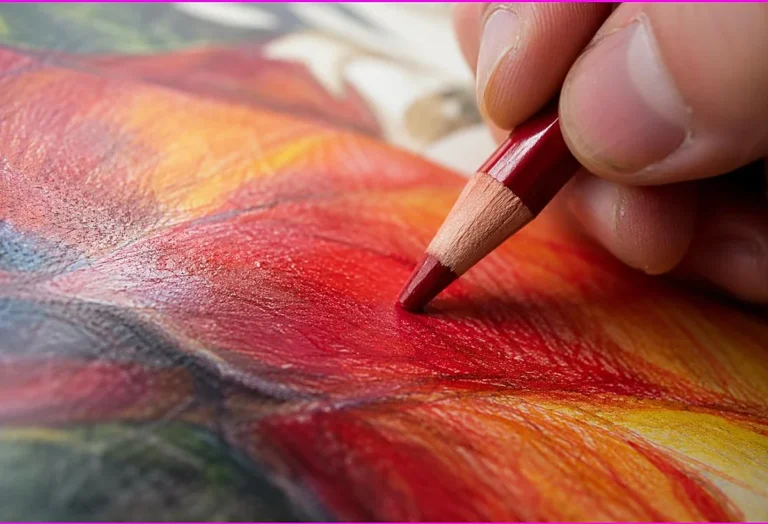
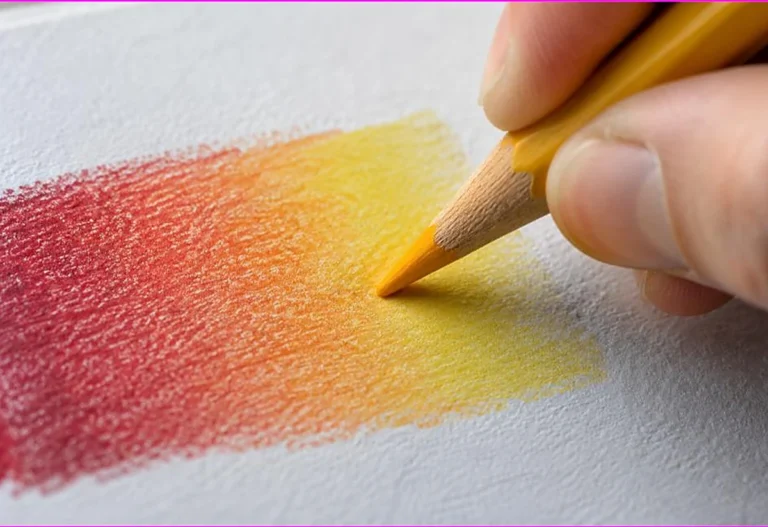
Blending colors within a mandala adds richness and depth. You might blend two colors within a ring, creating a gradient around the mandala, or blend from the center outward for a glowing effect. This takes a mandala from flat, pretty color to rich, dimensional beauty. Our guides on blending colored pencils and blending markers cover blending techniques.
Shading adds three dimensional depth. Adding a little shadow at the edges of sections, or where the pattern overlaps, gives the mandala depth and makes elements pop. Consistent shading around the symmetrical sections maintains the balanced look while adding dimension. Our guide on how to shade a coloring page covers shading. These techniques are optional but can make a mandala genuinely impressive.
Add these refinements once the basics feel comfortable. A beautifully colored mandala does not require blending and shading, since balanced, harmonious flat color is lovely on its own. But for those who want to develop their skills, a mandala is a perfect canvas for practicing blending and shading, with its repeating sections giving lots of chances to refine the techniques. Build up to them at your own pace.
Relaxing, not perfect
The most important thing about coloring a mandala is to focus on the calm, not perfection.
Mandalas are prized for their calming, meditative quality, so approach coloring one as a relaxing activity rather than a task to complete perfectly. Color at a slow, steady pace, focus on the process and the rhythm of filling the repeating sections, and let go of any pressure for a flawless result. The calm comes from the absorbed, unhurried process, as our guide on mindful coloring covers.
Do not worry about small imperfections or slight unevenness. A hand colored mandala is meant to be a personal, meditative creation, not a machine perfect one, and small variations are part of its handmade charm. Chasing perfection creates stress, which defeats the calming purpose of coloring a mandala. Let the process be gentle and forgiving.
There is no need to finish a mandala in one sitting, either. Coloring a mandala slowly over several relaxing sessions is perfectly fine and can be part of the pleasure. The goal is the calm, focused, satisfying process, with a beautiful mandala as the happy result. Approaching it this way makes mandala coloring one of the most rewarding and soothing forms of coloring. Our guide on the benefits of mandala coloring covers the calm they bring.
Choosing a mandala to color
The mandala you choose affects your experience, so pick one that suits you.
For beginners, or for a quick, calming session, choose a simpler mandala with larger sections. These are easy to color, come together quickly, and still give the satisfying, balanced mandala look. They are a great starting point that builds confidence without overwhelming you. There is no need to start with the most intricate design.
For a longer, more absorbing session, or once you are comfortable, choose a more detailed, intricate mandala. These offer a deeply meditative, immersive coloring experience, with many small sections to fill in a calming rhythm. They reward patience with a stunning finished piece, and they are perfect for a long, relaxing coloring session.
Match the mandala to your mood and available time. A simple mandala suits a short break or a beginner, while an intricate one suits a long, deep, relaxing session. Having a range of mandalas lets you choose the right one for the moment. Whatever the complexity, the same approach applies: plan your palette, use the symmetry, and focus on the calm. Our collection of free printable coloring pages includes mandalas at every level.

Mandalas for stress relief
Mandalas are especially valued for stress relief, and coloring them with that in mind makes them even more soothing.
The repeating, symmetrical structure of a mandala gives the mind a clear, gentle framework to follow, which is deeply calming. Filling section after section in a steady rhythm draws your attention into the present, much like meditation, and quiets a busy mind. Research links coloring mandalas to lower anxiety, more so than free form coloring, as our guide on the benefits of mandala coloring covers.
To get the most stress relief, color your mandala slowly and mindfully. Choose a quiet space, breathe steadily, and focus on the colors and the rhythm of filling the sections rather than the finished result. Let the repetitive, symmetrical coloring absorb your attention and settle your mind. Our guide on mindful coloring covers this approach.
Coloring a mandala this way, as a calming, meditative practice, makes it one of the best coloring activities for stress relief. Keep a few mandalas and your colors ready for when you want to unwind, and let the soothing rhythm of coloring them settle you. The beautiful finished mandala is a lovely bonus to a genuinely calming activity. Our collection of free printable coloring pages includes mandalas ideal for calm, mindful coloring.
Frequently asked questions about color mandalas
How do you color a mandala?
Choose a palette of 3 to 5 harmonious colors first, then color from the center outward or the reverse, keeping matching sections the same color to use the symmetry. Repeat your colors around each ring for a balanced look. Work in a steady, calming rhythm.
Where do you start when coloring a mandala?
Many colorists start at the center and work outward, following the mandala’s natural structure, but you can also work from the outside in, or by color. Choose whatever feels natural. Working systematically, rather than randomly, keeps the design balanced.
How do I choose colors for a mandala?
Choose a small palette of 3 to 5 colors that work together before you start. Analogous colors give a calm mandala, complementary colors a bold one. Planning your palette keeps the process flowing and the result harmonious and balanced.
Do I have to color mandalas symmetrically?
Using the symmetry, coloring matching sections the same, gives the classic balanced mandala look and makes coloring easier. But you can color a mandala however you like. Symmetrical color is the traditional, most harmonious approach, and it is also the most calming.
Are mandalas hard to color?
No, mandalas are beginner friendly despite looking intricate. Their repeating, symmetrical structure means you fill matching sections consistently rather than making new decisions. With a planned palette and the symmetry as your guide, anyone can color a mandala beautifully.
The takeaway on color mandalas
Coloring mandalas is calming, rewarding, and more approachable than it looks. Plan a palette of a few harmonious colors first, work systematically from the center out or the reverse, and use the symmetry by coloring matching sections consistently. Add blending and shading as your skills grow, choose a mandala to suit your mood, and above all focus on the calming, meditative process rather than perfection. With this approach, mandala coloring becomes one of the most soothing and satisfying forms of coloring.
Ready to color a mandala? Browse our free printable coloring pages, including mandalas for every level. Every one is free to download and print. For ready made packs, browse our mandala coloring pages.