Is Coloring Good for Your Brain? The Science, Made Simple
Quick answer
Yes — coloring engages focus, fine-motor control, and creativity at once, and its repetitive, absorbing nature can calm the mind much like mindfulness. For adults it’s a low-pressure way to relax and concentrate; for children it helps build the coordination and attention skills used in learning.
By the TheColoringPages.net team. Reviewed for accuracy, September 2026.
This guide to Good for your Brain gives clear, practical answers, drawing on the human brain and years of hands on coloring.
Coloring feels good, but what is actually happening in your brain while you do it? It turns out coloring engages more of the brain than you might expect, and it calms the part that drives stress. You do not need to understand neuroscience to enjoy coloring, but knowing the basics helps explain why such a simple activity has such a steadying effect.
This guide explains, in plain terms, what coloring does in the brain, why it calms you, and what it can and cannot do for your mind. The aim is an honest picture, free of the exaggerated claims that often surround this topic, so you know exactly what to expect.
Quick answer: Coloring engages the areas of the brain involved in focus, fine motor control, and vision, while calming the amygdala, the brain’s stress center. This combination improves concentration and brings on a relaxed, meditative state. Coloring is good for focus and calm, though it is not a cure for any condition.

What happens in the brain when you color
Coloring is not one action but several, and each engages a different part of the brain at once.
When you color, your eyes track the outline and the space to fill, using the visual areas of the brain. Your hand grips and guides the tool, using the areas that control fine movement. You decide which color to use and where, using the areas involved in planning and choice. All of this happens together, in a smooth, low effort loop.
Because coloring engages vision, movement, and light decision making at the same time, it occupies the mind fully without straining it. This full but gentle engagement is part of why coloring is so absorbing. The brain is busy enough to be held, but not so taxed that it feels like work.
None of this requires effort to trigger. You simply pick up a color and begin, and the brain follows into that engaged, settled state.
Why coloring calms you
The calming effect of coloring comes down to attention and the brain’s stress response.
Deep in the brain sits the amygdala, which helps drive the stress and fear response. When you are anxious, it is active, keeping you tense and alert. Activities that focus and settle the mind can help quiet this response. Coloring is one of them, because it draws attention onto a simple, present task and away from the worries that keep the stress response running.
The Mayo Clinic Health System has noted that coloring can relax the brain by focusing attention, and Cleveland Clinic has described how adult coloring can help the brain unwind. The mechanism is the same one behind meditation: narrow attention onto something gentle, and the anxious churn quiets down.
This is why coloring feels calming even though it is simple. It is not the pictures that soothe you. It is the focused attention that pulls the mind out of stress and into the present.
Focus and attention
Beyond calm, coloring gives the brain useful practice at focusing, which strengthens over time.
Focusing is a skill, and like any skill it improves with practice. Coloring offers steady practice at holding attention on one task and seeing it through. For children, this helps lengthen a short attention span. For adults, it offers a break from the fractured, jumping attention that screens encourage.
Completing a page also trains persistence, the ability to stay with a task to the end. This carries over into other areas that need sustained focus. Our guide on whether coloring improves concentration in kids looks at this in children, though the effect applies to adults too.
The key point is that coloring gives the brain a rare thing in modern life: sustained, single task focus. That practice is genuinely good for the mind’s ability to concentrate.
Left brain and right brain, together
You may have heard that coloring uses both sides of the brain, and there is a grain of truth worth understanding.
The popular idea splits the brain into a logical left side and a creative right side. Reality is more blended than that, but coloring does draw on different kinds of thinking at once. It uses logic and structure, staying within lines and choosing an order, alongside creativity and expression, picking colors and making the page your own.
This blend is part of coloring’s appeal. It satisfies both the wish for structure and the wish to create, in one gentle activity. You are not solving a hard problem or facing a blank page, yet you are still thinking and making choices. That balance is comfortable and absorbing for most people.
It is worth being accurate here. Coloring does not sharply “activate both hemispheres” in the dramatic way some claims suggest. It simply engages both structured and creative thinking, which is enough to explain why it feels satisfying.

Does coloring improve memory or creativity?
It is fair to ask whether coloring makes you smarter, more creative, or better at remembering. The honest answer is measured.
Coloring is not proven to boost memory or make you more intelligent. Claims that it sharply improves cognition or prevents decline go beyond what the evidence supports. It is best not to treat coloring as brain training.
What coloring does support is focus, calm, and a small creative outlet. Making color choices exercises light creativity, and the calm it brings can indirectly help thinking, since a settled mind concentrates better than a stressed one. For children, the skill building is real and valuable. For adults, the main gifts are calm and focus rather than raised intelligence.
Keeping these expectations honest makes coloring more useful, not less. It is a genuine tool for calm and focus, and that is plenty. Overselling it as brain training only sets people up for disappointment, while understanding its true, modest strengths lets you use it well.
The limits worth knowing
Coloring is good for the brain in real but modest ways, and knowing the limits keeps it in its proper place.
Coloring calms everyday stress and supports focus. It is a helpful, low risk, enjoyable activity for the mind. It is not a treatment for anxiety, depression, dementia, or any other condition, and it does not replace professional care when that is needed.
Think of coloring as one small, reliable support for your mental wellbeing, alongside sleep, movement, connection, and help when you need it. Used that way, its brain benefits are real and worth having. Our guide on the wider benefits of coloring sets it in that fuller context.
How coloring compares to screens for the brain
One of the clearest brain benefits of coloring shows up when you compare it to time on a screen.
Screens deliver fast, constant stimulation. The brain takes in a stream of changing images and rewards without doing much active work, and heavy screen use can leave attention fragmented and the mind overstimulated. Coloring is the opposite kind of input. It is slow, steady, and active, asking the brain to focus and create rather than passively receive.
This difference matters for focus. Where screens train the brain to jump from one thing to the next, coloring trains it to settle on one task. For both children and adults, that single task focus is a valuable counterbalance to a screen heavy day. Our guide on coloring versus screen time looks at this contrast in detail.
Coloring also leaves the mind calmer, while intense screen use often leaves it wired. Swapping some screen time for coloring gives the brain a gentler, more restorative kind of activity, which is part of why coloring before bed helps sleep, as our guide on coloring before bed explains. The contrast is not that screens are all bad, but that coloring offers the brain a different, calmer mode that is easy to lose in a screen filled day.

Getting the most brain benefit from coloring
A few simple choices help you get the focus and calm that coloring can offer.
Color without distractions. Coloring while half watching a screen splits your attention and removes much of the focusing benefit. Give the activity your attention, even for a short session, and the calming, focusing effect is stronger.
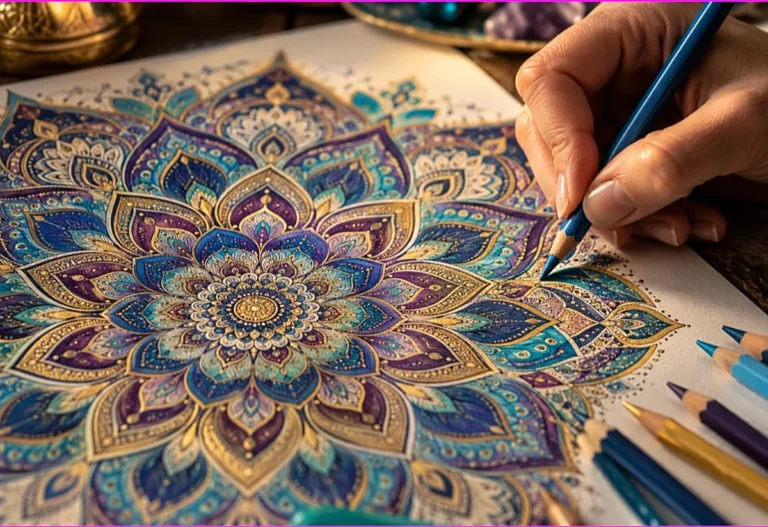
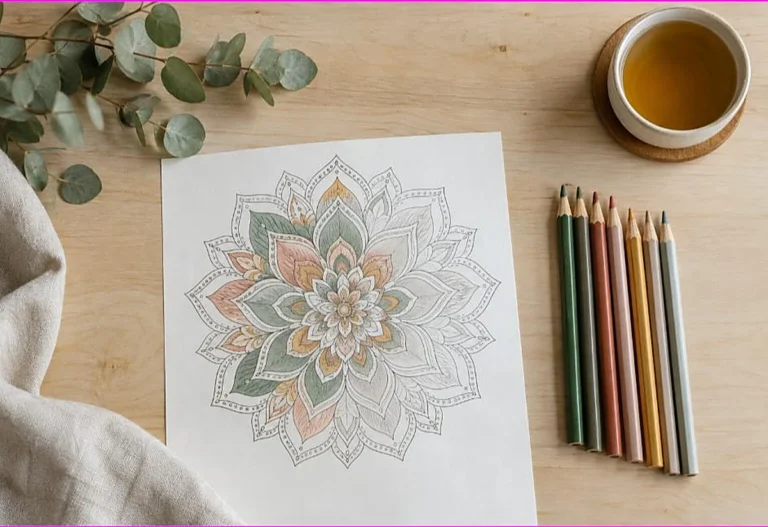
Choose the right design for your goal. Structured, repeating patterns like mandalas are best for calm, since they ask for no decisions and offer a soothing rhythm. More detailed scenes suit deep, absorbed focus. Matching the page to what you want keeps the benefit high.
Keep sessions regular rather than rare. Like any practice that trains focus and calm, coloring helps more as a small, steady habit than as an occasional long stretch. A short session most days does more for your mind than an hour once in a while. Our collection of free printable coloring pages gives you designs for both calm and focus, so you can build the habit around pages you enjoy returning to.
Coloring and the brain at different ages
Coloring benefits the brain at every age, though what it offers shifts across a lifetime.
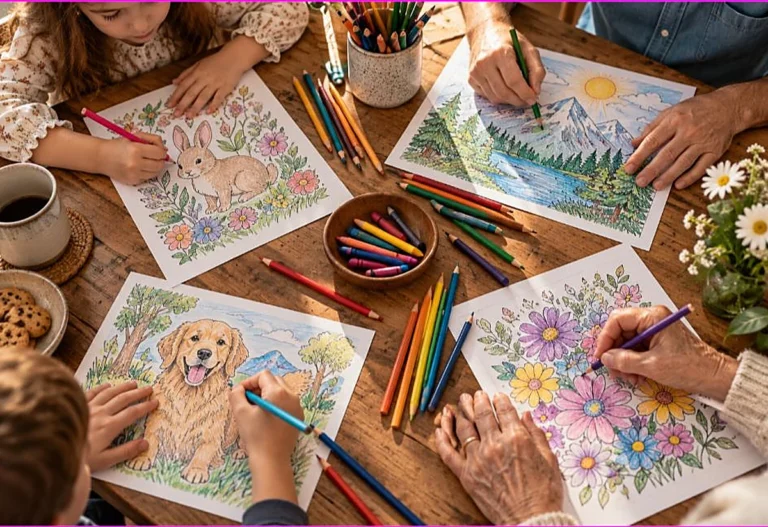
For young children, coloring builds the brain’s control over the hands and eyes, laying the groundwork for writing and other fine motor tasks. It also trains early focus and gives the developing brain practice at sticking with a task. Our guide on the benefits of coloring for kids covers this developmental side.
For adults, the main brain benefits are calm and focus. Coloring gives a busy, screen tired mind a rest and a chance to practice single task attention. It is a simple counterweight to the fragmented focus that modern life encourages.
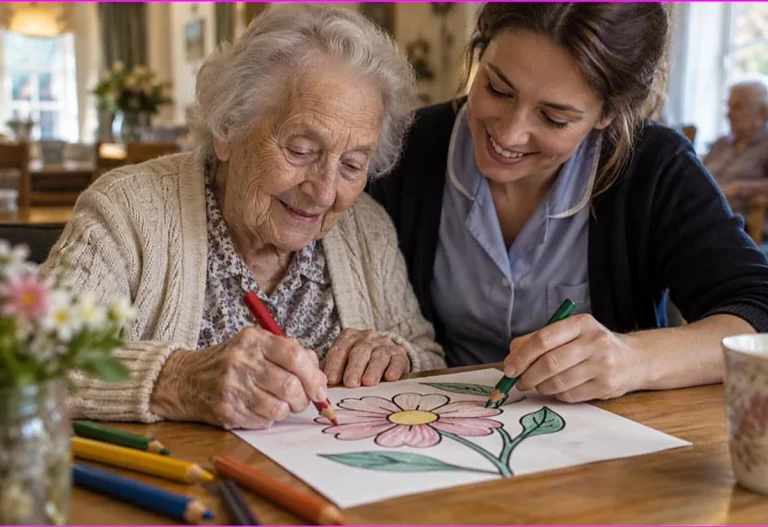
For older adults, coloring keeps the mind gently engaged and gives the hands steady exercise. It offers pleasant mental activity without pressure, which suits the brain in later life. Our guide on the benefits of coloring for seniors explores this. The same simple activity, then, meets the brain’s needs differently at each stage, which is a large part of why coloring stays useful across a whole life.
Frequently asked questions about good for your brain
Is coloring good for your brain?
Yes, in modest ways. Coloring engages the brain’s focus, movement, and visual areas while calming the stress response. This improves concentration and brings on a relaxed state, though it is not a cure for any condition.
How does coloring calm the brain?
Coloring draws attention onto a simple, present task, which quiets the amygdala, the brain’s stress center. This is the same mechanism as meditation, and it eases the anxious mental churn that fuels stress.
Does coloring use both sides of the brain?
Coloring draws on both structured thinking, like staying in lines, and creative thinking, like choosing colors. The popular “both hemispheres” claim is oversimplified, but coloring does blend logic and creativity in one activity.
Does coloring improve memory or make you smarter?
There is no strong evidence that coloring boosts memory or intelligence. Its real benefits are calm, focus, and a small creative outlet. For children, it also builds genuine developmental skills.
Is coloring as good as meditation for the brain?
Coloring works much like meditation by focusing attention and calming the stress response. It is often easier than meditation, since the task gives the mind something to hold rather than asking it to sit still.
The takeaway on good for your brain
Coloring is good for your brain in real, modest ways. It engages focus, movement, and vision while calming the stress center, which improves concentration and brings a settled, meditative state. It blends structure and creativity, and it gives the mind rare single task focus. It is not brain training or a cure, but as a simple tool for calm and focus, it earns its place, and it does so for the developing brain of a child, the busy mind of an adult, and the mind of an older person alike.
Ready to give your brain a calm, focused break? Browse our free printable coloring pages and pick a design. Every one is free to download and print.