Developmental Milestones of Coloring (By Age)
Quick answer
Coloring develops in predictable stages: toddlers (around 12–18 months) start with random scribbles, 2–3-year-olds make controlled marks and name colors, 3–4-year-olds fill large shapes, and most children color inside the lines fairly well by about 5–6. These are general guides — every child moves at their own pace.
By the TheColoringPages.net team. Reviewed for accuracy, September 2026.
This guide to Coloring Milestones gives clear, practical answers, drawing on child development and years of hands on coloring.
Coloring develops through a series of milestones, from the first random scribble to neatly coloring inside the lines. Knowing these milestones helps you understand what to expect at each age, support your child appropriately, and appreciate the developmental work behind every stage. Each milestone builds the hand skills and control a child needs for writing and learning.
This guide maps the coloring milestones by age, explaining what happens at each stage and how to support it.
Quick answer: Coloring milestones progress with age: random scribbling around 12 to 18 months, controlled scribbling around 2 years, filling shapes and naming drawings around 3 years, coloring with intent around 4 years, and coloring inside the lines around 5 to 6 years. Each stage builds on the last, and children reach them at their own pace.

Milestone chart by age
Here is an overview of the coloring milestones by age, before we look at each in detail.
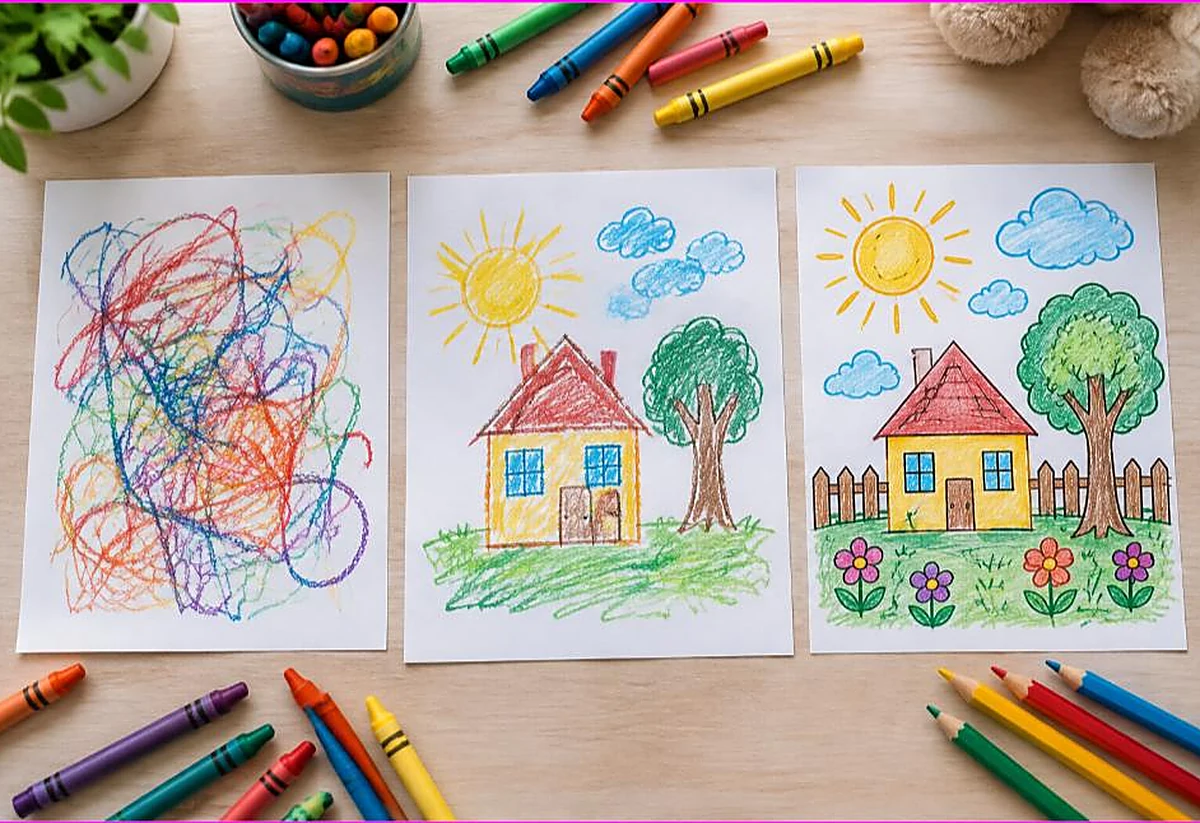
Around 12 to 18 months, children reach the first milestone: random scribbling, making marks with the whole arm and a fisted grip. Around 2 years, this develops into controlled scribbling, with purposeful back and forth and circular marks.
Around 3 years, children begin filling shapes and may name what they have drawn, showing early representation. Around 4 years, they color with more intent, staying roughly within a large area and choosing colors on purpose. By 5 to 6 years, most reach the milestone of coloring inside the lines, with the control to stay within boundaries.
These ages are typical, but every child develops at their own pace, and a wide range is normal. The sequence matters more than the exact ages, since each milestone builds on the last. Understanding this progression helps you support your child at their current stage. Our guide on coloring and child development covers the wider picture.
12 to 18 months: first scribbles
The first coloring milestone is random scribbling, which arrives around 12 to 18 months.
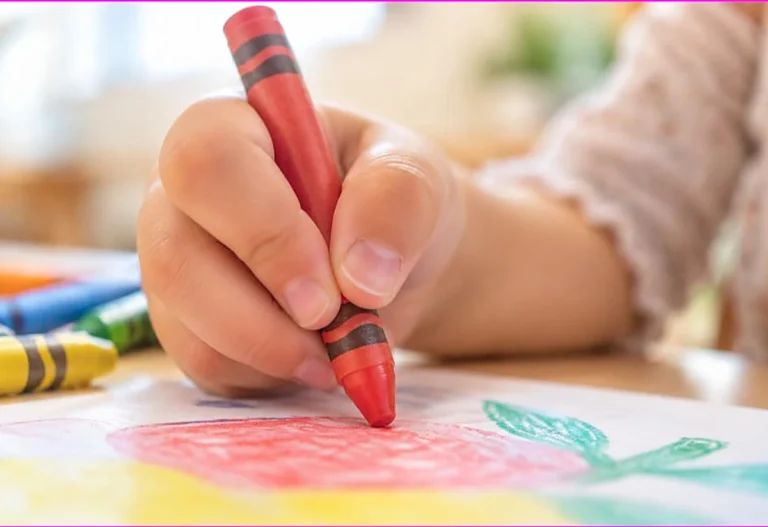
At this stage, a child grips a chunky crayon in their fist and makes marks with whole arm movements. The scribbles are random, with no control over where they go. The child is delighted simply to discover that moving the crayon makes color appear, which is a key learning moment about cause and effect.
This first scribbling is essential developmental work, not just play. It builds the hand strength and coordination that all later coloring depends on, and it teaches the child that their actions produce results. Encouraging this scribbling, rather than expecting anything more, supports the child perfectly. Our guide on what age kids start coloring covers this stage.
Support this milestone with chunky, washable crayons and large paper, and let the child scribble freely. Expect marks everywhere and no control, since that is exactly right. Praising the effort and the joy of making marks builds a positive start to coloring. The control will come later, built on this foundation of free scribbling.
2 years: controlled scribbles
Around 2 years, scribbling becomes more controlled, marking the next milestone.
The child begins making purposeful marks: back and forth lines, circular motions, and repeated patterns. This shows developing control over the crayon, a step up from the random marks of the first stage. The child is starting to direct their movements, though coloring is still loose and goes anywhere.
This controlled scribbling reflects growing hand strength and fine motor control, built through the earlier free scribbling. The child is developing the ability to guide the crayon, which is the foundation for filling shapes and, eventually, staying in the lines. It is an important step in the progression toward controlled coloring.
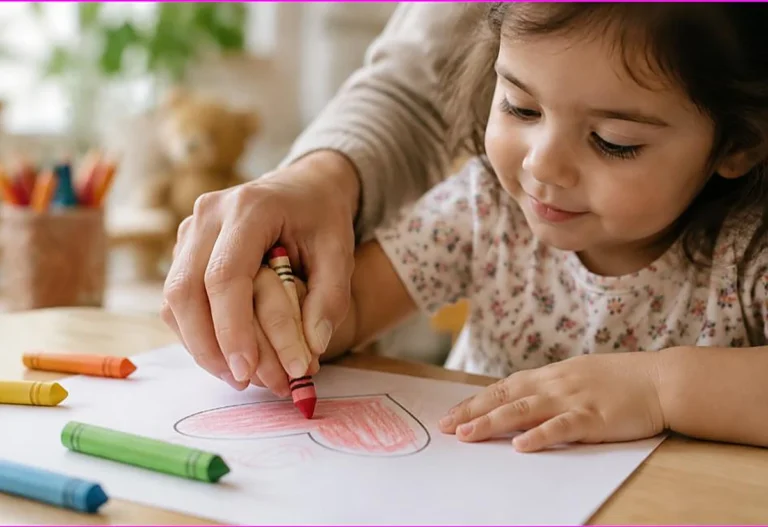
Support this milestone by continuing to offer chunky crayons and simple pages, and let the child explore their developing control freely. There is no need to push for filling shapes or staying in lines, which come later. Celebrating the child’s scribbles and their growing control encourages them to keep coloring, building the skills for the next stage. Our guide on coloring for toddlers covers this age.

3 years: shapes and fills
Around 3 years, children reach the milestone of beginning to fill shapes and name their drawings.
The child starts to fill in areas, though loosely and well outside any lines, and may begin to name what they have drawn, even if it does not look like the named thing. This shows early representation, the understanding that marks can stand for objects, which is a significant cognitive step. Coloring is still loose, but it is becoming more purposeful.
This milestone reflects growing control and developing imagination. The child is gaining the ability to fill areas, a step toward controlled coloring, and beginning to connect their marks to ideas and objects. Both the physical and cognitive development show in this stage. It is a rich period of growth.
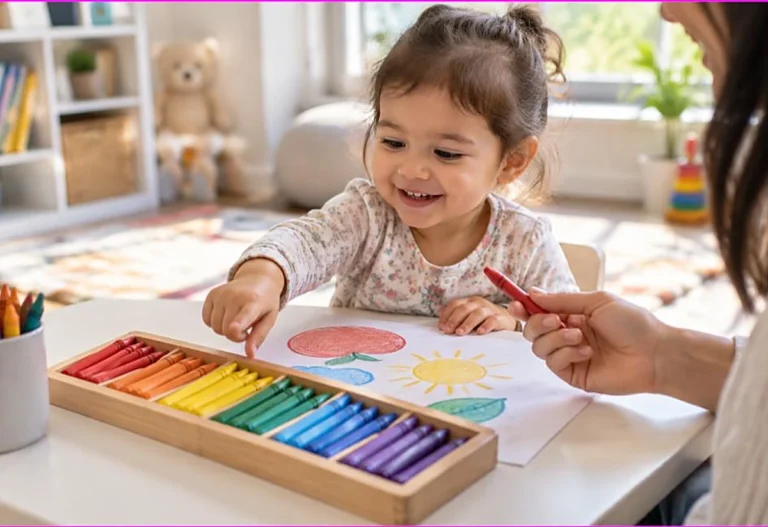
Support this milestone by offering pages with clear, large shapes to fill, and engaging with the child’s naming and stories about their coloring. Talking about what they have drawn encourages their developing imagination and language. There is still no need to push for neatness, since coloring within lines comes later. Our guide on coloring for speech therapy covers building language through coloring.
4 years: intentional coloring
Around 4 years, children color with more intent, marking a milestone of purposeful coloring.
The child now colors with clear intention, staying roughly within a large area and choosing colors on purpose. They may try to color objects their real colors and show more care in filling shapes, though they still cross lines. This shows developing control and a growing understanding of coloring as representing things accurately.
This milestone reflects maturing fine motor control and hand and eye coordination, built through the earlier stages. The child is approaching the control needed to stay in the lines, though not quite there. Their coloring is becoming recognizable and purposeful, showing significant developmental progress. It is an exciting stage to watch.
Support this milestone by offering more varied pages, including ones with distinct areas to color, and encouraging the child’s efforts without demanding neatness. Praising their color choices and care builds confidence and motivation. Offering slightly more detailed pages as they are ready gently stretches their developing control. Our guide on the benefits of coloring for kids covers the skills building at this stage.
5 to 6 years: inside the lines
Around 5 to 6 years, most children reach the milestone of coloring inside the lines.
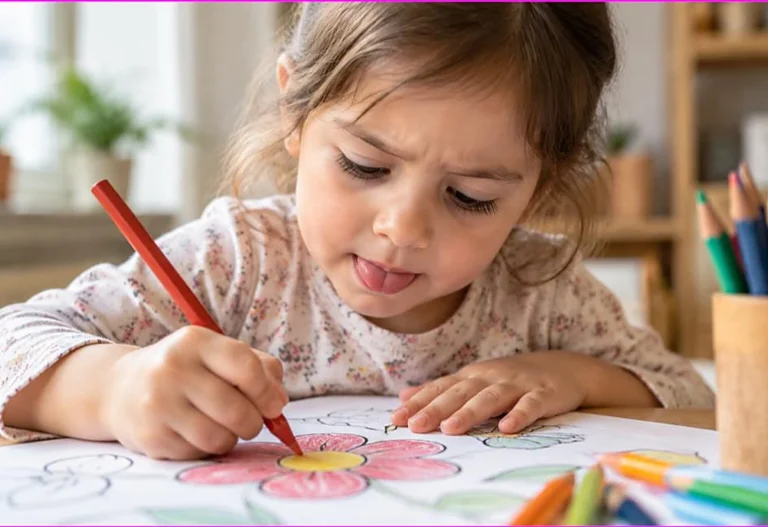
The child now has the fine motor control, hand and eye coordination, and visual perception to guide the crayon precisely along boundaries and stay within them. This is the culmination of the coloring progression, showing mature hand control. It is the same control that handwriting requires, which is why the two develop around the same time. Our guide on what age kids color inside the lines covers this milestone.
Reaching this milestone reflects years of development, built through all the earlier stages of scribbling and free coloring. The wild scribbling of a toddler has developed, step by step, into the precise coloring of a school age child. Every earlier stage contributed to this control, which is why each was valuable in its own right.
Support this milestone by offering more detailed pages that reward the child’s control, and celebrating their neat coloring while still valuing creative color choices. This is also a sign of writing readiness, so pairing coloring with pre writing activities supports the transition to writing. Our guide on coloring and handwriting readiness covers this. Our collection of free printable coloring pages for kids offers detailed designs for this stage.
When to seek advice
Coloring milestones vary widely, but occasionally it is worth checking in with a professional.
Most children progress through these milestones at their own pace, and a wide range of ages is completely normal. There is no need to worry if your child reaches a milestone a little later than another child, or than the typical age. Development is not a race, and coloring skill depends on interest and opportunity as well as ability.
That said, if a child seems significantly behind the typical progression, such as still only making random marks well past the age when controlled scribbling usually develops, or if you have other concerns about their fine motor development, it is worth mentioning to your pediatrician. A teacher or doctor may also raise a concern. An occupational therapist can assess development and provide support. Our guide on coloring in occupational therapy covers this.
For most children, though, coloring milestones unfold naturally with time, opportunity, and encouragement. Offering plenty of enjoyable coloring, suited to the child’s stage, supports their progression. Trust the process, celebrate each stage, and let your child develop at their own pace. The milestones will come.

How the milestones connect to writing
The coloring milestones do more than track coloring ability. They mark a child’s progress toward writing readiness.
Each coloring milestone reflects developing hand skills that writing also requires. The hand strength built through early scribbling, the control developed through filling shapes, and the precision reached when coloring inside the lines are all foundations for handwriting. So as a child progresses through the coloring milestones, they are also progressing toward the ability to write. Our guide on coloring and handwriting readiness covers this link.
The milestone of coloring inside the lines, around 5 to 6 years, is particularly significant, since it shows the mature hand control that letter formation needs. A child who has reached this milestone has developed much of the physical readiness for writing. This is why coloring and early writing tend to develop around the same time.
So watching your child progress through the coloring milestones gives you insight into their writing readiness too. Supporting each milestone with plenty of coloring builds the hand skills that writing depends on. By the time a child reaches the later milestones, coloring has helped prepare their hand for the writing to come. Our collection of free printable coloring pages for kids supports every stage of this development.
Frequently asked questions about coloring milestones
What are the developmental milestones of coloring?
Coloring milestones progress with age: random scribbling around 12 to 18 months, controlled scribbling around 2 years, filling shapes around 3 years, intentional coloring around 4 years, and coloring inside the lines around 5 to 6 years.
At what age do children color inside the lines?
Most children color inside the lines around 5 to 6 years, once they have developed the fine motor control, coordination, and visual perception to stay within boundaries. This is the same control handwriting requires.
Is it normal for my child to only scribble?
Yes, if your child is young. Random scribbling is normal from 12 to 18 months, and controlled scribbling around 2 years. Scribbling is essential developmental work that builds the hand skills for later coloring. It should not be corrected.
Do all children reach coloring milestones at the same age?
No. A wide range of ages is normal, and children reach milestones at their own pace. The sequence matters more than the exact ages. There is no need to worry about small differences from the typical ages.
When should I be concerned about my child’s coloring development?
If a child seems significantly behind the typical progression, or you have other concerns about their fine motor development, mention it to your pediatrician. A teacher or doctor may also raise a concern, and an occupational therapist can assess and support.
The takeaway on coloring milestones
Coloring develops through clear milestones: random scribbling around 12 to 18 months, controlled scribbling around 2 years, filling shapes around 3 years, intentional coloring around 4 years, and coloring inside the lines around 5 to 6 years. Each stage builds on the last, developing the hand skills and control a child needs for writing. Support your child at their current stage with suitable pages and encouragement, and let the milestones unfold at their own pace. Every stage, from the first scribble on, is valuable developmental work.
Ready to support your child at every stage? Browse our free printable coloring pages for kids, from simple to detailed. Every one is free to download and print. For ready made packs, browse our educational coloring pages.