Can You Print Coloring Pages on Cardstock? (Yes, Here’s How)
Quick answer
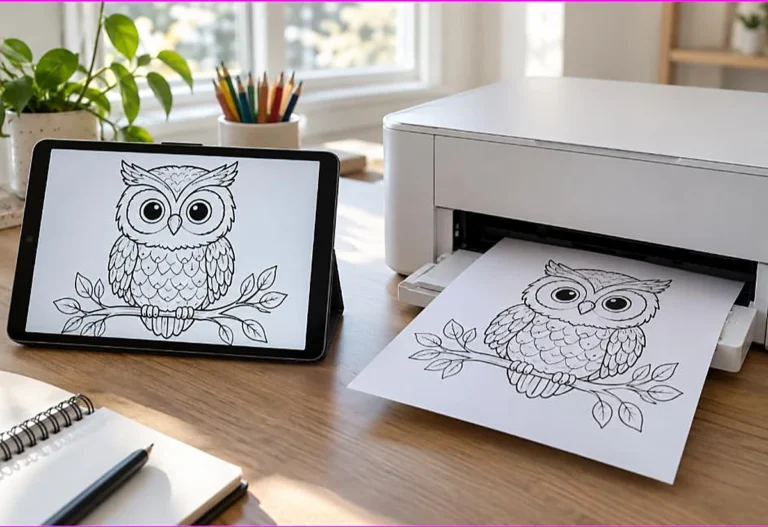
Yes — cardstock is ideal for coloring pages because the thicker paper (about 65–110 lb / 176–300 gsm) stops markers bleeding through. Load one or two sheets at a time, set your printer’s paper type to “cardstock” or “heavy,” and use the rear or manual feed if you have one so the stiff paper feeds smoothly.
By the TheColoringPages.net team. Reviewed for accuracy, September 2026.
This guide to Cardstock gives clear, practical answers, drawing on card stock and years of hands on coloring.
If your child loves markers, or you want a coloring page sturdy enough to keep, cardstock is the answer. It is thicker than regular paper, so markers do not bleed through and the finished page holds up to handling. But cardstock also needs a couple of printer tweaks, or it can jam or smear.
This guide explains when cardstock is worth using, what weight to choose, and how to set up your printer so it feeds and prints cleanly every time.
Quick answer: Yes, you can print coloring pages on cardstock. Use a weight of 150 to 200 gsm, set your printer’s paper type to “cardstock” or “heavy,” and feed sheets one at a time if your printer tends to jam. Cardstock is ideal for markers, keepsakes, and pages you plan to laminate.

When cardstock is worth using
Cardstock costs more than copy paper, so it is best saved for the pages that benefit from it. There are a few clear cases.
Markers are the main reason. Water based and alcohol markers both bleed through thin paper and mark whatever is underneath. Cardstock is thick enough to stop that, so your child can color with markers freely. Our guide on how to color with markers without bleeding through covers the wider fix.
Keepsakes are the second reason. A page your child will frame, hang, or give as a gift feels more special on cardstock, and it survives being handled and displayed. Thin paper creases and tears, while cardstock stays crisp.
Lamination and reuse are the third. If you plan to laminate a page or turn it into a bookmark or ornament, cardstock gives it the body it needs. Our guide on how to laminate coloring pages shows the method.
For everyday coloring where kids race through a dozen crayon pages an afternoon, skip cardstock. Plain copy paper is cheaper and does the job.
Best cardstock weight for coloring
Cardstock comes in a range of weights, measured in gsm, or grams per square meter. The right weight balances sturdiness against what your printer can handle.
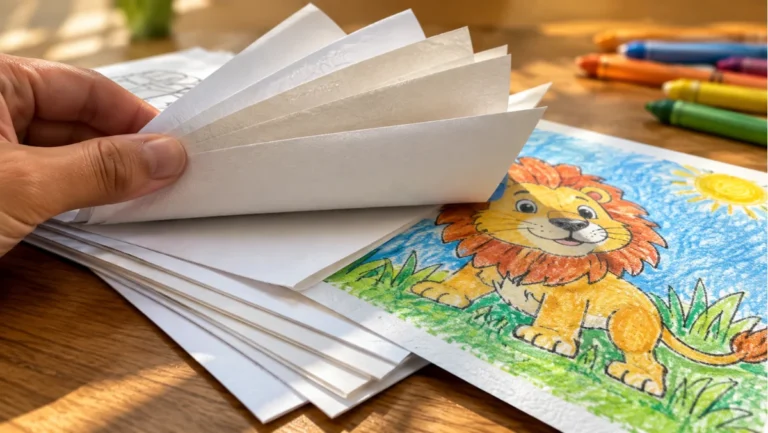
150 gsm is light cardstock. It is noticeably thicker than copy paper, stops most marker bleed, and feeds easily through nearly every home printer. This is the sweet spot for coloring.
180 to 200 gsm is medium cardstock. It is sturdier, ideal for keepsakes and lamination, and still works in most printers, though some may need sheets fed one at a time.
Above 200 gsm is heavy cardstock, closer to a thin card or poster board. It is excellent for durability, but many home printers struggle to pull it through, so check your printer’s maximum weight before buying.
For most families, 150 gsm bright white cardstock covers everything from markers to keepsakes without pushing the printer too hard. Buy a small pack and keep it alongside your regular copy paper.
Printer settings for cardstock
Cardstock needs two settings changed, or it can smear or jam.
First, set the paper type in the print window to “Cardstock” or “Heavy.” This tells the printer to slow down and lay ink correctly for a thick sheet. Skip this, and ink can sit wet on the surface and smear, especially on an inkjet. You will usually find this setting under “Printer Properties” or “Paper Type” in the print window.
Second, set the print quality to “Normal” or “Best.” Cardstock keepsakes deserve crisp lines, and the heavier paper handles the extra ink well. Our guide on printer settings for coloring pages covers quality in depth.
Leave scaling on “Fit to Page” and match the paper size as usual. Cardstock does not change those settings, only the paper type and quality.
Avoiding jams and feeding problems
The main frustration with cardstock is jams. A few habits prevent almost all of them.
Feed sheets one at a time if your printer struggles with a stack. Loading a single sheet gives the rollers less to grip and pull, which stops the double feeds and misfeeds that cause jams.
Use the manual feed tray if your printer has one. This tray is built for heavier paper and pulls it through more gently than the main tray. Check your printer for a rear or side feed slot.
Fan the stack before loading, so the sheets are not stuck together. Cardstock sheets can cling, and separating them helps the printer grab just one at a time.
Keep the paper flat and dry. Curled or damp cardstock jams more easily. Store it in its wrapper away from humidity, as covered in our guide on the best paper for coloring pages.

Inkjet versus laser on cardstock
The type of printer you have affects how cardstock behaves.
Inkjet printers spray liquid ink, so they handle thick cardstock gently and rarely have trouble with weight. The main thing to watch is drying, since ink sits wet on cardstock a little longer. Let each sheet dry a moment before stacking so it does not smudge.
Laser printers use heat to fuse toner, which gives crisp, smudge proof lines instantly. They handle cardstock well too, but very heavy stock can sometimes struggle through the heated rollers. Check your laser printer’s maximum weight if you plan to use heavy cardstock.
For coloring pages, both types work well at 150 gsm. The choice comes down to what you already own rather than what you need to buy.
Cardstock versus regular paper, at a glance
Here is a simple comparison to help you decide when to reach for cardstock.
| Feature | Regular copy paper | Cardstock | |—|—|—| | Weight | 80 to 100 gsm | 150 to 200 gsm | | Best for | Everyday crayon and pencil | Markers, keepsakes, lamination | | Marker bleed | Bleeds through | Resists bleed | | Durability | Creases and tears | Holds up to handling | | Cost | Low | Higher | | Printer handling | Easy | May need manual feed |
Keep both on hand. Copy paper for daily fun, cardstock for markers and pages worth keeping.
Letting cardstock prints dry
One small step protects your cardstock keepsakes, especially on an inkjet printer.
Inkjet ink sits wet on cardstock a moment longer than on thin paper, because the heavier surface absorbs it more slowly. If you stack pages straight from the printer, the wet ink can smudge or transfer to the sheet above. Let each page rest for a minute before stacking or coloring.
Laser printers avoid this, since the toner fuses instantly with heat and comes out dry. So if you print keepsakes often on an inkjet, build in a short drying pause, and your lines will stay crisp and clean.
For pages a child will color right away, a quick moment of drying is usually enough. For pages you plan to frame or laminate, give them a little longer to be safe.
Coloring supplies that shine on cardstock
Cardstock brings out the best in certain coloring tools, which is part of why it feels special.
Markers look richest on cardstock, since the thick surface holds the ink without bleeding, so colors stay bold and even. Alcohol markers in particular blend beautifully on a smooth, heavy sheet. Our guide on how to blend markers covers the technique.
Colored pencils also do well, because cardstock has enough surface texture to grab pigment for smooth layering. Gel pens glide cleanly and their metallic and glitter finishes pop against the sturdy white background.
Crayons work fine but gain the least from cardstock, since they never bleed anyway. So save cardstock for the markers, pencils, and gel pens that truly benefit from it.
Making cardstock pages last
Because cardstock is sturdy, it is the natural choice for pages you want to keep or reuse.
Laminate a cardstock page and it becomes a wipe clean, reusable sheet that survives spills and repeated coloring with dry erase markers. The cardstock gives the lamination a solid base, so it does not curl. Our guide on how to laminate coloring pages shows the method.
Cardstock also holds up as a bookmark, a gift tag, or an ornament, since it does not crease or tear like thin paper. So when a page is destined to be handled, displayed, or reused, cardstock is the paper that lets it last.

Buying cardstock: what to look for
Not all cardstock is the same, and picking the right pack saves frustration at the printer.
Look for the weight on the label, in gsm or in pounds. For coloring, 150 gsm, which is around 65 lb cover, is the easy all rounder. Choose bright white for the most vivid colors, since cream or colored cardstock mutes what you color on top. Matte, not glossy, so crayon and pencil grip the surface.
Check that the pack says it is printer safe or inkjet and laser compatible. Some craft cardstock has a coating meant for stamping or die cutting, not printing, and ink can sit wet or smear on it. A pack labeled for home printers avoids that.
Buy a small pack first and test it with your printer and your usual coloring tools before committing to a big box. Printers vary, and a five minute test tells you whether that cardstock feeds and prints cleanly for you. Our guide on the best paper for coloring pages covers weights and finishes across all paper types.
Cardstock for classrooms and parties
Cardstock earns its place in settings where pages get heavy use or need to look their best.
In a classroom, a cardstock page laminated once serves a whole year of dry erase coloring, which saves paper and prep over time. Teachers often print a favorite activity page on cardstock, laminate it, and reuse it with each new group. Our guide on coloring activities for the classroom has more on reusable pages.
At a party, cardstock coloring pages double as sturdy placemats or take home favors that survive the journey in a bag. A thin paper favor crumples, while a cardstock one arrives home intact and ready to display. This small upgrade makes a coloring activity feel more special.
For these repeat use cases, the extra cost of cardstock pays off, since one sturdy page replaces many flimsy ones. Save plain paper for quick, one time coloring, and reach for cardstock when a page needs to last or impress.
Frequently asked questions about cardstock
Can home printers print on cardstock?
Most home printers handle cardstock up to about 200 gsm. Set the paper type to “Cardstock” or “Heavy” and feed sheets one at a time if needed. Check your printer’s manual for its maximum paper weight.
What weight cardstock is best for coloring pages?
150 gsm is the sweet spot. It stops marker bleed, feeds easily through most printers, and suits both everyday marker coloring and keepsakes. Use 180 to 200 gsm for sturdier keepsakes.
Why does my cardstock jam in the printer?
The sheets may be feeding two at a time, or the paper is curled. Feed one sheet at a time, use the manual feed tray, fan the stack first, and keep the cardstock flat and dry.
Does cardstock stop markers bleeding through?
Yes, cardstock is thick enough to stop most marker bleed. For very wet alcohol markers, place a scrap sheet behind the page as extra insurance against bleed to the surface below.
Is cardstock better than paper for coloring?
It depends on the use. Cardstock is better for markers, keepsakes, and lamination. Regular paper is better and cheaper for everyday crayon and pencil coloring.
The takeaway on cardstock
Cardstock is worth keeping for markers, keepsakes, and laminated pages. Choose 150 gsm bright white, set the printer’s paper type to “Cardstock,” and feed one sheet at a time to avoid jams. For daily coloring, plain paper still wins on cost.
Ready to print something sturdy? Browse our free printable coloring pages and pick a page for cardstock. For weights and finishes, see our guide on the best paper for coloring pages.