Best Paper for Printing Coloring Pages (GSM, Cardstock, and What Actually Matters)
Quick answer
The best paper depends on your medium: standard 20–24 lb printer paper suits crayons and colored pencils, while markers need heavier cardstock (65–110 lb) to prevent bleed-through, and alcohol markers do best on marker or mixed-media paper. Smooth, bright-white paper makes colors look most vivid.
By the TheColoringPages.net team. Reviewed for accuracy, September 2026.
This guide to Best Paper gives clear, practical answers, drawing on paper weight and finish and years of hands on coloring.
Most people grab whatever paper sits in the printer tray and hope for the best. Then the markers bleed through, the colors look dull, or the page buckles into ripples. The paper you print on shapes the finished result more than the crayons or markers do.
This guide explains what to look for, in plain terms, so you can match the right paper to the way your family colors. You will learn what GSM means, when cheap paper is fine, and when it is worth spending a little more.
Quick answer: For everyday coloring with crayons and pencils, standard 80 to 100 gsm printer paper works well. For markers or heavy coloring, use 120 gsm paper or cardstock at 150 to 200 gsm to stop bleed through. Choose bright white, matte paper for the brightest colors and the smoothest surface.

What GSM means and why it matters
GSM stands for grams per square meter. It measures how heavy and thick a sheet of paper is. A higher GSM means a thicker, sturdier sheet.
Here is the range you will meet at home:
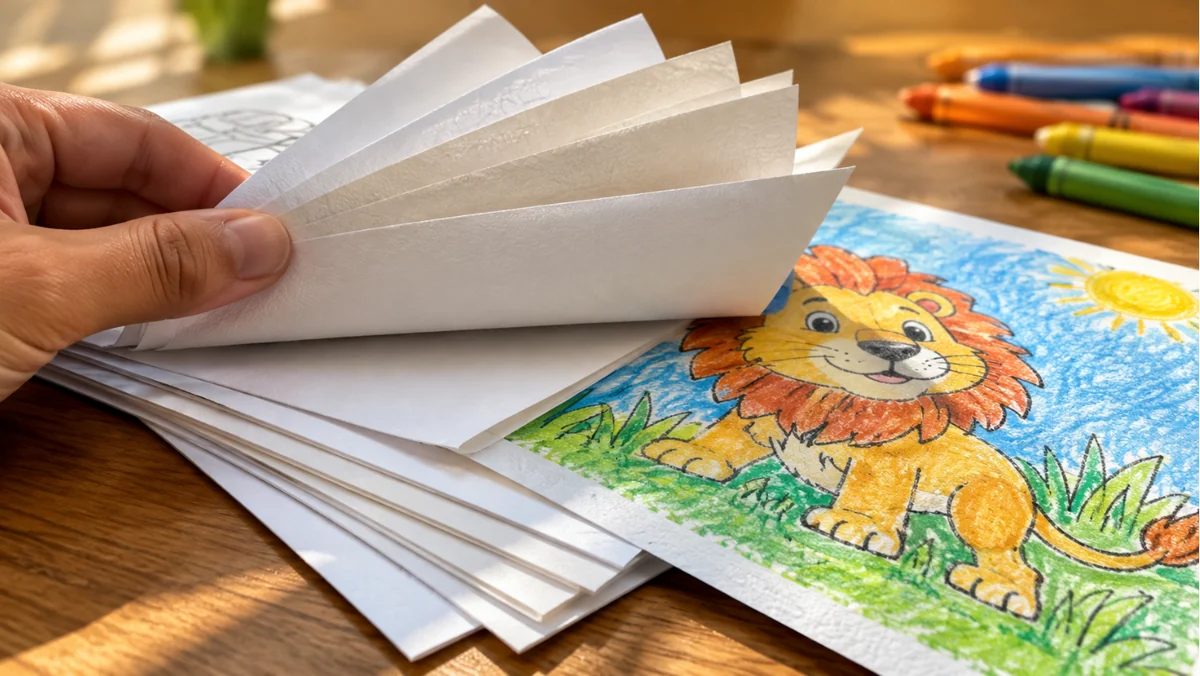
– 70 to 80 gsm is thin. This is basic copy paper, the kind that comes in giant reams. It is fine for quick crayon and pencil work. – 90 to 120 gsm is medium weight. It feels more substantial and resists bleed through from markers better. – 150 to 200 gsm is cardstock. It is stiff, almost like a thin card, and holds up to heavy coloring and handling. – 200 gsm and up is heavy cardstock, closer to poster board. Good for keepsakes, less friendly for some home printers.
Why does thickness matter so much? Thin paper lets wet ink pass straight through to the surface below. Thick paper absorbs and holds the ink, so the color stays on the page where it belongs. That single difference decides whether your child can use markers without wrecking the sheet underneath.
The best paper for each coloring tool
The right paper depends on what your child colors with. Matching the two is the simplest way to get better results.
For crayons
Crayons are wax based and forgiving. They sit on top of the paper and never soak through. Standard 80 gsm copy paper handles crayons with no trouble at all. There is no reason to spend more here. If anything, a slightly toothy, matte sheet grips the wax better and gives richer color.
For colored pencils
Colored pencils also work fine on regular copy paper for casual use. If your child likes to layer colors or blend, step up to 90 to 120 gsm. The extra thickness gives the paper more surface texture, called tooth, which grabs more pigment. More tooth means richer, more blendable color. Serious adult colorists often prefer heavier stock for exactly this reason.
For markers
Markers are where paper choice becomes critical. Water based markers, like the washable ones made for kids, will bleed through thin copy paper and mark whatever is underneath. Move up to 120 gsm at least. For alcohol markers, which are far wetter, use marker paper or cardstock, or place a scrap sheet behind the page to catch any bleed. Our guide on how to color with markers without bleeding through covers this in more depth.
For gel pens
Gel pens work on almost any paper because they lay down a small amount of ink in fine lines. Any weight from 80 gsm up is fine. Just give the ink a moment to dry so it does not smear.
Cardstock: when you actually need it
Cardstock is not overkill, but it is not always necessary either. Reach for it in a few clear situations.
Use cardstock when markers are involved and you want zero bleed. Its thickness stops even wet ink cold. Use it for pages your child will keep, frame, or give as a gift, since it feels special and survives handling. Use it for anything that will be laminated or turned into a bookmark, card, or ornament.
Skip cardstock for large, everyday coloring sessions where kids burn through a dozen pages an afternoon. The cost adds up fast, and crayons never needed it in the first place.
One printer note: set your printer’s paper type to “cardstock” or “heavy” before printing on it. This tells the printer to slow down and lay ink correctly. Feeding sheets one at a time also prevents jams. Our full guide to printing on cardstock walks through the settings.
Matte versus glossy
For coloring, matte wins almost every time.
Matte paper has a flat, non shiny surface. Crayons, pencils, and markers all grip it well, and the color looks even. It is the standard for coloring pages, and it is what most copy paper already is.
Glossy paper has a slick, shiny coating made for photos. Crayon and pencil slide right off it, and marker ink pools and smears instead of drying. Avoid glossy for coloring. Save it for printing photographs.
If you ever see paper labeled “silk” or “satin,” that sits between matte and glossy. It can work for pencil, but matte remains the safer, cheaper choice.
Bright white versus cream and recycled
The color of the paper changes how the colors on top of it look.
Bright white paper reflects the most light, so every color you add looks more vivid. Reds are redder, blues are bluer. For coloring pages, bright white is the best backdrop.
Cream or off white paper gives a softer, warmer feel. Some adult colorists like it for a vintage look, but it slightly mutes bright colors. Recycled paper is often a touch gray or speckled, which dulls the finished art. It is a fine, eco friendly choice for practice pages and everyday scribbling, just not for the piece your child wants to keep.

Paper by use case, at a glance
Here is a simple way to decide, based on how the page will be used.
| Use case | Recommended paper | Weight | |—|—|—| | Everyday crayon and pencil | Standard copy paper | 80 gsm | | Colored pencil, layering and blending | Medium weight, bright white | 100 to 120 gsm | | Water based markers | Medium weight or light cardstock | 120 to 150 gsm | | Alcohol markers | Marker paper or cardstock | 150 to 200 gsm | | Keepsakes, cards, framing | Cardstock, bright white | 150 to 200 gsm | | Lamination or reusable pages | Cardstock | 150 gsm and up |
Keep two types on hand and you are set for anything: a ream of standard copy paper for daily use, and a small pack of 150 gsm cardstock for markers and special pages.
Will your home printer handle heavier paper?
Most home printers manage up to about 200 gsm, but check your manual for the maximum weight before you buy a heavy pack. Inkjet printers tend to handle cardstock more gently than laser printers, which use heat and can sometimes struggle with very thick stock.
If your printer jams on cardstock, feed one sheet at a time through the manual feed tray rather than loading a stack. Slowing the machine down solves most jams.
Budget picks versus premium
You do not need expensive paper to get good results. Match the spend to the job.
For everyday coloring, store brand copy paper is perfect. Buy the big ream and do not overthink it. Children color fast and care more about the picture than the paper.
For markers and adult coloring, a mid range 120 gsm bright white paper is the sweet spot. It costs a little more per sheet but stops bleed and lifts color noticeably.
Premium marker paper and artist cardstock are worth it only for finished pieces you plan to display or gift. For daily use, the difference is not worth the price.
How paper texture changes your color
Paper has a surface texture called tooth. It is the tiny roughness you feel when you run a finger across a sheet. Tooth decides how much pigment the paper grabs, and it quietly shapes how your finished art looks.
A smoother sheet gives clean, even color and works well for markers and gel pens, which glide across it. A toothier sheet grabs more crayon wax and pencil pigment, so colors build up richer and blend more smoothly. This is why adult colorists who love layered pencil work often seek out slightly textured drawing paper rather than smooth copy paper.
For children, texture matters less, and any decent copy paper is fine. For older kids and adults chasing depth in their coloring, a sheet with a bit more tooth rewards the effort. You do not need to buy artist paper to notice this. Even stepping from thin copy paper up to a 120 gsm bright white sheet gives you more tooth and visibly better pencil color.

Storing and handling your paper
Paper quality can drop before you even print if you store it badly. Two things harm it: moisture and light.
Humidity makes paper curl and can cause jams, and it makes ink dry unevenly. Keep your paper in its original wrapper or a sealed box, away from bathrooms, kitchens, and damp basements. Flat storage keeps sheets from warping.
Sunlight fades paper over time and can yellow the edges. Store it in a drawer or cupboard rather than on a sunny shelf. This matters most for cardstock and keepsake paper, which you may hold onto for a while before using.
Handle sheets by the edges when loading heavy paper, since finger oils can affect how ink sits. This is a small point for everyday coloring, but it makes a difference for framed or gifted pieces.
A note on eco friendly choices
Many families want to color without wasting paper. There are easy ways to do both.
Print double sided for practice pages, so one sheet holds two pictures. Use recycled paper for everyday scribbling, where a slightly grayer background does not matter. Save your bright white and cardstock only for pages worth keeping.
Reusable pages cut waste the most. Slip a printed page into a sheet protector, or laminate it, and color with dry erase markers. One printed sheet then lasts for months. Our guide on how to laminate coloring pages shows the method, including a no machine option.
A quick test before a big batch
Before you print twenty pages, print one on the paper you plan to use and color a small patch with the actual tools your child will use. Check the back for bleed and look at how the color sits. This thirty second test tells you more than any label, and it saves a stack of wasted sheets.
Frequently asked questions about best paper
What GSM is best for coloring pages?
For crayons and pencils, 80 to 100 gsm is plenty. For markers, use 120 gsm or heavier. For keepsakes and lamination, use cardstock at 150 to 200 gsm. Match the weight to the tool and the purpose.
Can I use normal printer paper for coloring?
Yes, for crayons and colored pencils normal copy paper works well. It only falls short with markers, which can bleed through thin sheets. For markers, switch to heavier paper or cardstock.
Does paper stop markers from bleeding?
Heavier paper reduces bleed a lot, but very wet alcohol markers can still pass through. Use cardstock or place a scrap sheet behind the page as a backing to catch any ink that gets through.
Is cardstock good for coloring pages?
Cardstock is excellent for markers, keepsakes, and pages that will be handled or laminated. It is thicker and pricier, so it is best saved for special pages rather than everyday coloring.
What paper makes colors look brightest?
Bright white, matte paper gives the most vivid results. It reflects more light than cream or recycled paper, so every color you add looks stronger and cleaner.
The bottom line
Paper is the quiet ingredient behind every good coloring page. Keep standard copy paper for daily crayon and pencil fun, and a small stack of bright white cardstock for markers and keepsakes. Choose matte over glossy, and white over cream, whenever you want colors to shine.
Once your paper is sorted, you are ready to print. Browse our free printable coloring pages and pick your first pack. For the full setup, see our guide on how to print coloring pages at home.