Coloring vs Drawing: The Difference and Which Is Better
Quick answer
Coloring means filling ready-made line art with color, while drawing means creating the lines and shapes yourself. Coloring builds focus, fine-motor control, and color skills with no pressure to “get it right,” which makes it welcoming at any age; drawing adds composition and proportion. Many people use coloring as a relaxing, confidence-building step toward drawing.
By the TheColoringPages.net team. Reviewed for accuracy, September 2026.
This guide to Coloring vs Drawing gives clear, practical answers, drawing on drawing and years of hands on coloring.
Coloring and drawing look similar, but they are different activities that build different skills in children. Coloring fills in outlines that are already there, while drawing creates images from scratch. Parents often wonder which is better for their child, and the honest answer is that both have real value. Understanding the difference helps you offer each at the right time.
This guide explains what sets coloring and drawing apart, what each builds, and how to use both to support your child’s development.
Quick answer: Coloring fills in existing outlines and builds control, focus, and color skills. Drawing creates images from scratch and builds imagination and planning. Neither is better overall, since they develop different skills. Children benefit from both: coloring builds precision and calm, while drawing builds creativity and self expression.

What each activity is
Coloring and drawing are related but distinct, so it helps to define each clearly.
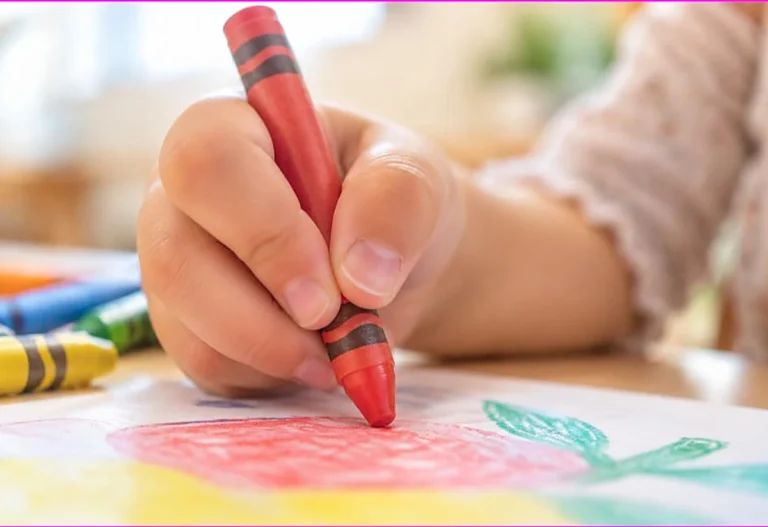
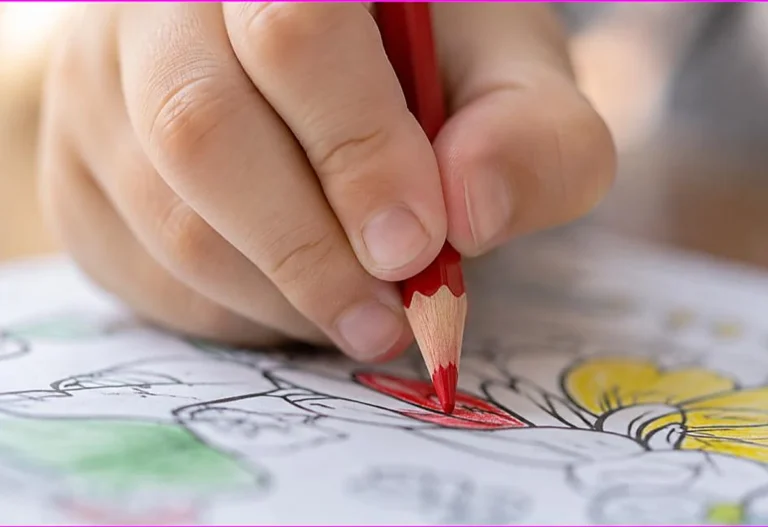
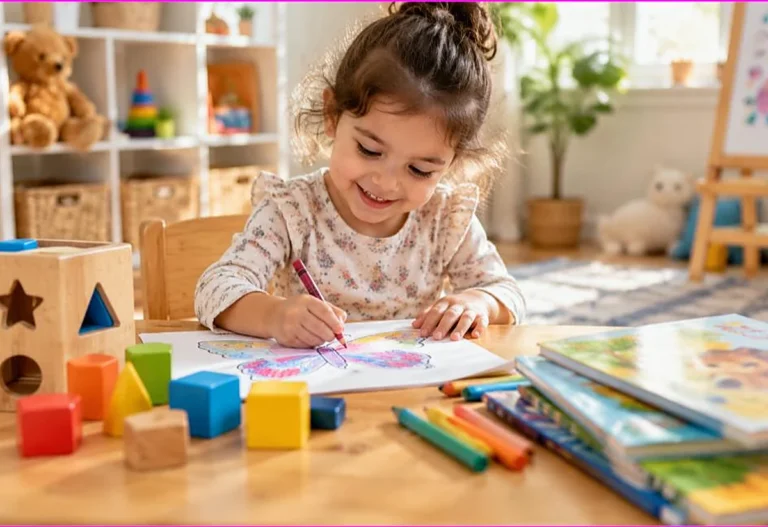
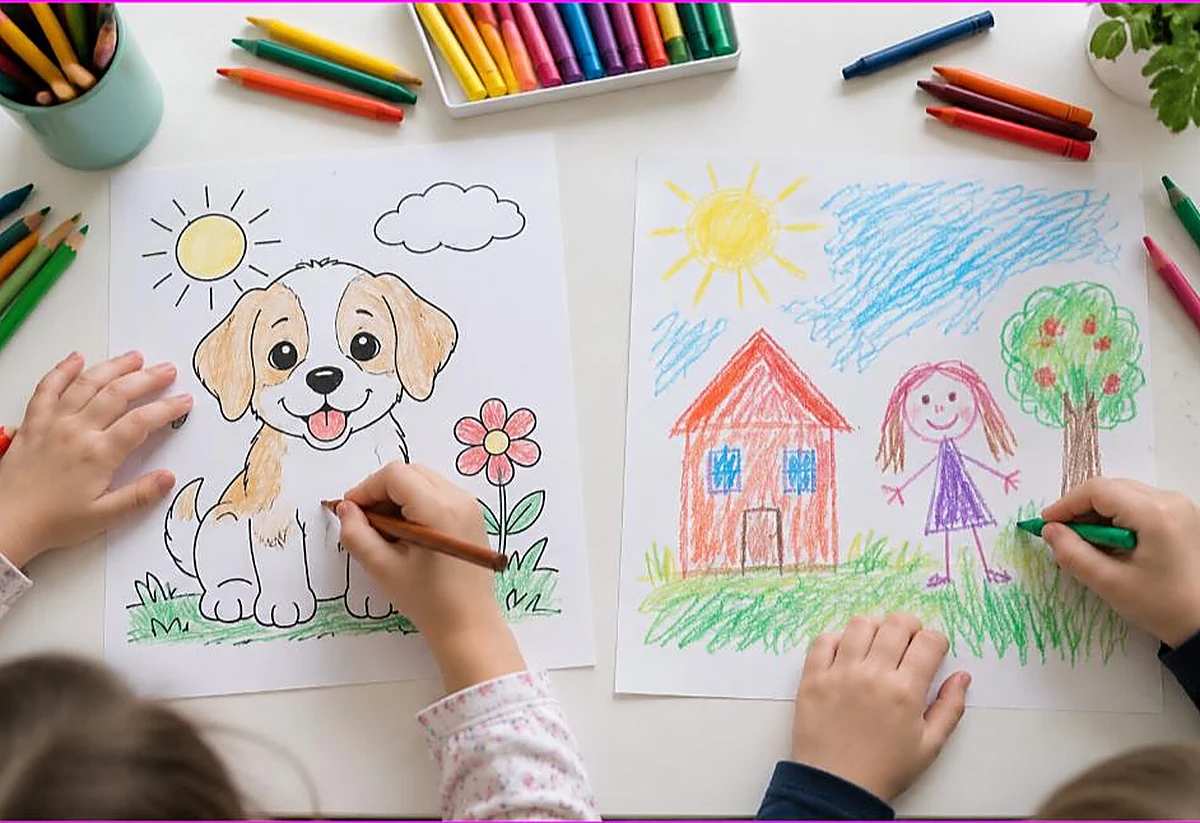
Coloring means filling in a picture that already exists, adding color within outlines someone else has drawn. The design is done, and the child’s job is to choose colors and fill the shapes. Coloring gives a child a structure to work within, which removes the pressure of creating from nothing and makes it accessible and satisfying.
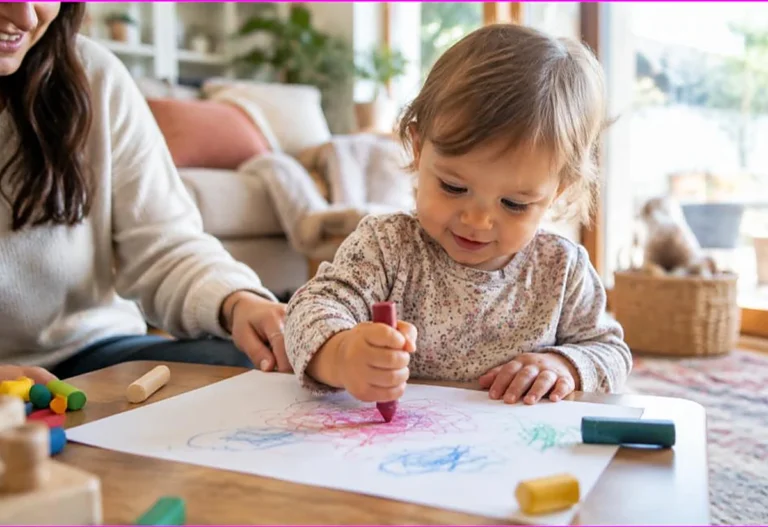
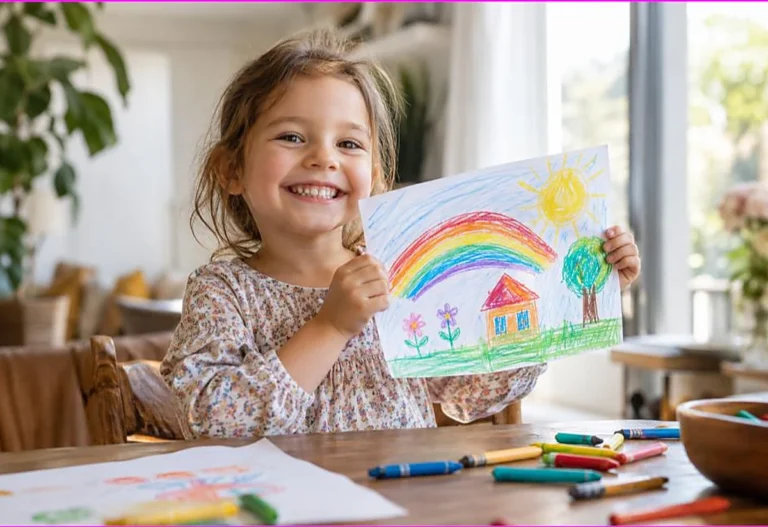
Drawing means creating an image from scratch, making the lines and shapes yourself. A child with a blank page and a pencil is drawing, deciding what to make and how. Drawing is open ended, with no structure provided, which invites imagination but also asks more of the child.
So the core difference is structure. Coloring provides it, drawing does not. This single difference shapes what each activity builds and which children they suit at different stages. Our guide on coloring and child development covers how coloring develops.
Skills coloring builds
Coloring builds a specific set of valuable skills, thanks to its structure.
Coloring develops fine motor control, as a child guides the crayon within outlines and fills shapes. Staying roughly within lines builds precision and hand and eye coordination. These skills are foundations for handwriting, which is why coloring is considered a key pre writing activity. Our guide on coloring and fine motor skills covers this.
Coloring also builds focus and patience, as a child works to fill a page and see it through. It develops color recognition and an early sense of which colors work together. And because the design is provided, coloring is calming and low pressure, giving a child a soothing, achievable activity with a satisfying result.
The structure of coloring is its strength. By providing the outline, coloring lets a child focus on control, color, and completion, building precision and calm. This makes it especially valuable for building the hand skills and focus that school requires. It is accessible to every child, since there is no blank page to face.
Skills drawing builds
Drawing builds a different, equally valuable set of skills, thanks to its openness.
Drawing develops imagination and creativity, as a child invents what to make from nothing. This open ended creation exercises the mind in a way that filling in outlines does not. A child drawing decides on a subject, plans how to represent it, and brings their own ideas to the page, which builds creative thinking.
Drawing also builds planning and problem solving, as a child works out how to draw what they imagine. It develops self expression, giving a child a way to communicate their ideas and feelings through their own images. And it builds confidence in creating, as a child learns they can make something from their own imagination.
The openness of drawing is its strength. By providing no structure, drawing pushes a child to create, plan, and express, building imagination and originality. This makes it valuable for developing creativity and independent thinking. It asks more of a child than coloring, which is part of what makes it developmentally rich.
When to encourage which
Knowing when to offer coloring and when to offer drawing helps you support your child well.
Coloring suits moments when you want a calm, achievable, structured activity. It is ideal for building fine motor skills and focus, for a child who finds a blank page daunting, and for a soothing wind down. Younger children, who are still building the control and confidence to draw, often start with coloring, which gives them success and skill building. Our guide on coloring for toddlers covers early coloring.
Drawing suits moments when you want to encourage imagination and self expression. It is ideal for creative play, for a child bursting with ideas, and for building confidence in creating. As children grow and gain control and confidence, drawing becomes more accessible and rewarding.
The best approach is to offer both, at different times and for different purposes. Coloring for structure, calm, and skill building, drawing for imagination and expression. There is no need to choose, since each serves a different developmental purpose, and children benefit from the mix.

Using both together
Coloring and drawing work well together, and combining them gives children the best of both.
You can move between the two, offering coloring for calm, structured skill building and drawing for open ended creativity. A child might color a page one day and draw their own picture the next, gaining different benefits from each. Both build hand skills, while coloring adds precision and calm and drawing adds imagination.
You can also blend the two on a single page. A child might color part of a page and add their own drawings to it, or color a scene and then draw more elements around it. This combines the structure of coloring with the creativity of drawing, giving a child both experiences at once. Some children naturally start adding their own drawings to coloring pages, which is a lovely sign of developing creativity.
So rather than seeing coloring and drawing as competitors, see them as partners. Together they build the full range of skills, from fine motor control and focus to imagination and self expression. Offering both, and letting them blend, supports your child’s development completely. Our guide on how to turn a drawing into a coloring page covers combining the two.
Common misconceptions
A few misunderstandings about coloring and drawing are worth clearing up.
The first is that coloring is less valuable than drawing because it is not creative. In truth, coloring builds important skills, precision, focus, color sense, and calm, that drawing does not build as directly. Both are valuable, just for different things. Dismissing coloring as mere filling in misses its real developmental value.
The second is that drawing is too hard for young children, so they should only color. In fact, young children can and should draw, even if their drawings are simple scribbles at first. Early drawing builds imagination and confidence, and it develops alongside coloring. Both suit young children, in age appropriate forms.
The third is that a child must master coloring before drawing, or the reverse. In reality, the two develop together, and children benefit from both throughout childhood. There is no set order. Offering both, from an early age, supports the fullest development. Our guide on the benefits of coloring for kids covers coloring’s specific value.
Supporting creativity in both
Whether your child colors or draws, you can support their creativity and skill in simple ways.
For coloring, encourage creative color choices. Let your child color a purple sun or a rainbow tree if they like, since choosing colors freely is a form of creativity within the structure of coloring. Offer varied pages that spark interest, and praise their choices and effort. This keeps coloring creative as well as skill building. Our collection of free printable coloring pages for kids offers plenty of variety.
For drawing, provide plenty of blank paper and encourage your child to make whatever they imagine, without judging the result. Praise the ideas and effort, not the accuracy, since young children’s drawings are meant to be simple and expressive. Ask about their drawings to show you value them, which builds confidence.
For both, keep it playful and pressure free. A child who enjoys coloring and drawing does more of both, which builds their skills and creativity. Celebrating their work, whatever form it takes, encourages them to keep creating. The goal is a child who loves to color and draw, gaining the full benefits of each.

How coloring leads to drawing
For many children, coloring is a natural stepping stone toward drawing, which is worth understanding.
Coloring builds the hand strength, grip, and control that drawing also requires. A child who colors regularly develops the fine motor skills that make drawing easier, since both use the same hands and the same control. So coloring quietly prepares a child for drawing, building the physical foundation before they create their own images.
Coloring also builds confidence with a crayon or pencil. A child who has success coloring, filling shapes and making a satisfying page, becomes more comfortable and willing to try drawing their own pictures. The achievable, structured nature of coloring gives a child early wins that build the confidence to face a blank page.
Many children naturally begin adding their own marks and drawings to coloring pages as they grow, which is a lovely sign of this progression. Coloring and drawing then develop together, each supporting the other. So offering plenty of coloring is not only valuable in itself but helps a child move toward drawing when they are ready. Our guide on how to turn a drawing into a coloring page covers connecting the two.
Choosing activities for your child’s personality
Children differ in what they enjoy, and matching activities to your child’s personality keeps both coloring and drawing appealing.
Some children love the structure and calm of coloring, finding the blank page of drawing daunting. For these children, coloring is a comfortable, rewarding activity, and drawing can be introduced gently, perhaps by adding to coloring pages first. Pushing a structure loving child straight into free drawing may frustrate them, so easing in works better.
Other children are bursting with ideas and love the freedom of drawing, finding coloring within lines restrictive. For these children, drawing is a joy, and coloring can be offered as a calming, skill building complement rather than the main event. Letting an imaginative child draw freely, while also offering coloring for its benefits, suits them best.
Most children enjoy both, in different moods and at different times. The key is to offer both without forcing either, and to follow your child’s interest. A child who is drawn to one activity still benefits from the other, so gently offering both, in a way that suits their personality, gives them the full range of benefits. Our collection of free printable coloring pages for kids gives you plenty for the coloring side.
Frequently asked questions about coloring vs drawing
What is the difference between coloring and drawing?
Coloring fills in a picture that already exists, adding color within outlines. Drawing creates an image from scratch, making the lines yourself. The key difference is structure: coloring provides it, while drawing is open ended.
Is coloring or drawing better for kids?
Neither is better overall. Coloring builds control, focus, and color skills through its structure, while drawing builds imagination, planning, and self expression through its openness. Children benefit from both, at different times and for different purposes.
Should young children color or draw?
Both. Coloring suits young children for building control, focus, and confidence, since the outline is provided. Drawing suits them for building imagination, even as simple scribbles. Offering both, in age appropriate forms, supports the fullest development.
Does coloring build creativity?
Coloring builds creativity through color choices, even though the outline is provided. A child chooses colors and makes the page their own. Drawing builds a different, more open form of creativity by having the child invent the image. Both foster creativity.
Can coloring and drawing be combined?
Yes. A child can color part of a page and add their own drawings, or color a scene and draw more around it. Combining the two blends the structure of coloring with the creativity of drawing, giving both benefits at once.
The takeaway on coloring vs drawing
Coloring and drawing are different activities that build different skills. Coloring provides structure, building control, focus, and color sense in a calm, achievable way. Drawing is open ended, building imagination, planning, and self expression. Neither is better, since each serves a different developmental purpose. Offer both to your child, let them blend, and keep both playful. Together they build the full range of skills, from fine motor control to creativity.
Ready to support both coloring and creativity? Browse our free printable coloring pages for kids for every age and interest. Every one is free to download and print. For ready made packs, browse our educational coloring pages.