Coloring for Toddlers: When to Start and How
Quick answer
Coloring suits toddlers from around 12–18 months, starting with chunky, washable crayons and big, simple pictures. Expect scribbles at first — that’s exactly how they build hand strength, grip, and hand-eye coordination. Keep sessions short, supervised, and fun, and choose non-toxic, toddler-safe supplies.
By the TheColoringPages.net team. Reviewed for accuracy, September 2026.
This guide to Coloring for Toddlers gives clear, practical answers, drawing on toddler development and years of hands on coloring.
Coloring is one of the first creative activities a toddler can enjoy, and it does far more than pass the time. Those early scribbles build hand strength, focus, and the foundations for writing, all while a child has fun. But toddlers need the right approach: the right crayons, simple pages, short sessions, and a relaxed, mess friendly attitude.
This guide covers everything you need to start coloring with a toddler, from when they are ready to how to make the sessions happy and successful.
Quick answer: Toddlers can start coloring around 12 to 18 months with chunky, washable crayons and large, simple pictures. Keep sessions short, expect scribbles, protect surfaces, and praise effort rather than neatness. Coloring builds grip, focus, and confidence, so keep it fun and pressure free, and let your toddler explore freely.

When toddlers are ready
Toddlers are usually ready to start coloring earlier than parents expect.
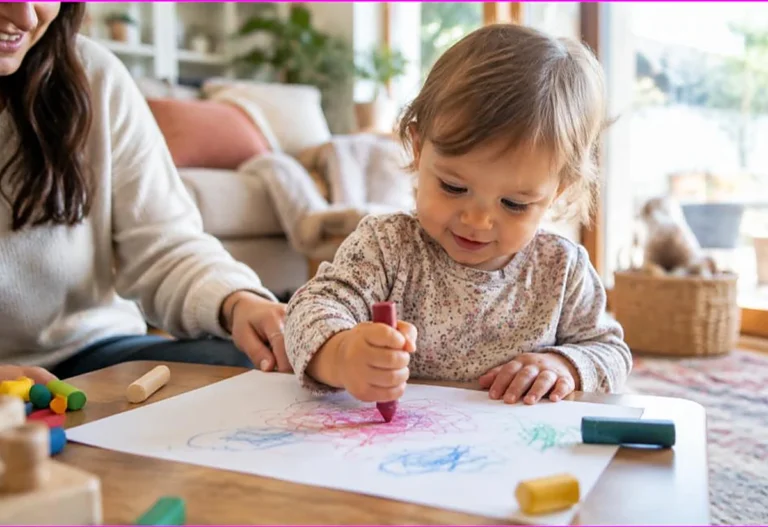
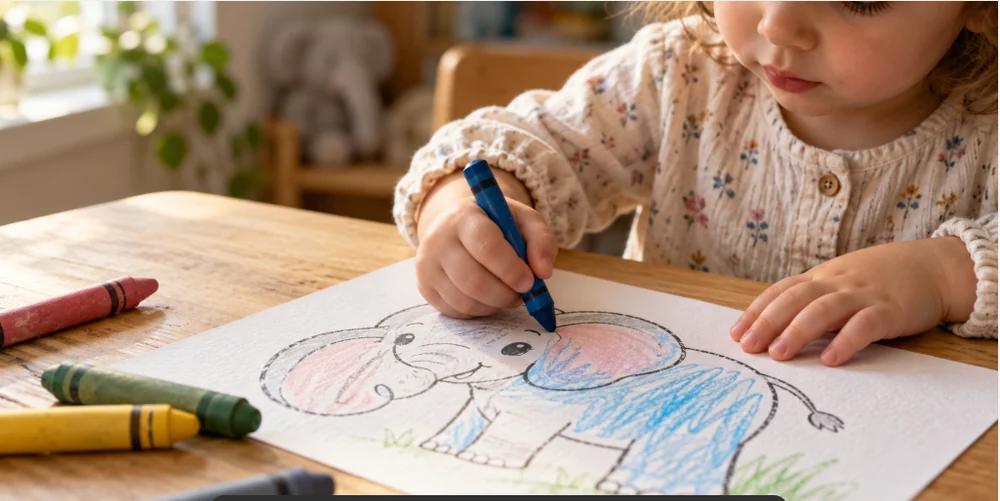
Most children can start around 12 to 18 months, once they can grip a chunky crayon and understand that moving it makes marks. Look for signs of readiness: the ability to hold a thick crayon, interest in crayons or your writing, and the understanding that their action makes something happen. A toddler who reaches for a crayon and wants to make marks is ready to begin.
You do not need to wait for perfect readiness. If your child can hold a crayon and shows interest, it is worth offering coloring. Keep the first sessions short and relaxed, and follow their lead. Some toddlers take to it immediately, others need a few tries, and both are normal.
Starting at this age gives a toddler years of practice building their hand skills before school. Early scribbling is valuable developmental work, not just play. Our guide on what age kids start coloring covers readiness in more detail.
Best crayons and paper for toddlers
The right tools make a toddler’s coloring a success rather than a frustration.
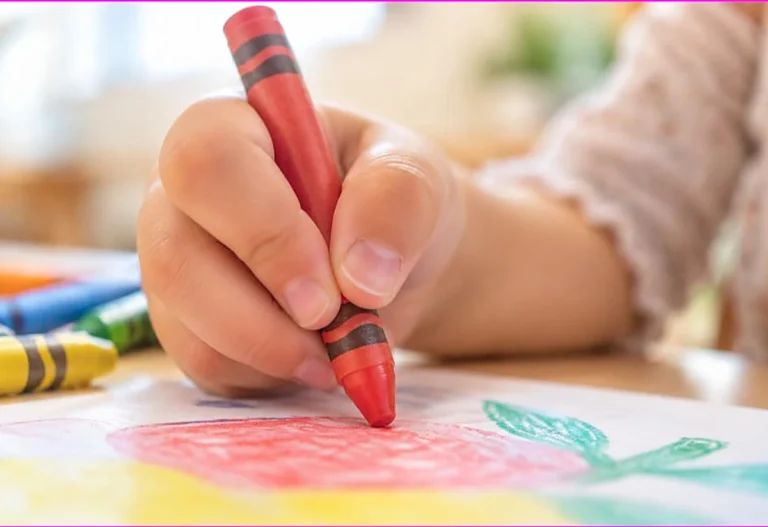
Choose chunky, washable, non toxic crayons. Thick crayons are easy for a small fist to grip, washable ones save you from scrubbing, and non toxic matters since toddlers mouth everything. Egg or ball shaped crayons suit the youngest, who use a palm grip, while jumbo stick crayons suit slightly older toddlers. Our guide on the best crayons for toddlers covers the options.
For paper, use large sheets or simple pages with big shapes. Toddlers make big marks with whole arm movements, so they need room, and detailed pages only frustrate them. Big, simple pictures let a child fill space and feel successful. Our collection of free printable coloring pages includes simple designs for little ones.
Keep safety in mind. Certified non toxic crayons matter at this age, and chunky crayons are large enough to reduce choking risk. Always supervise a toddler while they color. With the right tools, coloring is safe, easy, and enjoyable for your little one.
Simple first pages
The pages you choose shape how successful a toddler’s coloring feels.
Toddlers do best with large, simple pictures: a single big shape, a friendly animal, or a familiar object with bold outlines. Big areas are easy to fill, and simple designs are not overwhelming. Avoid detailed pages with small sections, which are impossible for a toddler and only lead to frustration.
Familiar subjects appeal most. A toddler engages more with a picture of something they recognize and love, like a favorite animal, a ball, or a car. Choosing subjects your child knows keeps them interested. There is no need for the page to be perfectly colored, so any big, simple, appealing picture works well.
Remember that at this age the page is just a canvas for exploration. A toddler may scribble all over it, ignore the shapes entirely, or color one small part. All of this is fine. The point is the joy of making marks and building hand skills, not filling the picture correctly. Our guide on coloring and child development covers what to expect.
Keeping sessions short and fun
Toddlers have short attention spans, so how you run the sessions matters.
Keep coloring sessions short, just a few minutes at first. A toddler will not sit for long, and that is completely normal. Follow your child’s interest, and stop when they lose focus or wander off. Trying to extend a session past a toddler’s attention only leads to frustration for everyone.
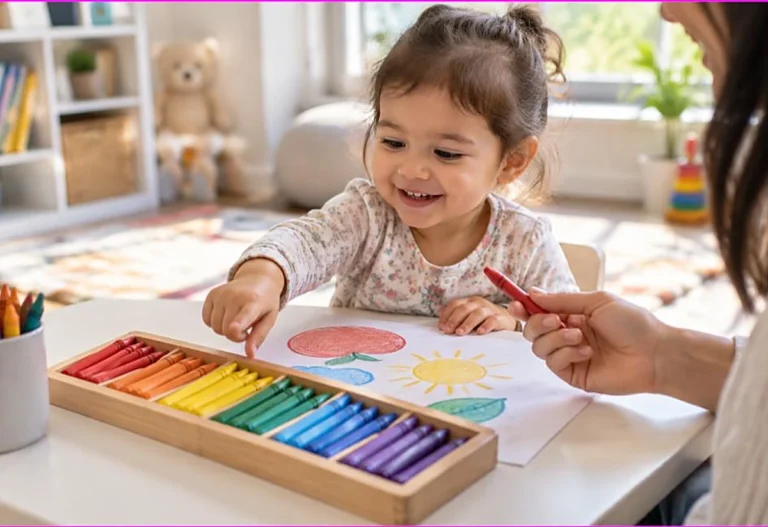
Keep it fun and free of goals. There is nothing to finish and no way to fail, so let your toddler enjoy the activity however they like. Sit with them, join in, and share their delight at the colors appearing. Your warm, relaxed presence makes coloring a happy shared moment.
End on a positive note, while your child is still enjoying it or content. Leaving coloring on a happy note makes a toddler more likely to want to do it again. Short, frequent, joyful sessions build a lasting love of coloring far better than long, forced ones. Our guide on the benefits of coloring for kids covers what these sessions build.

Managing the mess
Mess is part of toddler coloring, so a few habits keep it manageable and stress free.
Protect surfaces and clothes. A wipeable mat or some newspaper under the paper catches stray marks, and old clothes or a smock save good ones. Washable crayons make cleanup far easier, wiping off skin, surfaces, and clothes with much less effort than regular wax. Preparing for mess lets you relax rather than hover.
Teach that crayons are for paper, gently and over time. Toddlers do not know this rule at first, so they may color on walls, furniture, and themselves. Supervising, redirecting to paper, and offering washable crayons help teach the rule without stress. This is a normal stage that passes as the child learns.
Accept that some mess is inevitable and not a problem. A relaxed attitude to mess keeps coloring enjoyable for both of you. A child who senses that mess causes stress may become anxious about coloring, so keeping it lighthearted protects the fun. With washable crayons and a protected space, the mess is easily handled.
Encouraging without correcting
How you respond to a toddler’s coloring shapes their confidence and love of the activity.
Praise effort and choices, not neatness or accuracy. Saying you love the colors your child chose, or how hard they are working, encourages them far more than pointing out that they went outside the lines or scribbled. At this age there is nothing to correct, since scribbling and going outside any lines is exactly right.
Avoid taking over or fixing their coloring. Let your toddler color in their own way, even if it looks like nothing but scribbles. The value is in them doing it themselves, building their own hand skills and making their own choices. Correcting or taking over undermines this and can discourage them.
Celebrate their creations. Displaying a toddler’s colored page, or admiring it warmly, builds pride and confidence. A child who feels their coloring is valued returns to it happily, which is how all the developmental benefits build. Encouragement, not correction, is what keeps a toddler coloring and growing. Our guide on how to teach a child to color covers gentle guidance.
The developmental value of toddler coloring
It helps to remember just how much a toddler gains from those messy scribbles.
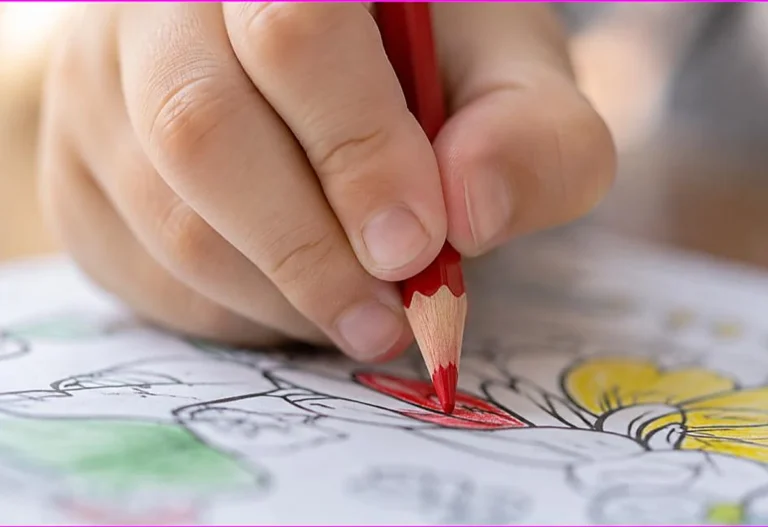
Coloring builds hand strength as a toddler presses the crayon to make color. It develops hand and eye coordination as they learn to guide the crayon. It begins the progression toward a mature pencil grip. And it teaches cause and effect, focus, and early creativity. All of this happens through play, with no lessons needed.
These are the foundations for writing and many school tasks. A toddler who colors regularly builds the hand skills, focus, and confidence that will serve them for years. So those early scribbles are genuine developmental work, not just a way to keep a child busy.
Understanding this value helps you prioritize coloring and approach it with patience. Offer the right tools, keep it fun and pressure free, and let your toddler scribble to their heart’s content. You are supporting real development while your child simply enjoys making color appear. Our guide on coloring and fine motor skills covers the hand development in depth.

Making coloring reusable for toddlers
Toddlers love to color the same thing again and again, and a couple of tricks make this easy and less wasteful.
Slip a printed page into a clear sheet protector, or laminate it, and give your toddler dry erase or washable markers. They color, you wipe it clean, and they color it again. This is perfect for toddlers, who enjoy repetition and go through pages quickly. It saves paper and gives endless coloring from a single printed sheet. Our guide on reusable dry erase coloring pages covers the method.
Reusable pages also travel well, which suits toddlers on the go. A laminated page and a washable marker in a bag keeps a toddler happily occupied in a restaurant, on a car trip, or during a wait, with no loose crayons to drop. Our guide on coloring pages for restaurants covers keeping little ones busy while out.
For a toddler who loves to color, a few reusable pages of favorite subjects are a practical, low mess option. They give the repetition toddlers enjoy while saving paper and cleanup, which makes coloring easier to offer often. Combined with regular printed pages, they keep a toddler’s coloring varied and available.
Building a toddler coloring routine
Coloring gives the most benefit when it becomes a regular, easy part of a toddler’s day.
Keep supplies ready and within reach, so coloring can happen whenever the moment suits. A caddy with chunky crayons and a folder of simple pages means you can offer coloring in a spare few minutes without hunting for materials. Tie it to a regular time, such as after breakfast or before nap, so it becomes a familiar, comforting part of the day.
Offer coloring as a calm, screen free alternative when your toddler is restless or overstimulated. The absorbing, soothing nature of coloring can help settle a wound up little one, which makes it a useful tool as well as a fun activity. Our guide on coloring versus screen time covers this.
Keep the routine relaxed and pressure free, following your toddler’s interest rather than forcing sessions. A toddler who colors a little most days, happily and freely, builds hand skills and focus steadily over time. The goal is a child who enjoys coloring and returns to it willingly, since that is how the benefits build. Our collection of free printable coloring pages gives you plenty of simple designs to keep the routine fresh.
Frequently asked questions about coloring for toddlers
When can a toddler start coloring?
Most toddlers can start around 12 to 18 months, once they can grip a chunky crayon and understand that moving it makes marks. Start with short, relaxed sessions and follow your child’s lead.
What crayons are best for toddlers?
Chunky, washable, non toxic crayons are best. Egg or ball shaped crayons suit the youngest, who use a palm grip, and jumbo stick crayons suit slightly older toddlers. These are easy to grip and hard to break.
What should toddlers color?
Large, simple pictures with big shapes and bold outlines suit toddlers best. Familiar subjects like favorite animals or objects appeal most. Avoid detailed pages, which frustrate young children who make big, whole arm marks.
How long should toddler coloring sessions be?
Keep sessions short, just a few minutes at first, since toddlers have brief attention spans. Follow your child’s interest and stop when they lose focus. Short, frequent, happy sessions build a love of coloring.
Should I correct my toddler’s coloring?
No. At this age, scribbling and coloring outside any lines is exactly right. Praise effort and choices rather than neatness, and let your toddler color in their own way. Encouragement, not correction, builds confidence and a love of coloring.
The takeaway on coloring for toddlers
Toddlers can start coloring around 12 to 18 months with chunky washable crayons and large, simple pages. Keep sessions short and fun, protect against mess, and praise effort rather than neatness. Those early scribbles build hand strength, coordination, focus, and confidence, the foundations for writing. Keep it pressure free, celebrate their creations, and let your toddler discover the joy of coloring.
Ready to start your little one coloring? Browse our free printable coloring pages, including simple designs for little hands. Every one is free to download and print. For ready made packs, browse our educational coloring pages.