Coloring for Kids With Autism and Sensory Needs
Quick answer
Coloring can be a calming, predictable activity for many children on the autism spectrum. Its repetition and clear structure can support focus and emotional regulation, while the sensory side of colors and textures is enjoyable for some and worth adjusting for others. Offer choice, keep it pressure-free, and follow the child’s preferences.
By the TheColoringPages.net team. Reviewed for accuracy, September 2026.
This guide to Kids with Autism gives clear, practical answers, drawing on autism and years of hands on coloring.
Many autistic children love to color, and there are good reasons why. Coloring is predictable, calming, and something a child can do at their own pace, on their own terms. For a child who finds the world loud and unpredictable, that steadiness is a comfort. It can also support focus, fine motor skills, and self regulation.
This guide explains why coloring suits many autistic and sensory sensitive children, how to choose pages and set up the activity, and how to follow the child’s lead so it stays a source of calm.
Quick answer: Coloring can be a calming, predictable, sensory friendly activity for autistic children, supporting focus, fine motor skills, and emotional regulation. Offer a choice of colors, avoid pressure to stay in the lines, and use bold, uncluttered designs. Follow the child’s interests and pace to keep it enjoyable.

Why coloring suits many autistic children
Autistic children often thrive with activities that are predictable and within their control, and coloring is both.
A coloring page does not change or surprise. The outline stays the same, the task is clear, and the child decides how to approach it. This predictability is reassuring for a child who can find unstructured or unpredictable activities stressful. There is a comforting sameness to filling a familiar kind of page.
Coloring also gives the child control. They choose the colors, the order, and the pace, with no single right answer. For a child who often has little say over their day, this sense of control is valuable and calming.
Many autistic children also gravitate toward specific interests, and coloring pages of a favorite subject, a beloved character, animal, or theme, can be highly motivating and joyful. Meeting a child’s interests is one of the surest ways to make coloring appealing.
Sensory and calming benefits
Coloring offers gentle sensory input and a calming rhythm, which can help autistic children regulate.
The repetitive motion of coloring is soothing. Filling a shape with steady strokes provides a predictable, rhythmic activity that many children find calming, much like other repetitive movements that help with self regulation. It can be a way to wind down after an overwhelming moment or a busy day.
Coloring also provides light sensory input through the feel of the tool on paper and the visual satisfaction of color filling a space. For some children this input is grounding and pleasant. Because coloring is quiet and low key, it avoids the sensory overload that louder, busier activities can bring.
Used this way, coloring becomes a tool for calm. Many parents and therapists keep coloring available for moments when a child needs to settle, which our guide on calming activities for kids explores further.
Supporting focus and fine motor skills
Alongside calm, coloring quietly builds skills that help autistic children.
Coloring gives practice at focusing on a single task and seeing it through, which can help extend attention in an enjoyable way. Because the child is often motivated by the subject, they may stay engaged longer than with less appealing tasks, building focus through interest.
It also develops fine motor skills, the small hand and finger control used for writing and daily tasks. Some autistic children have differences in fine motor development, and coloring offers gentle, low pressure practice of grip and control. Our guide on coloring and fine motor skills covers this side, and occupational therapists often use coloring toward these goals.
The key is that these benefits come through enjoyment, not drilling. A child motivated by a page they love builds skills without it feeling like work.
Choosing sensory friendly pages
The right page keeps coloring calming rather than overwhelming, so choose thoughtfully.
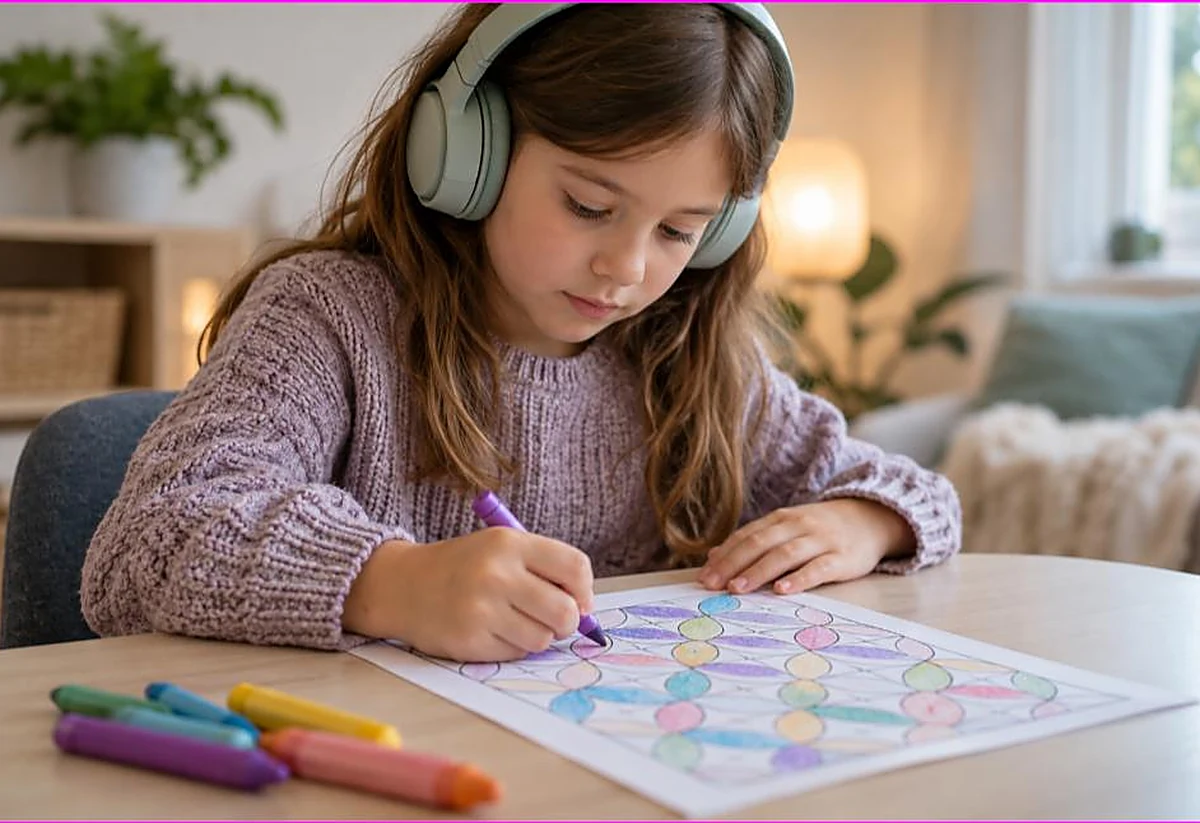
Bold, clear, uncluttered designs work best for many children. Simple pages with large shapes are easy to follow and less visually busy, which suits a child who can be overwhelmed by too much detail. A calm, clean page invites a calm, focused response.
Follow the child’s interests above all. A page featuring a favorite character, animal, vehicle, or theme is far more engaging than a generic one. Strong, specific interests are a strength to build on, so choose subjects the child genuinely loves. Our wide range of free printable coloring pages spans many popular subjects to match different interests.
Some children prefer very simple pages, others enjoy more detail, so watch what appeals to your child and offer more of that. There is no single right kind of page, only the kind that suits your particular child.

Setting up the activity
A calm, comfortable setup helps a child settle into coloring, especially for sensory sensitive children.
Choose a quiet, low distraction space, since a busy or noisy environment can make it hard to focus and can add sensory load. A calm corner with good, gentle lighting works well. Some children like to color at a familiar spot that feels safe to them.
Offer supplies that feel comfortable. Let the child choose tools they like the feel of, whether crayons, pencils, or markers, since sensory preferences vary. Some children dislike the texture of certain tools, so having options helps. Keep the choice of colors manageable if a large box feels overwhelming.
Let the child set the pace. Short sessions are fine, and there is no need to finish a page. Following the child’s rhythm, rather than a set expectation, keeps coloring a positive, pressure free experience.
Following the child’s lead
The most important principle is to follow the child rather than direct them.
Avoid pressure to color in a particular way or to stay in the lines. Coloring outside the lines, using unexpected colors, or focusing on one part of a page are all fine. The goal is the child’s enjoyment and calm, not a neat result, and pushing for neatness can turn a soothing activity into a stressful one.
Let the child choose the subject, the colors, and how long to color. If they want to color the same page or subject repeatedly, that repetition is comforting and completely fine. If they lose interest, let the activity end without pressure.
By following the child’s lead, you keep coloring on their terms, which is exactly what makes it a reliable source of calm and enjoyment for them.
When coloring becomes a shared moment
Coloring can also be a gentle way to connect with an autistic child, on their terms.
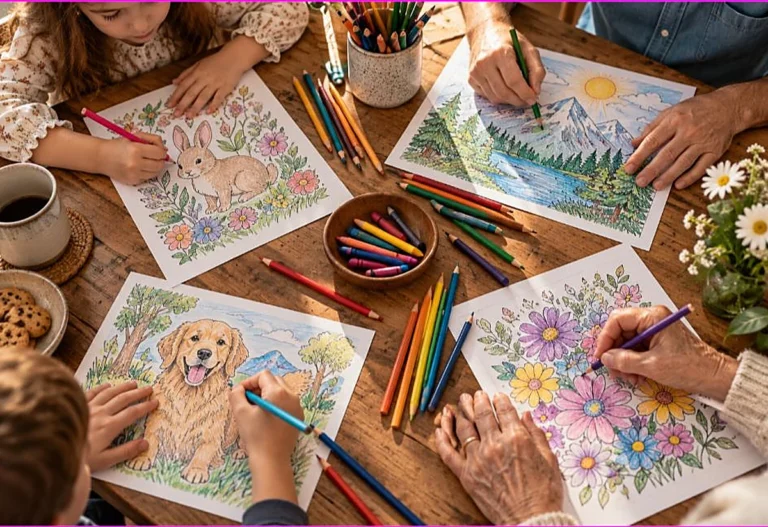
Coloring side by side, without demands, can be a comfortable shared activity. There is no need for eye contact or conversation, which can feel pressured, so the child can simply enjoy your calm presence alongside their own coloring. This quiet togetherness can strengthen connection without overwhelming the child.
You can gently join their interest by coloring the same theme, or by admiring their color choices without correcting them. Let the child lead any interaction. Some children will enjoy sharing the activity, others will prefer to color alone with you nearby, and both are valuable forms of connection.
Using coloring to support routines and transitions
Coloring can help autistic children in another practical way: easing routines and transitions.
Transitions between activities can be hard for many autistic children, and a calm, predictable activity can smooth them. A short coloring session can act as a bridge, a settled pause between a stimulating activity and a quieter one, or a calm way to start or end the day. Because coloring is familiar and low demand, it works well as a steady point in a changing schedule.
Coloring can also become part of a visual or predictable routine. Offering it at the same time each day, such as after school or before bed, gives the child something reliable to expect. This predictability is comforting and can reduce anxiety around the day’s flow.
Used this way, coloring is more than an activity. It becomes a small tool for regulation and structure, helping a child move through their day with a little more calm. Our guide on calming activities for kids covers using coloring to help children settle.

Working with an occupational therapist
If your child sees an occupational therapist, coloring can support the goals they are working on.
Occupational therapists often use coloring to build fine motor control, hand strength, and visual motor skills, and they can suggest ways to adapt the activity for your child. This might mean a particular grip, a certain page size, or a way of positioning the paper. Following their guidance turns everyday coloring into targeted, enjoyable practice.
Share what you notice at home, too. If certain pages, tools, or setups work especially well for your child, tell the therapist, since your observations help them tailor their approach. Likewise, ask how you can carry over their strategies into home coloring sessions.
This partnership makes coloring more valuable. It stays a source of calm and enjoyment while also gently supporting the skills your child is developing, all through an activity they already like. Our guide on coloring in occupational therapy covers the therapy side in more depth.
Coloring and special interests
Special interests are a real strength for many autistic children, and coloring is a natural way to honor them.
When a child loves a particular character, animal, vehicle, or theme, coloring pages of that subject can be deeply motivating and joyful. Rather than steering a child away from a strong interest, coloring lets you build on it. A child who adores trains, dinosaurs, or a favorite show will often color pages of that subject with focus and delight.
This does more than fill time. Engaging with a beloved subject through coloring can extend focus, build fine motor practice, and bring genuine happiness, all at once. It also shows the child that their interest is valued, which supports confidence and connection.
Keep a supply of pages that match your child’s current interests, and update it as those interests shift. Our wide range of free printable coloring pages spans many popular subjects, so you can usually find pages that match what your child loves most right now. Meeting a child through their interests is one of the surest ways to make any activity, coloring included, a success.
Frequently asked questions about kids with autism
Is coloring good for autistic children?
Coloring can be calming, predictable, and enjoyable for many autistic children, supporting focus, fine motor skills, and self regulation. Its steadiness and the control it gives the child are especially suited to autistic children.
Why do autistic children like coloring?
Coloring is predictable and within the child’s control, which is reassuring. It offers soothing, repetitive motion, gentle sensory input, and the chance to color favorite subjects, all of which many autistic children find appealing.
What coloring pages are best for a child with autism?
Bold, clear, uncluttered designs with large shapes suit many children, since they are easy to follow and not visually overwhelming. Above all, choose subjects the child genuinely loves, as strong interests boost engagement.
Should I make an autistic child stay in the lines?
No. Avoid pressure to color a certain way or stay in the lines. Coloring outside the lines or using unexpected colors is fine. The goal is the child’s calm and enjoyment, not a neat result.
Can coloring help an autistic child calm down?
Yes, for many children. The repetitive, predictable motion of coloring can be soothing and grounding, which is why it is often kept available for moments when a child needs to settle.
The takeaway on kids with autism
Coloring suits many autistic and sensory sensitive children because it is predictable, calming, and within their control. Offer bold, uncluttered pages of subjects they love, set up a quiet space, let them choose their tools, and follow their lead without pressure. Approached this way, coloring becomes a reliable source of calm, focus, and quiet connection.
Every child is different. This guide offers general ideas, not individual advice. An occupational therapist or your child’s care team can suggest what suits your child best.
Ready to find a page your child will love? Browse our free printable coloring pages across many popular subjects and interests.