Coloring and Child Development: An Age-by-Age Guide
Quick answer
Coloring supports child development on several fronts at once: it strengthens fine-motor skills and grip, builds focus and patience, teaches colors and shapes, and gives children a calm way to express themselves. It’s a simple, screen-free activity that grows with a child from toddler scribbles to detailed artwork.
By the TheColoringPages.net team. Reviewed for accuracy, September 2026.
This guide to Child Development gives clear, practical answers, drawing on child development and years of hands on coloring.
Coloring looks simple, but for a child it is serious developmental work. From the first scribble to neatly coloring inside the lines, each stage builds the hand control, focus, and skills a child needs for writing and learning. Knowing what to expect at each age helps you support your child and enjoy watching them grow.
This guide walks through how coloring develops from toddlerhood to school age, what skills it builds along the way, and how to help at every stage without pressure.
Quick answer: Children progress from scribbling around 12 to 18 months, to controlled coloring by 2 to 3 years, to coloring inside the lines around 5 to 6 years. At each stage, coloring builds fine motor skills, focus, and pre writing readiness. Understanding the stages helps you offer the right pages and support at the right time.

The stages of coloring by age
Coloring develops in a predictable sequence, and knowing it helps you set fair expectations.
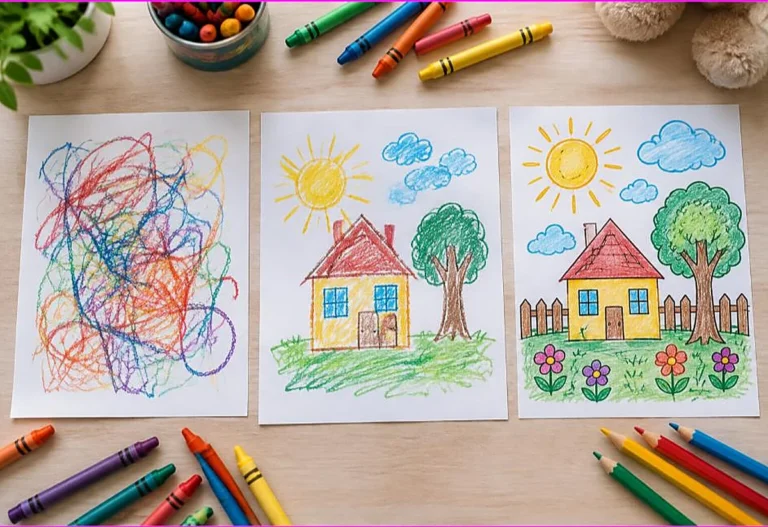
Around 12 to 18 months, children begin random scribbling. They grip a chunky crayon in their fist and make marks with whole arm movements, delighting in the color that appears. There is no control yet, and that is exactly right for this age.
Around 2 years, scribbling becomes more controlled. Children start to make back and forth and circular marks on purpose, showing early control over the crayon. By 3 years, they begin to fill shapes and may name what they have drawn, though coloring is still loose.
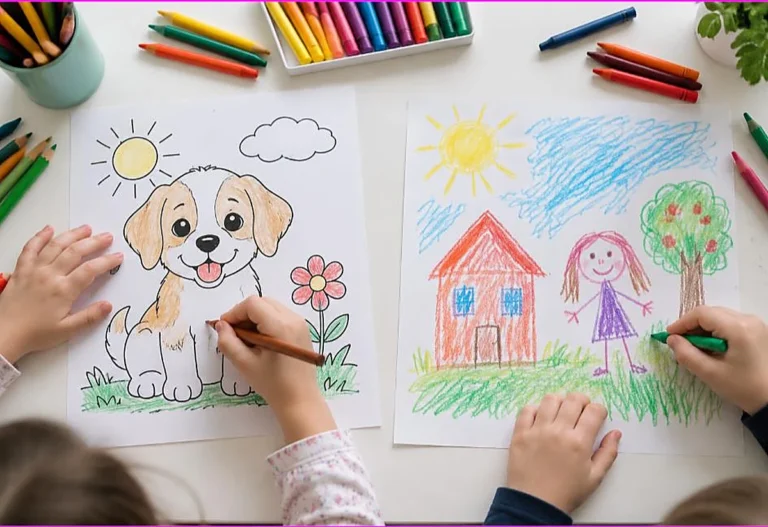
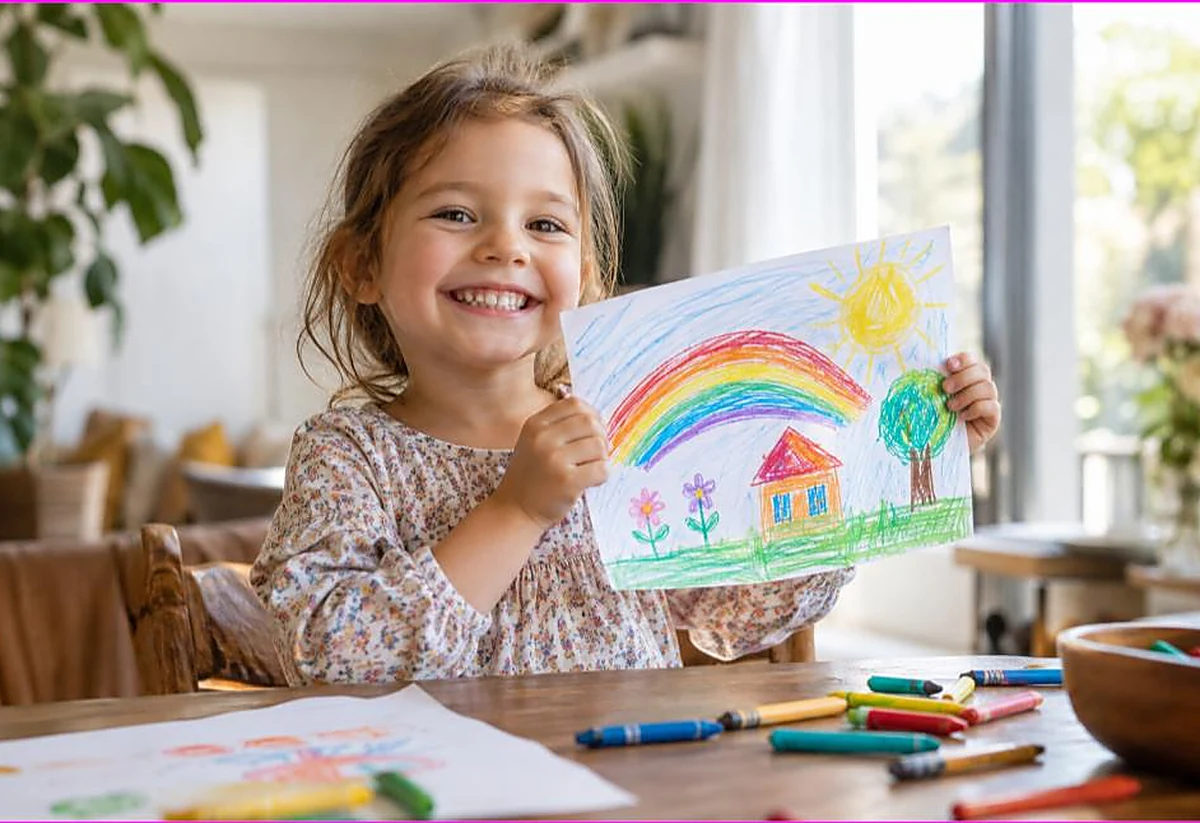
Around 4 years, children color with more intent, staying roughly in a large area and choosing colors on purpose. By 5 to 6 years, most can color inside the lines, as fine motor control and hand and eye coordination mature. Each stage builds on the last, and every child moves through them at their own pace.
Skills coloring builds
Behind these stages, coloring develops a set of skills that reach far beyond the page.
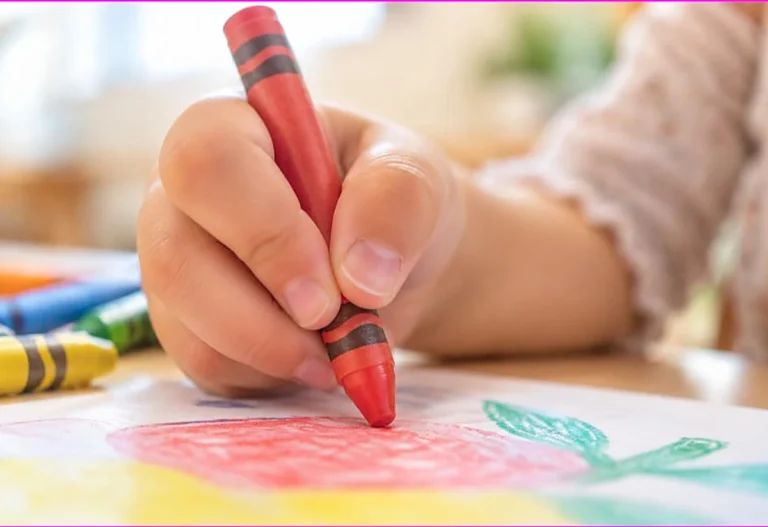
Fine motor skills come first. Gripping and moving a crayon strengthens the small hand muscles and refines control, which is the foundation for writing. Hand and eye coordination grows as a child learns to guide the crayon where they want it to go, matching hand to eye.
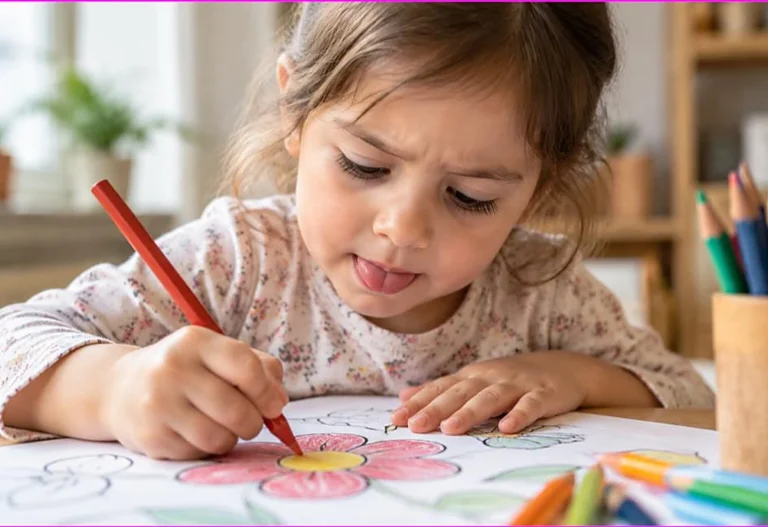
Focus and patience build as a child works toward finishing a page. Completing a picture teaches persistence and stretches attention span. Color and shape recognition grow through naming and filling, supporting early learning. And creativity and self expression develop as a child makes choices about how to color.
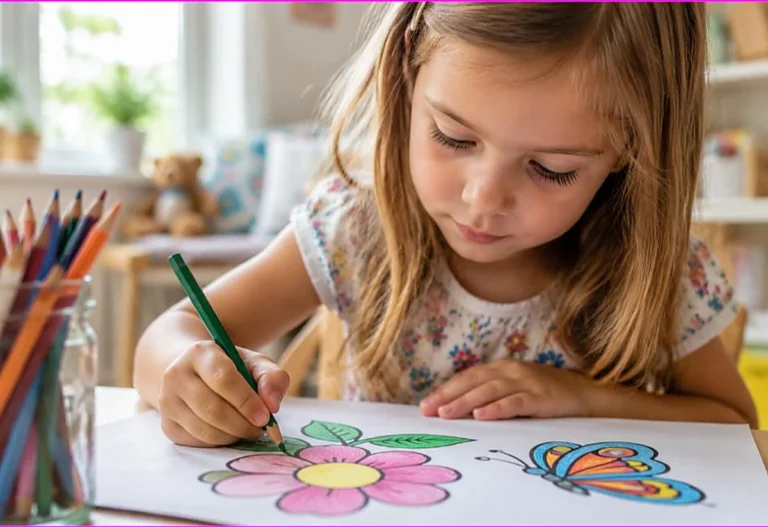
Together these skills prepare a child for school, especially for handwriting, which relies on the same hand control coloring builds. This is why teachers and occupational therapists value coloring so highly. Our guide on the benefits of coloring for kids covers each skill in depth.
How to support each stage
Your role shifts as your child grows, and matching your support to their stage helps most.
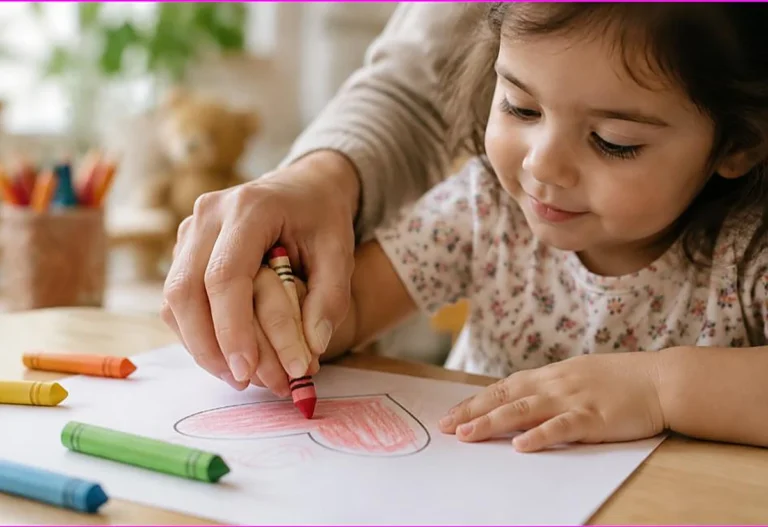
For scribbling toddlers, offer chunky, washable crayons and large, simple pages, and let them explore freely. Expect mess and scribbles, and praise the effort. The goal is enjoyment and grip building, not neatness. Our guide on coloring for toddlers covers this age.
For preschoolers gaining control, offer pages with clear, medium sized shapes to fill, and gently model coloring without correcting theirs. This is when hand control grows quickly. For school age children ready to color inside the lines, offer more detailed pages that challenge them and reward their growing precision.
At every stage, keep it pressure free and praise effort over results. Pushing a child to color neatly before they are ready only frustrates them. Meeting your child where they are, with the right pages and a relaxed attitude, is what keeps them coloring and building skills.
When kids start scribbling
The first stage, scribbling, is more important than it looks, so it deserves attention.
Most children start scribbling around 12 to 18 months, once they can grip a chunky crayon and understand that it makes marks. Early scribbles are made with whole arm movements and a fisted grip, with no control over where the marks go. This is not a lesser form of coloring but an essential first step.
Scribbling builds the hand strength and coordination that later coloring and writing depend on. It also teaches cause and effect, that moving the crayon makes color appear, which is an early learning milestone. Encouraging scribbling, rather than correcting it, supports this development. Our guide on what age kids start coloring covers this stage in detail.
So when a toddler scribbles, they are doing exactly the right developmental work. Offer big paper, chunky crayons, and freedom, and let them scribble to their heart’s content. The control will come later, built on this foundation.

When kids color inside the lines
The milestone parents watch for most, coloring inside the lines, arrives later than many expect.
Most children can color inside the lines around 5 to 6 years old. This ability requires mature fine motor control and hand and eye coordination, which take years to develop. Before this age, coloring outside the lines is completely normal and healthy, and it should not be corrected or rushed. Our guide on what age kids color inside the lines covers this.
Pushing a young child to stay in the lines before they are ready is counterproductive. It can frustrate them and take the joy out of coloring, which is the opposite of what you want. The ability arrives naturally as their hand control matures, built on all the scribbling and free coloring that came before.
So when a three or four year old colors well outside the lines, that is exactly right for their age. Celebrate the effort and the colors, and trust that staying in the lines will come in time. Patience here protects the love of coloring that keeps a child practicing.
When to seek advice
Coloring development varies widely, but occasionally it is worth checking in with a professional.
Most children progress through the coloring stages at their own pace, and a wide range is normal. There is no need to worry if your child reaches a stage a little later than another child. Development is not a race, and coloring skill depends on interest as much as ability.
That said, if you have concerns about your child’s fine motor development, such as difficulty gripping a crayon well past the typical age, or if a teacher or doctor raises a concern, it is worth mentioning to your pediatrician. An occupational therapist can assess fine motor skills and suggest supportive activities, with coloring often among them. Our guide on coloring in occupational therapy covers this.
For most families, though, coloring development needs no intervention, only encouragement. Offer good pages, keep it fun, and let your child grow at their own pace. Trust the process, and enjoy watching their skills unfold.
Coloring and school readiness
One of the biggest reasons coloring matters is how directly it prepares a child for school.
The single most important link is handwriting. Coloring builds the exact hand strength, pencil grip, and control that writing letters requires. A child who colors regularly is practicing the fine motor skills that handwriting depends on, which is why coloring is considered a key pre writing activity. Our guide on coloring and handwriting readiness covers this link.
Coloring also builds the focus and task completion that classroom learning demands. Sitting to color a page teaches a child to attend to one task and see it through, which transfers to worksheets, lessons, and independent work. Following coloring instructions, such as which colors to use where, practices listening and following directions too.
Beyond these, coloring supports color recognition, shape awareness, and early creativity, all of which feed into early learning. So coloring is not a break from school preparation but a part of it. A child who colors often arrives at school with stronger hands, better focus, and more confidence, ready for the writing and learning ahead. Our guide on play based learning and coloring covers the educational side.

Making coloring a regular habit
The developmental benefits of coloring come through regular practice, so making it a habit matters.
Keep coloring easy to reach, with a folder of pages and a box of crayons or pencils within your child’s reach. When coloring is available, a child can choose it in a spare moment, which builds the regular practice that develops their skills. Tie it to a routine, such as after lunch or before bed, so it becomes a natural part of the day.
Offer variety to keep it fresh: different subjects, and pages that match your child’s current interests and stage. A child who colors pictures they love colors more often, which builds more skill. Our collection of free printable coloring pages for kids spans many subjects and levels, so you can keep the pages fresh.
Above all, keep it enjoyable. A child who associates coloring with fun and encouragement, rather than pressure or correction, returns to it willingly, and that regular, happy practice is what drives the development. The goal is a child who loves to color, because that child gets all the benefits without anyone having to push.
Coloring alongside other developmental activities
Coloring is one valuable activity among several that support a child’s development, and it works best as part of a varied mix.
Coloring shares developmental ground with drawing, playdough, puzzles, building blocks, and threading activities, each building slightly different skills. Playdough builds hand strength through squeezing, puzzles build problem solving, and drawing builds imagination from a blank page. Coloring adds fine motor control, focus, and color knowledge through a task with a clear structure and finish. Our guide on coloring versus drawing compares two of these.
Offering a range of activities gives a child the full spread of early skills. Coloring is a strong, accessible piece of that mix, easy to set up and always available, but it works best alongside other hands on play rather than as the only activity. A child who colors, draws, builds, and plays develops a well rounded set of skills.
So value coloring for what it uniquely offers, the fine motor and focus building of filling a structured page, while giving your child other activities too. Together they build the hands, mind, and creativity a child needs, and coloring is one of the most enjoyable and useful parts of that picture. Our collection of free printable coloring pages for kids gives you plenty to include in the mix.
Frequently asked questions about child development
At what age do children start coloring?
Most children start scribbling around 12 to 18 months, once they can grip a chunky crayon. Purposeful coloring develops between 2 and 3 years, and coloring inside the lines arrives around 5 to 6 years.
What age do kids color inside the lines?
Most children can color inside the lines around 5 to 6 years old, once fine motor control and hand and eye coordination mature. Before then, coloring outside the lines is normal and should not be corrected or rushed.
What skills does coloring build in children?
Coloring builds fine motor skills, hand and eye coordination, pencil grip, focus, patience, and color and shape recognition, along with creativity. These skills prepare a child for handwriting and learning, which is why teachers value coloring.
Should I make my young child stay in the lines?
No. Coloring inside the lines develops around 5 to 6 years. Before then, scribbling and coloring outside the lines is healthy practice. Pushing neatness too early can frustrate a child and take the joy out of coloring.
When should I worry about my child’s coloring development?
Most children develop at their own pace, and a wide range is normal. If you have concerns about fine motor development, or a teacher or doctor raises one, mention it to your pediatrician, who may suggest an occupational therapy assessment.
The takeaway on child development
Coloring develops in stages, from scribbling around 12 to 18 months, to controlled coloring by 2 to 3 years, to coloring inside the lines around 5 to 6 years. Each stage builds fine motor skills, focus, and pre writing readiness. Support your child by offering the right pages for their stage, keeping it pressure free, and praising effort. Let them grow at their own pace, and enjoy watching their skills unfold.
Ready to support your child’s development the fun way? Browse our free printable coloring pages for kids for every age and stage. Every one is free to download and print. For ready made packs, browse our educational coloring pages.