Crayons vs Markers vs Colored Pencils: Which Should You Buy?
Quick answer
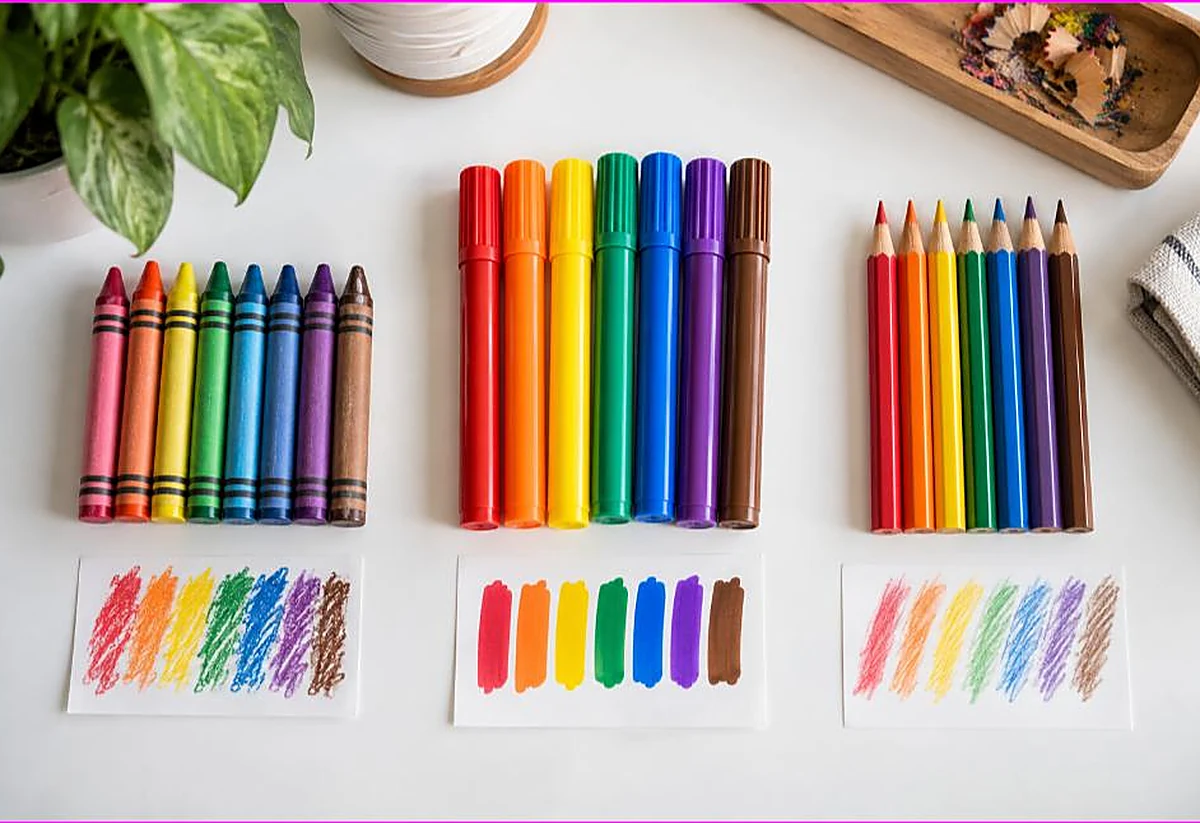
Each suits a different need: crayons are cheap, durable, and best for young children; markers give bold, vivid color but can bleed through thin paper; colored pencils allow the most control, blending, and detail, making them the favorite for adult coloring. Many colorists keep all three and choose based on the page.
By the TheColoringPages.net team. Reviewed for accuracy, September 2026.
This guide to Crayons vs Markers gives clear, practical answers, drawing on colored pencils and years of hands on coloring.
Standing in the craft aisle, most people wonder the same thing: crayons, markers, or colored pencils? All three color a page, but they behave very differently, and the right one depends on who is using it and what they want. Buy the wrong one and coloring feels frustrating. Buy the right one and it feels effortless.
This guide compares all three head to head, so you know exactly which to choose for a toddler, a school child, or an adult, and which suits your paper and the look you want.
Quick answer: Crayons are cheap, durable, and best for toddlers. Colored pencils give the most control, detail, and blending, which suits older kids and adults. Markers are the boldest and most vibrant but can bleed through thin paper. Many colorists keep all three and choose based on age, paper, and the result they want.

Quick comparison
Here is the fast answer before the detail, so you can decide at a glance.
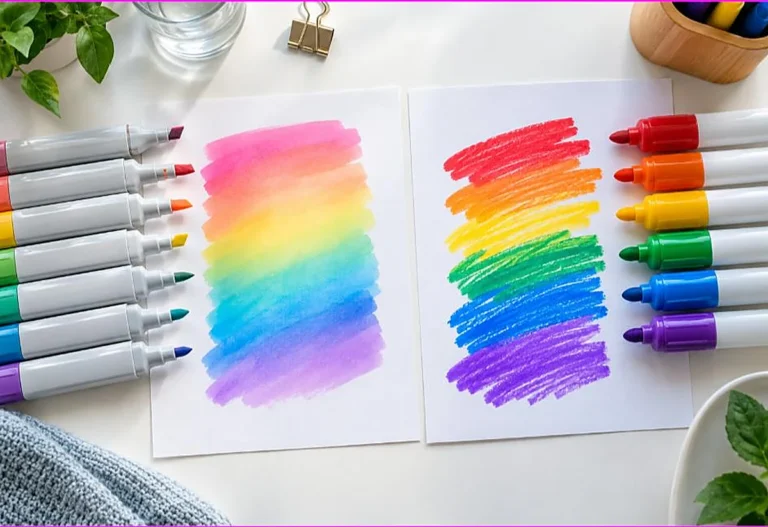
| Feature | Crayons | Colored pencils | Markers | |—|—|—|—| | Best age | Toddlers and up | School age and up | All ages | | Control and detail | Low | High | Medium | | Vibrancy | Medium | Medium | High | | Blending | Poor | Excellent | Good | | Speed to fill | Medium | Slow | Fast | | Bleed through | None | None | Can bleed | | Mess | Low | Low | Medium | | Cost | Low | Low to high | Low to high | | Durability | Very high | Medium | Medium |
Read on for what each of these means in practice, and which tool wins for your situation.
Crayons: cheap, tough, and toddler friendly
Crayons are the classic first coloring tool, and for good reason.
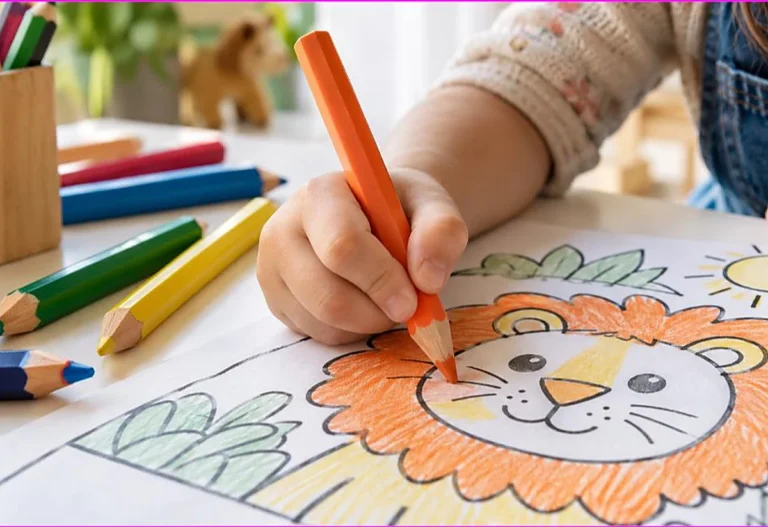
They are made of colored wax, which makes them cheap, durable, and safe. A crayon survives being dropped, squeezed, and pressed hard, which suits the rough handling of young children. They never bleed through paper, so there is no mess on the table below. And they are non toxic and washable in kid friendly versions.
Their weakness is precision. Crayons cannot color fine detail or blend smoothly, and filling a large area evenly takes effort. The color is decent but not as vibrant as markers. So crayons shine for young children and casual coloring, and fall short for detailed adult work.
Buy crayons for toddlers and preschoolers, for classrooms, and for anyone who wants a cheap, no fuss, mess free option. Our guide on the best crayons for toddlers helps you pick.
Colored pencils: control, detail, and blending
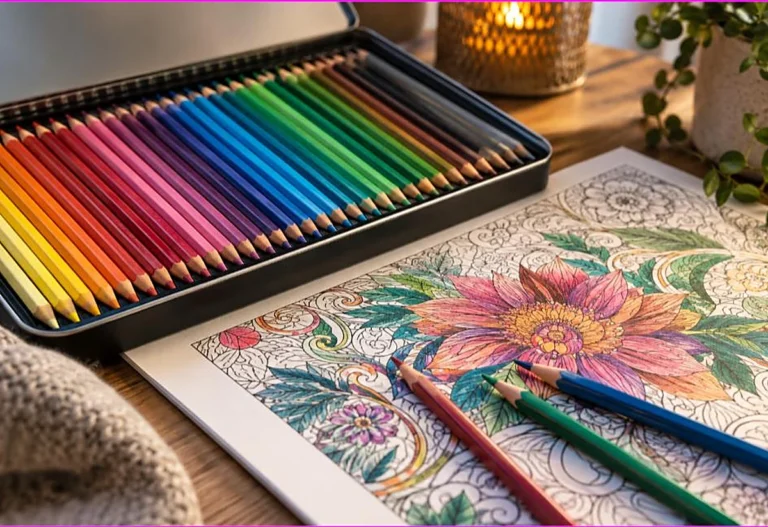
Colored pencils are the most versatile of the three, which is why serious colorists favor them.
They offer fine control, so you can color small details and stay neatly within lines. They layer and blend beautifully, letting you build rich color and smooth transitions, which is the key to advanced coloring. They come in every quality level, from cheap kids sets to professional artist pencils, so there is a set for every budget and skill.
The trade offs are speed and effort. Filling a large area with pencil takes time and a steady hand, and pencils need sharpening. The color is rich but not as instantly bold as marker ink.
Buy colored pencils for school age children ready for detail, and for teens and adults who want control and blending. Our guides on the best colored pencils for kids and the best colored pencils for adult coloring cover the options.
Markers: bold, vibrant, and fast
Markers deliver the most striking color of the three, with the least effort.
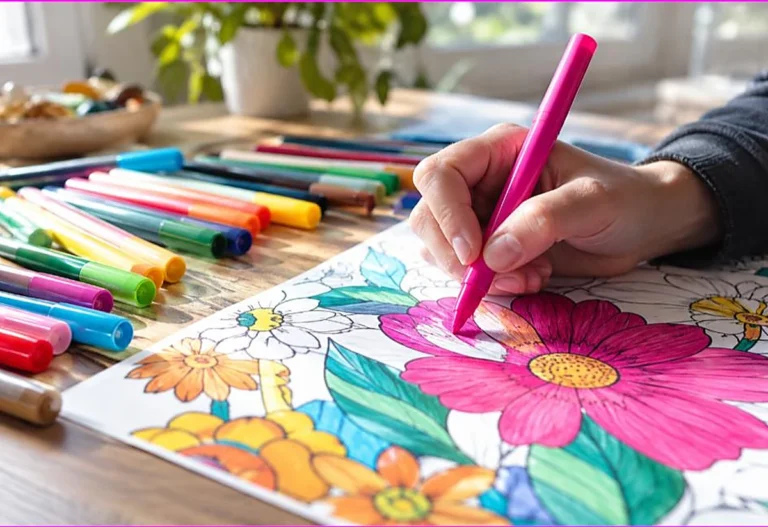
Marker ink lays down bold, vibrant color quickly, so filling an area is fast and satisfying. The results look bright and finished. Good markers blend well too, especially alcohol markers, which artists use for smooth gradients. For anyone who loves vivid color and quick coverage, markers are the winner.
Their main weakness is bleed through. Marker ink can soak through thin paper and mark the surface below, so markers need heavier paper or a backing sheet. Cheaper markers can also streak, and they dry out if left uncapped. Our guide on how to color with markers without bleeding through covers the fix.
Buy markers for children who love bold color, on suitable paper, and for teens and adults who want vibrant results. Our guide on the best markers for coloring helps you choose.

Which to choose by age
Age is the clearest guide to which tool to buy, so start here.
For toddlers and preschoolers, choose crayons. They are safe, durable, easy to grip, and forgiving of scribbling. Washable markers can be added, but crayons are the mainstay at this age. Our guide on washable markers versus crayons for toddlers compares the two.
For school age children, colored pencils and washable markers both work well. Pencils suit those ready for detail, markers suit those who love bold color, and many children enjoy both.
For teens and adults, colored pencils and markers are the main choices. Pencils suit detailed, blended work, while markers suit vibrant, quick coverage. Gel pens make a fun addition for accents, as our guide on gel pens for coloring explains.
Which to choose by paper
Your paper narrows the choice too, mainly because of markers.
On thin copy paper, crayons and colored pencils are safe, since neither bleeds through. Markers can bleed on thin paper, so either avoid them or add a backing sheet.
On heavier paper or cardstock, all three work well, and markers give their best, bold results without bleeding. If you love markers, keep some heavier paper on hand. Our guide on the best paper for coloring pages covers weights.
So if you only have thin paper, lean toward crayons or pencils. If you have or can buy heavier paper, markers become a great option.
The verdict: which is best?
There is no single best tool, only the best tool for your situation, so here is the plain verdict.
Choose crayons if you are coloring with a toddler, want the cheapest and most durable option, or need a mess free tool for a classroom. They are unbeatable for young children.
Choose colored pencils if you want the most control, detail, and blending, or if you are an older child or adult who enjoys careful, layered coloring. They are the most versatile all rounder.
Choose markers if you want bold, vibrant color quickly and have suitable paper. They give the most striking results with the least effort.
For many people, the real answer is all three. Crayons for the youngest, pencils for detail and blending, and markers for bold color, chosen to fit the moment. Together they cover every kind of coloring, and building up to all three over time gives you the right tool for any page and any age in the house.
Mixing supplies for the best results
You do not have to choose only one tool for a page. Combining them can give the best of each.
Many experienced colorists use more than one supply on a single page. You might fill large areas with markers for bold, quick color, then add fine detail and shading with colored pencils on top. Gel pens can then add sparkle or highlights as a finishing touch. Layering supplies this way combines the speed of markers, the control of pencils, and the accents of gel pens.
Colored pencils layer well over crayon or marker, so they are the natural tool for adding detail on top of a bolder base. Just let markers dry fully before adding pencil, so the pencil does not smear the ink. A little experimenting shows you which combinations you like.
For children, keeping it to one tool at a time is usually simplest. For teens and adults who want a more finished look, mixing supplies opens up effects that no single tool gives alone. This is part of the fun of coloring as a hobby, as our guide on coloring techniques for beginners explores.

Caring for each type of supply
Each supply lasts longer with the right care, so a few habits protect your investment.
Crayons need the least care. Keep them from heat so they do not soften, and store them where they will not be crushed. Broken crayons still work, and short pieces even help young children grip better.
Colored pencils need gentle sharpening to avoid snapping the core, and a soft touch when dropped, since a dropped pencil can crack inside and break repeatedly when sharpened. Store them in a case so the points stay intact.
Markers need the most care. Always recap them firmly, since an open marker dries out quickly. Store them flat or tip down so the ink reaches the tip. With this simple care, a marker set lasts far longer. Our guide on the best markers for coloring covers marker choice and care.
Cost over time, not just upfront
The cheapest tool to buy is not always the cheapest to own, so it helps to think ahead.
Crayons are cheap upfront and last a long time, since they do not dry out and a box lasts through heavy use. They are the most economical option overall, which suits classrooms and young children who color often. Colored pencils also last well, since they wear down slowly and do not dry, so even a mid range set gives long service.
Markers are the most variable. Cheap markers dry out and get replaced, which adds up over time. Premium refillable markers cost more at first but can last for years with new ink, making them cheaper in the long run for frequent colorists. So the true cost depends on how much you color and how well you care for the supplies.
For occasional coloring, buy affordable supplies and do not overthink it. For frequent coloring, spending a little more on durable or refillable tools can save money over time. Matching the spend to your coloring habit is the sensible approach. Our collection of free printable coloring pages keeps the pages themselves free, whatever supplies you choose.
Frequently asked questions about crayons vs markers
Which is better, crayons, markers, or colored pencils?
None is best for everyone. Crayons suit toddlers, colored pencils suit detail and blending, and markers give bold, vibrant color. The best choice depends on the age of the user, the paper, and the result you want.
What is best for young children?
Crayons are best for toddlers and preschoolers. They are cheap, durable, safe, easy to grip, and forgiving of scribbling. Washable markers can be added, but crayons are the mainstay for young children.
What do adults use for coloring?
Adults mainly use colored pencils and markers. Pencils give control and blending for detailed work, while markers give bold, vibrant color. Gel pens are a popular addition for accents and highlights.
Which tool bleeds through paper?
Only markers bleed through paper. Crayons and colored pencils are dry and never bleed. To use markers without bleed, choose heavier paper or place a backing sheet under the page.
Should I buy all three?
For many people, yes. Crayons suit the youngest, colored pencils suit detail and blending, and markers suit bold color. Having all three lets you choose the right tool for each coloring situation.
The takeaway on crayons vs markers
Crayons, colored pencils, and markers each have a clear place. Crayons win for toddlers and durability, colored pencils win for control and blending, and markers win for bold, fast color. Match the tool to the age, the paper, and the look you want, and consider keeping all three so you always have the right one to hand.
Ready to put your tools to use? Browse our free printable coloring pages for every age and style. Every one is free to download and print, ready for crayons, pencils, or markers alike.