Coloring Supplies Guide: Crayons, Markers, and Pencils Explained
Quick answer
A good coloring kit covers three bases: crayons for young kids and quick color, markers for bold vivid fills (on thicker paper), and colored pencils for blending and detail. Add a sharpener, a blending tool, and the right paper or cardstock for your medium. Start simple and build up as you find what you enjoy.
By the TheColoringPages.net team. Reviewed for accuracy, September 2026.
This guide to Coloring Supplies gives clear, practical answers, drawing on crayons and years of hands on coloring.
Walk down the craft aisle and the choice of coloring supplies can feel overwhelming. Crayons, colored pencils, markers, gel pens, and more, each in dozens of brands and sizes. The truth is simpler than it looks. Three main supplies cover almost everything, and the right one depends on who is coloring, on what paper, and for what result.
This guide compares crayons, colored pencils, and markers clearly, explains which suits which situation, and points you to deeper guides for each. By the end you will know exactly what to buy.
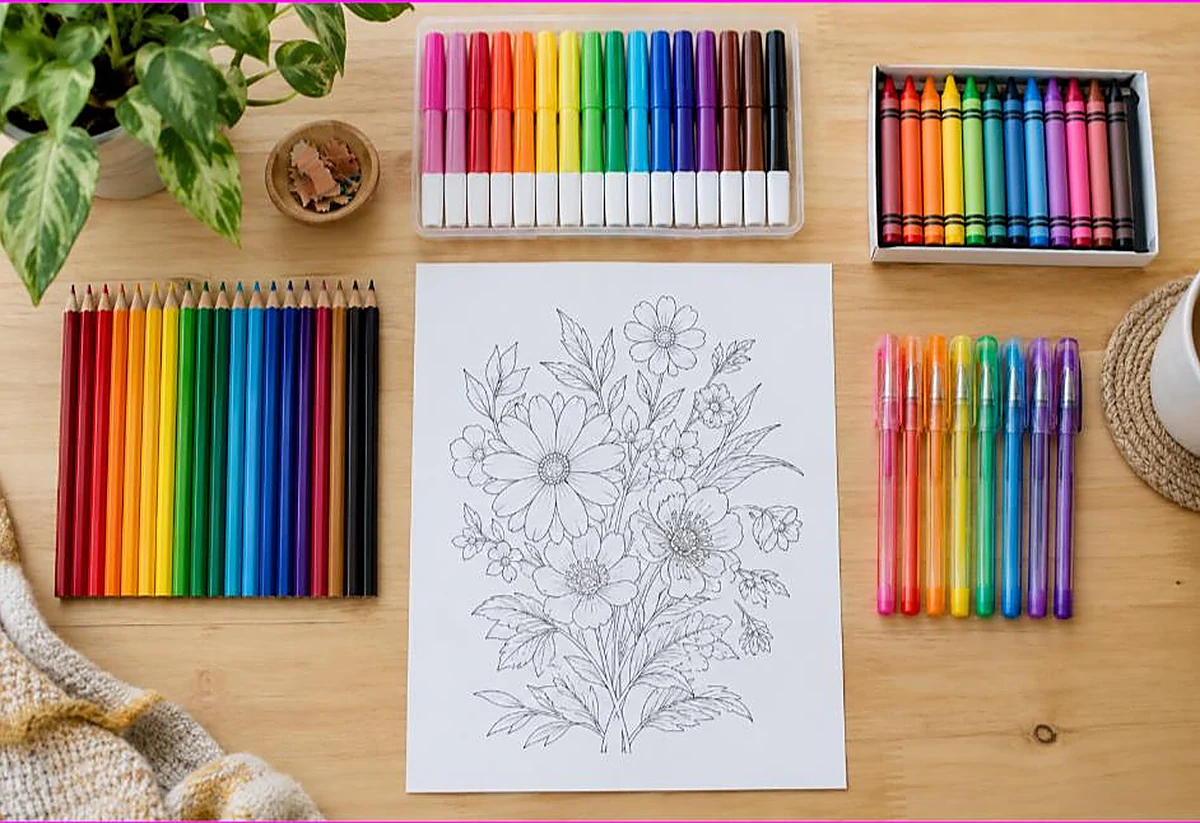
Quick answer: The three main coloring supplies are crayons, colored pencils, and markers. Crayons are cheap, durable, and best for young children. Colored pencils give the most control, detail, and blending for older kids and adults. Markers are the boldest and most vibrant but can bleed through thin paper. Many colorists keep all three.

The three main supplies compared
Most coloring comes down to three tools, and each has a clear personality.
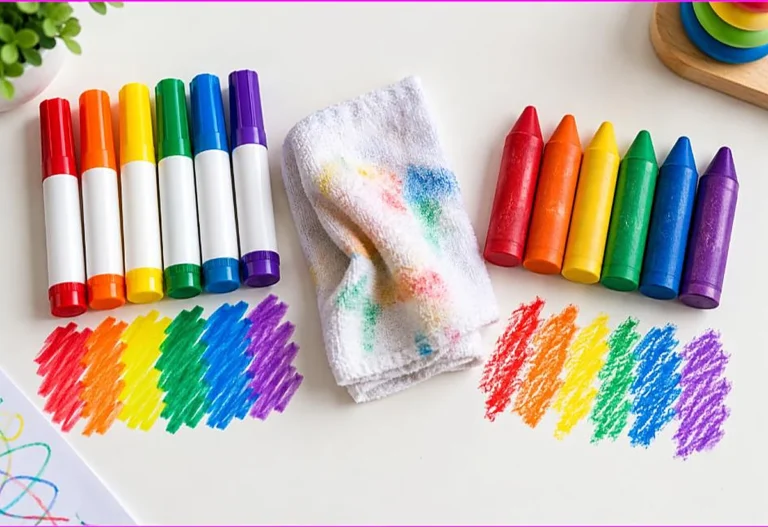
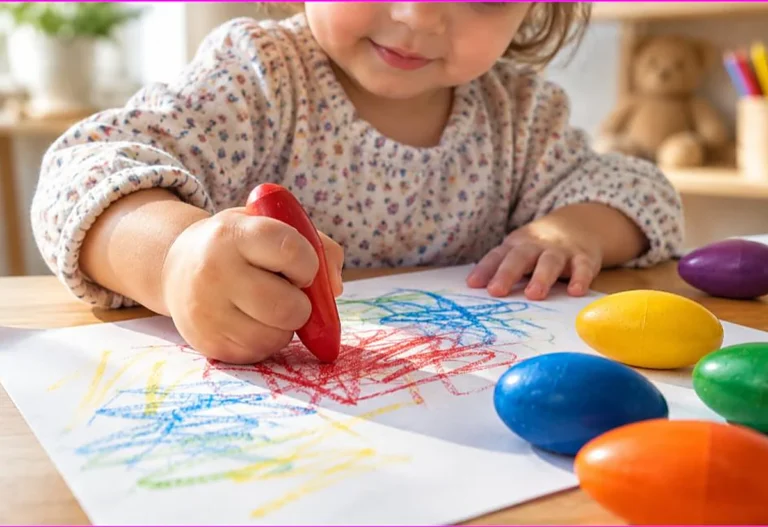
Crayons are wax based sticks of color. They are cheap, tough, and safe, which makes them the natural first tool for young children. They never bleed through paper and survive being dropped and squeezed. Their downside is that they cannot produce fine detail or smooth blends.
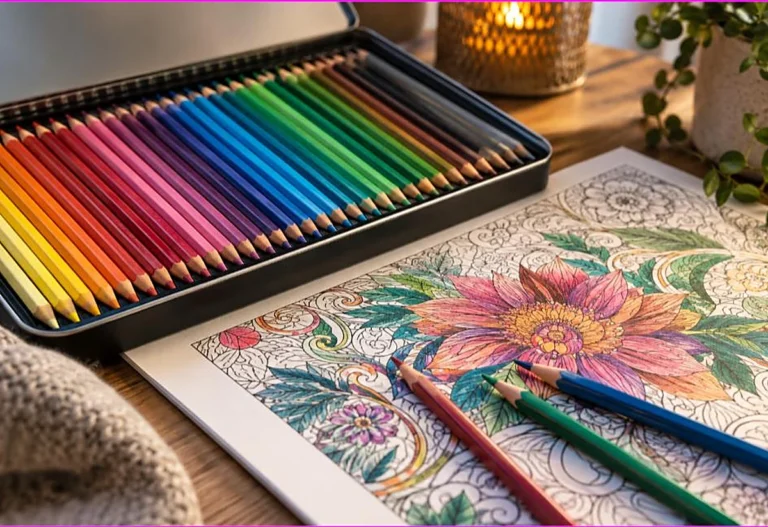
Colored pencils are wood cased sticks of colored core. They offer the most control of the three, letting you color fine detail, layer colors, and blend smoothly. They suit older children and adults who want precision and depth. They take more effort to fill large areas and need sharpening.
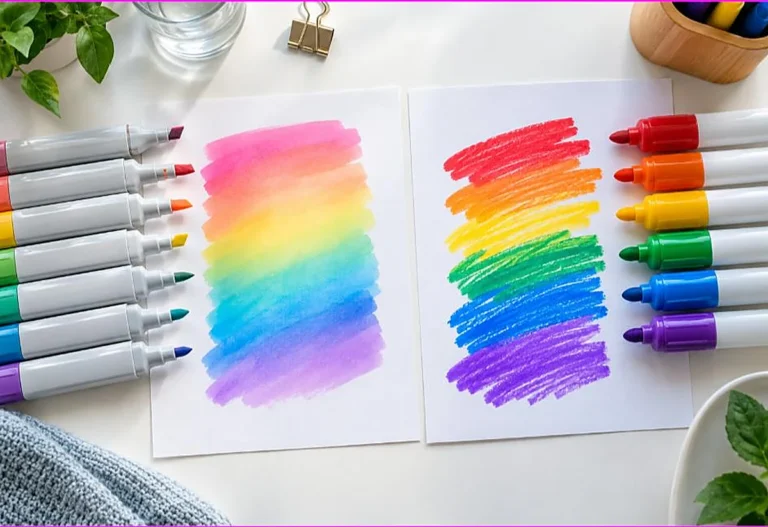
Markers are pens filled with colored ink. They lay down the boldest, most vibrant color quickly, which makes filling areas fast and satisfying. Their weakness is bleed through on thin paper, and cheaper ones can streak. They suit anyone who wants bright, bold results.
Here is a quick comparison to see them side by side.
| Feature | Crayons | Colored pencils | Markers | |—|—|—|—| | Best for | Young children | Detail, blending, adults | Bold, vibrant color | | Control | Low | High | Medium | | Vibrancy | Medium | Medium | High | | Blending | Poor | Excellent | Good | | Bleed through | None | None | Can bleed | | Cost | Low | Low to high | Low to high | | Ease for kids | Very easy | Easy | Easy |
Best supply by age
Age is the single biggest factor in choosing a coloring tool, so match the two.
For toddlers and preschoolers, crayons win. Chunky, washable crayons are easy to grip, safe, and forgiving of the scribbling that young children do. They build hand strength without frustration. Our guide on the best crayons for toddlers covers the options, and our guide on coloring for toddlers covers this stage.
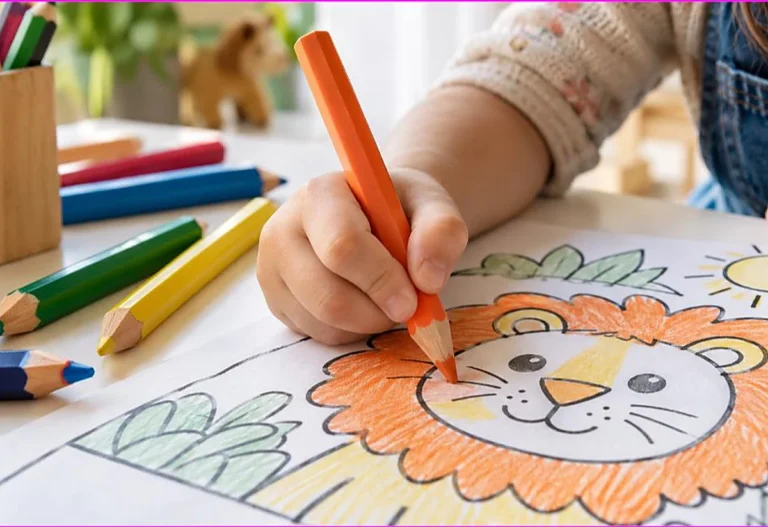
For school age children, colored pencils and markers both work well. Pencils suit children ready for more detail and control, while markers appeal to those who love bold color. Many children enjoy having both. Our guide on the best colored pencils for kids helps you choose.
For teens and adults, colored pencils and markers are the main choices, depending on the look you want. Pencils suit detailed, blended work, while markers suit vibrant, quick coverage. Our guides on the best colored pencils for adult coloring and the best markers for coloring go deeper.
Best supply by paper type
Your paper affects which supply works best, especially where markers are involved.
On standard copy paper, crayons and colored pencils are safe choices, since neither bleeds through. Markers, though, can bleed through thin copy paper and mark the surface below. So if you only have thin paper, stick to crayons or pencils, or add a backing sheet under markers.
On heavier paper or cardstock, all three work well. The extra thickness stops markers bleeding, so you can use bold markers freely and get the vibrant results they are known for. Our guide on the best paper for coloring pages explains weights and finishes.
The simple rule is that thin paper suits crayons and pencils, while markers deserve heavier paper. Matching your supply to your paper prevents the bleed through that ruins so many pages.
Bleed-through and how to avoid it
Bleed through is the most common supply problem, so it is worth understanding.
Bleed through happens when wet marker ink soaks through the paper to the surface below. It ruins the page underneath and can show through the coloring page itself as a shadow. Crayons and colored pencils never bleed, since they are dry. Only markers cause this.
To avoid it, use heavier paper for markers, place a scrap sheet behind the page to catch any ink, and choose water based markers over alcohol markers on thinner paper. Our guide on how to color with markers without bleeding through covers the full fix.
If bleed through is a constant worry, colored pencils sidestep it entirely, which is one reason they are so popular for coloring books with thin pages.

Gel pens and other extras
Beyond the big three, a few extra supplies add variety and fun.
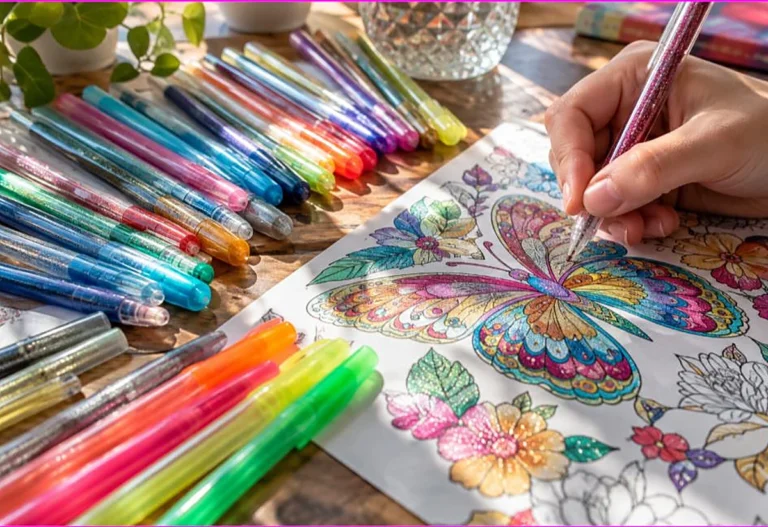
Gel pens are excellent for details, highlights, and special effects like glitter, metallic, and neon. They are too slow for filling large areas but shine for accents on top of pencil or marker work. Our guide on whether gel pens are good for coloring covers them.
Watercolor pencils, fine liners, and brush pens all have their place too, though they are more specialized. Most colorists do not need them to start. Begin with the main three, and add extras only as your interest grows and you want new effects.
The point is that crayons, pencils, and markers cover the vast majority of coloring, and everything else is a nice addition rather than a necessity. Start with the main three that suit your situation, and treat the rest as optional extras you can explore once you know what you enjoy.
Starter kits by colorist
Here is what to buy depending on who the coloring is for, so you can shop with confidence.
For a toddler, buy a set of chunky washable crayons and some simple, large printed pages. That is all a young child needs to start building grip and having fun.
For a school age child, a box of good colored pencils and a set of washable markers covers both detail and bold color. Add pages of subjects they love, and they are set.
For a teen or adult, a set of around twenty four colored pencils is the ideal starting point, with markers or gel pens added later if you want bolder color or accents. Our guide on coloring supplies for beginners covers a simple adult starter kit.
For any of these, free printable pages let you try coloring at no cost before buying anything more. Our collection of free printable coloring pages has pages for every age.
How to store and care for supplies
Good supplies last longer with a little care, which saves money over time.
Store markers flat or tip down so the ink stays at the coloring end and does not dry out unevenly. Always recap them firmly, since an uncapped marker dries out fast, which is the most common way markers die before their time. Keep crayons and pencils in a box or roll so they do not get crushed or lost, and sharpen pencils gently to avoid snapping the core.
Keep all supplies away from heat and direct sun. Heat can soften crayons and dry markers, and sun can fade some colors over time. A drawer or a lidded box in a normal room is ideal. For children, a simple caddy that holds everything in one place makes cleanup easy and keeps supplies from wandering off.
A small habit of capping, boxing, and storing supplies properly means a set lasts far longer. This matters most with markers, which are the quickest to ruin through neglect, and least with crayons, which survive almost anything.

Matching supplies to the coloring page
The kind of page you are coloring can also guide which supply to reach for.
For pages with large, simple areas, such as those for young children, crayons and markers fill quickly and look bold. For detailed pages with small sections and fine lines, colored pencils give the control to color neatly within them, and gel pens can add tiny highlights. For mandalas and patterns, pencils and fine tip markers both work well, letting you fill small repeating sections precisely.
Think about the finished look you want too. Bold, bright pages suit markers. Soft, blended, layered pages suit colored pencils. Simple, cheerful pages suit crayons. Matching the tool to the page and the look keeps coloring satisfying.
If you are unsure, colored pencils are the safe all rounder, since they handle detail and large areas alike, just more slowly. Our collection of free printable coloring pages spans simple and detailed designs, so you can match your supplies to the page.
Building your supplies over time
You do not need every supply at once. A coloring kit can grow with your interest.
Start with the basics for whoever is coloring: crayons for a toddler, colored pencils for an older child or adult. This covers most coloring and lets you see what you enjoy before spending more. Free printable pages let you practice at no cost while you decide what to add.
Add supplies as your coloring grows. If you find you love bold color, add markers and heavier paper. If you enjoy detail and blending, invest in better colored pencils. If you want finishing touches, add gel pens for highlights. Each addition opens up new effects without needing a big outlay all at once.
There is no need to buy premium supplies to enjoy coloring. Many people color happily for years with a modest set of pencils and some markers. Build slowly, add what suits how you color, and let your kit reflect your own coloring rather than a shopping list. Our collection of free printable coloring pages gives you plenty to color at every stage.
Frequently asked questions about coloring supplies
What are the best coloring supplies?
The three main supplies are crayons, colored pencils, and markers. Crayons suit young children, colored pencils suit detail and blending, and markers give bold, vibrant color. The best choice depends on age, paper, and the result you want.
What is the difference between crayons, pencils, and markers?
Crayons are cheap, durable wax sticks best for young kids. Colored pencils offer the most control and blending for detail work. Markers give the boldest color but can bleed through thin paper. Each suits a different situation.
What coloring supplies are best for kids?
Chunky washable crayons suit toddlers, while colored pencils and washable markers suit school age children. Choose non toxic, easy grip supplies, and match the tool to the child’s age and hand control.
Do markers bleed through coloring pages?
Markers can bleed through thin paper, unlike crayons and pencils. Use heavier paper or a backing sheet, and choose water based markers on thin paper, to prevent bleed through.
What supplies do I need to start coloring?
Just something to color with, such as colored pencils, and some pages. A basic set of pencils or markers plus free printable pages is enough to begin, with extras added as your interest grows.
The takeaway on coloring supplies
Coloring supplies come down to three main tools. Crayons suit young children, colored pencils suit detail and blending, and markers give bold color. Match the supply to the age, the paper, and the result you want, and add extras like gel pens as your interest grows. Start simple, and build your kit from there.
Ready to put your supplies to use? Browse our free printable coloring pages for every age and style. Every one is free to download and print, so you can match them to whatever supplies you have on hand.