Best Crayons for Toddlers (Safe, Chunky, and Easy to Grip)
Quick answer
The best crayons for toddlers are chunky and easy to grip: egg- or ball-shaped crayons suit the youngest hands, jumbo crayons work well as they grow, and washable crayons keep mess down. Whatever the shape, choose non-toxic crayons clearly labeled safe for young children, and always supervise.
By the TheColoringPages.net team. Reviewed for accuracy, September 2026.
This guide to Crayons for Toddlers gives clear, practical answers, drawing on crayons and years of hands on coloring.
Crayons are usually a toddler’s first coloring tool, and the right ones make all the difference. A good toddler crayon is easy to grip, hard to break, safe if it reaches a little mouth, and washable when it reaches the wall. The wrong crayon frustrates a small child and makes a mess you will be scrubbing for days.
This guide explains what to look for in toddler crayons, compares the popular shapes, and helps you choose crayons that suit little hands and support early skills. The right first crayon makes those early scribbles a pleasure rather than a struggle, which keeps a toddler coming back to color.
Quick answer: The best crayons for toddlers are chunky, easy to grip, washable, and non toxic. Egg or ball shaped and jumbo crayons suit little hands and are hard to break. Washable formulas make cleanup of walls, tables, and clothes far easier. Look for a safety certification, since toddlers explore with their mouths.

What to look for in toddler crayons
A few features matter most when choosing crayons for the youngest children.
Safety is first. Toddlers put things in their mouths, so choose non toxic crayons, ideally with a recognized safety certification. Reputable brands meet strict standards, which gives peace of mind.
Grip suits small hands. Chunky, thick crayons are far easier for a toddler’s developing grip to hold than thin standard crayons. Special shapes like eggs, balls, or blocks fit tiny hands even better and are hard to drop.
Durability saves frustration. Toddlers press hard and snap thin crayons instantly. Thick, sturdy crayons survive heavy handling, so the crayon lasts and the child is not upset by constant breakage.
Washability saves your sanity. Toddlers color on more than paper. Washable crayons wipe off walls, tables, and clothes far more easily than regular wax, which makes the inevitable mess manageable.
Best egg and ball shaped crayons
For the very youngest toddlers, rounded crayons are often the easiest to hold.
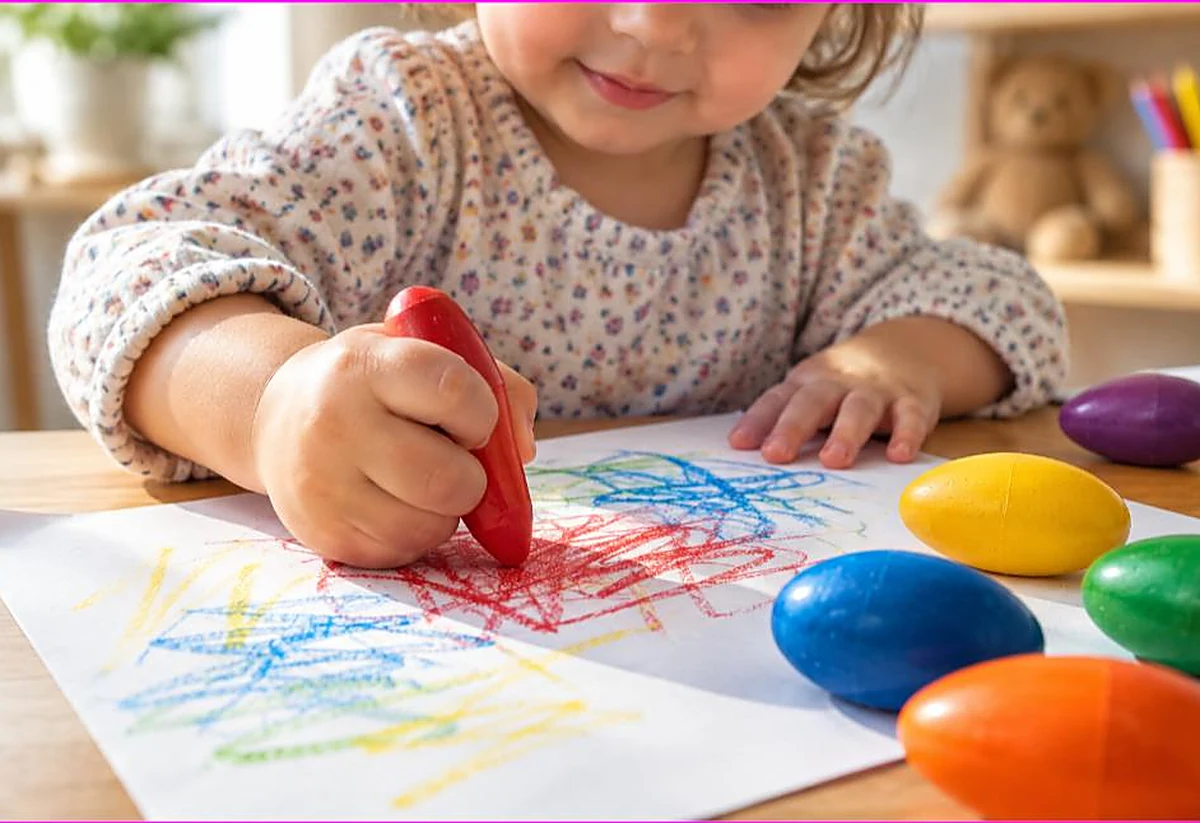
Egg shaped and ball shaped crayons are designed for tiny hands that cannot yet grip a stick. A toddler wraps their whole hand around the rounded crayon, using a natural palm grip, which is exactly how the youngest children hold things. These shapes are also nearly impossible to break and hard to roll away.
Palm grip crayons suit children from around one year old who are just starting to make marks. They remove the frustration of a crayon that keeps slipping or breaking, so the child can focus on the joy of making color appear.
As the child grows and their grip develops, they move on to chunkier stick crayons and then standard ones. But for a first crayon, a rounded, easy hold shape is often the best start. Our guide on coloring for toddlers covers this early stage.
Best jumbo crayons
Once a toddler can hold a stick, jumbo crayons are the natural next step.
Jumbo or chunky crayons are thicker and sturdier than standard crayons, which suits toddlers and preschoolers well. The thick barrel is easy to grip, and the sturdy build resists the breakage that thin crayons suffer under heavy little hands. They also lay down bold color easily, so a child gets a satisfying result.
Jumbo crayons suit children from around two years old who have moved past the palm grip stage and are developing finger control. They bridge the gap between rounded first crayons and standard crayons.
Look for jumbo crayons from familiar, trusted brands, which balance quality, safety, and price. A basic set of chunky crayons in bright colors is all a preschooler needs for happy coloring. Our guide on how to hold a crayon covers grip development.
Best washable crayons
Washability turns crayon time from a source of stress into a relaxed activity.
Washable crayons are formulated to wipe off surfaces and wash out of clothes far more easily than standard wax crayons. Since toddlers color on walls, tables, and themselves as readily as on paper, washable crayons save you endless scrubbing. Many parents consider washability essential for this age.
Test washability on your own surfaces, since results vary by surface and by how long the mark sits. Cleaning marks promptly gives the best results. Even so, washable crayons are far more forgiving than regular ones.
For toddlers, the combination of chunky and washable is ideal: easy to hold and easy to clean up. This lets you relax and let the child explore, which is what coloring at this age should be. Our guide on washable markers versus crayons for toddlers compares the options.

Safety first: what to check
With toddlers, safety deserves extra attention, so here is what to confirm.
Choose non toxic crayons with a safety certification, which shows they have been tested and meet standards for children’s art materials. Reputable brands display this clearly. This matters because toddlers taste and mouth their crayons.
Consider size in relation to choking risk. Chunky crayons are large enough to be safe for most toddlers, which is another reason to avoid thin crayons for this age, beyond their tendency to break. Always supervise a young child while they color, keeping an eye on how they use the crayons and stepping in gently if needed.
Keep crayons for the age they suit. Products are often labeled with an age range, and following it helps you choose crayons that are both safe and appropriate for your child’s stage. When in doubt, chunky, washable, certified crayons from a trusted brand are a safe bet. Trusted names have a long track record of meeting safety standards, which is reassuring when your child is at the mouthing stage.
Helping toddlers get the most from crayons
The right crayons work best alongside a few simple habits.
Offer large, simple pages with big shapes, which suit the broad strokes toddlers make. Detailed pages frustrate a young child. Big, bold pictures let them fill space and feel successful. Our collection of free printable coloring pages includes simple designs for little ones.
Keep sessions short and pressure free. Toddlers have short attention spans, and the goal is enjoyment and grip building, not finishing or neatness. Praise the effort, not the result, and let them scribble freely, which is exactly right for this age.
Protect surfaces and clothes, since mess is inevitable. A wipeable mat and old clothes let you relax. With washable crayons, chunky grip, and a forgiving attitude, toddler coloring becomes a calm, happy activity that builds real early skills. Our guide on the benefits of coloring for kids covers those gains.
How crayons support toddler development
Crayons do more than entertain a toddler. They quietly build important early skills, which is worth knowing.
Coloring with crayons strengthens the small muscles in the hand and fingers, since a child must press to make color appear. This hand strength is the foundation for the pencil grip and control that writing will later require. Occupational therapists often favor crayons for this reason, especially chunky ones that suit small hands.
Crayons also build hand and eye coordination, as a child learns to guide the crayon where they want it to go. Choosing colors and filling shapes exercises early decision making and creativity. And completing a scribbled page, however messy, builds focus and a sense of accomplishment. Our guide on the benefits of coloring for kids covers these gains.
All of this happens through play, with no lessons needed. A toddler with good crayons and simple pages is building real skills while having fun, which is exactly what early activities should do. This is why crayons remain a valued first tool despite the simplicity of the activity.

From first crayons to the next stage
Crayons are a starting point, and knowing what comes next helps you support your child’s growth.
The youngest toddlers start with rounded egg or ball crayons using a palm grip. As their grip develops, they move to chunky jumbo crayons held more like a stick. Around preschool age, many children are ready for standard crayons and then colored pencils, which allow more detail and control. Our guide on the best colored pencils for kids covers that next step.
There is no need to rush this progression. Let your child use the crayons that suit their current grip, and offer the next stage when they seem ready for more control. Pushing a thin crayon on a child who cannot hold it only frustrates them.
Watching a child move from palm gripped scribbles to controlled coloring is watching their fine motor skills develop. Good crayons at each stage support that journey, which eventually leads to the pencil control writing needs. Our guide on how to hold a crayon covers grip by age.
Alternatives to standard crayons
A few crayon alternatives suit toddlers well, so it helps to know the options beyond regular sticks.
Crayon rocks and pebble shaped crayons are small, rounded crayons designed for a palm and finger grip. They encourage the same finger positioning that leads to a good pencil grip later, while being easy for small hands to hold and hard to break. Many parents and therapists like them for building grip in a natural way.
Twistable crayons come in a plastic barrel that you twist up, so there is no paper to peel and no sharpening needed. They stay clean and are harder to snap, which suits toddlers, though the barrel can be slimmer than a chunky crayon. Silicone or bath crayons let toddlers color in the bath and wipe clean, which some children love, though these are more for play than skill building.
Standard chunky crayons remain the simple, reliable choice for most toddlers, but these alternatives can add variety or suit a particular need, such as grip building or mess free coloring. Trying a couple lets you see what your child takes to. Whatever you choose, pair it with simple pages, like those in our collection of free printable coloring pages, and a relaxed approach.
Frequently asked questions about crayons for toddlers
What are the best crayons for toddlers?
The best toddler crayons are chunky, easy to grip, washable, and non toxic. Egg or ball shaped crayons suit the youngest, jumbo crayons suit older toddlers, and washable formulas make cleanup far easier. Look for a safety certification.
At what age can toddlers use crayons?
Most toddlers can start with rounded, easy grip crayons around one year old, once they can grasp and make marks. Chunky stick crayons suit children from around two, as their grip develops.
Are washable crayons worth it for toddlers?
Yes. Toddlers color on walls, tables, and clothes as readily as paper, and washable crayons wipe off surfaces and wash out of clothes far more easily than regular wax, which makes cleanup manageable.
Are crayons safe for toddlers?
Choose non toxic crayons with a safety certification, since toddlers explore with their mouths. Chunky crayons are large enough to reduce choking risk, and supervision is always wise during coloring.
What shape crayon is best for a toddler?
Egg or ball shaped crayons suit the youngest toddlers, who use a palm grip. Chunky or jumbo stick crayons suit slightly older toddlers developing finger control. Both are easier to hold and harder to break than thin crayons.
The takeaway on crayons for toddlers
The best crayons for toddlers are chunky, washable, non toxic, and shaped for little hands. Start with rounded egg or ball crayons for the youngest, move to jumbo crayons as their grip develops, and always choose washable, certified crayons. Pair them with simple pages and a relaxed, pressure free approach, and crayon time becomes a happy activity that builds early skills.
Ready to let your toddler color? Browse our free printable coloring pages, including simple designs for little hands. Every one is free to download and print, ready for chunky crayons and little hands. Above all, keep the mood relaxed and let your toddler explore, since the joy of making color appear is what draws a young child back to coloring day after day.