What Is Line Art? (And Why Coloring Pages Use It)
Quick answer
Line art is artwork made purely from distinct lines — outlines and contours — without shading, color, or gradients filling the shapes. It’s the foundation of every coloring page, where clean black lines define the areas you fill in. Line art ranges from bold, simple outlines for beginners to fine, detailed linework for intricate adult designs.
By the TheColoringPages.net team. Reviewed for accuracy, September 2026.
This guide to Line Art gives clear, practical answers, drawing on line art and years of hands on coloring.
Every coloring page starts as line art, but many people have never thought about what line art actually is. Understanding it helps you recognize good coloring pages, make your own, and appreciate what you are coloring. This guide explains what line art is, why coloring pages use it, what makes good coloring line art, and how it differs from other kinds of drawing.
Quick answer: Line art is a black and white drawing made of clean outlines with no shading or color. It is the base of every coloring page. Good coloring line art has clear, closed outlines and enough space to color inside comfortably. The outlines define the picture, leaving white spaces for you to fill with color.

Definition
Line art, in simple terms, is a drawing made purely of lines, with no color or shading.
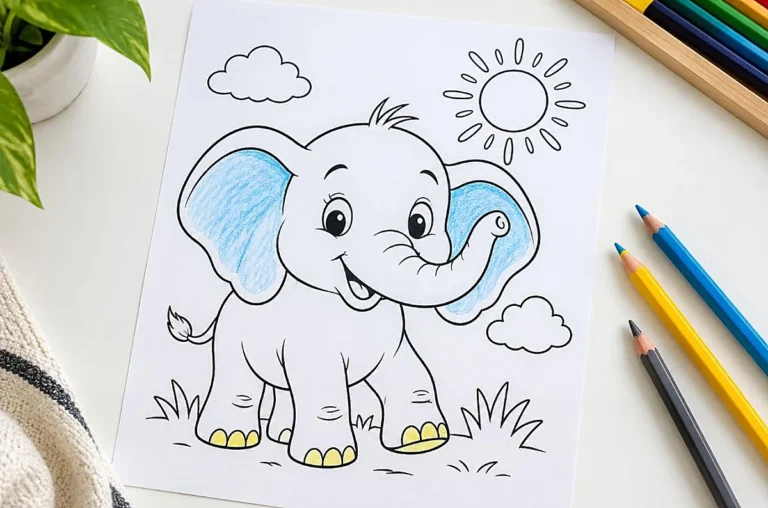
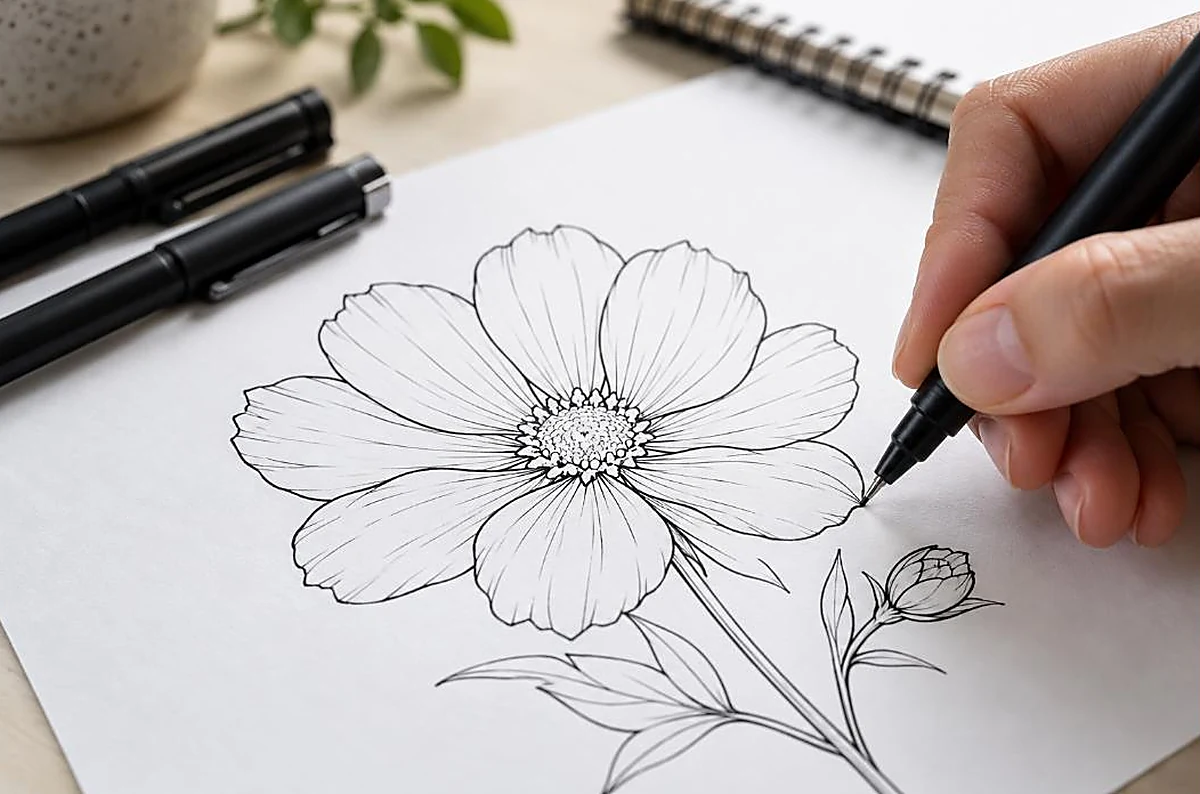
Line art, sometimes written lineart, is a style of drawing that uses only clean, defined lines to depict a picture. There is no color, no shading, and no filled in areas, just the outlines that define the shapes and details of the image. A line art drawing of an apple, for example, would be the outline of the apple and its stem and leaf, in black lines on white, with nothing filled in.
This makes line art distinct from other drawing styles that include shading, color, or filled areas. Line art is the essential structure of a picture, reduced to its defining outlines. It is clean, clear, and simple, showing the picture through lines alone. This simplicity is exactly what makes it perfect for coloring, since the white spaces between the lines are left open to be filled.
Line art appears in many contexts beyond coloring pages, from illustrations and comics to logos and technical drawings, wherever a clean, outline based image is wanted. But for our purposes, line art is the black outline drawing that forms the base of every coloring page. Understanding this, line art is a picture drawn purely in outlines, helps you see what a coloring page really is. Our guide on what a coloring page is covers the basics.
Why coloring pages use line art
Coloring pages use line art for a clear reason: it leaves the coloring for you to do.
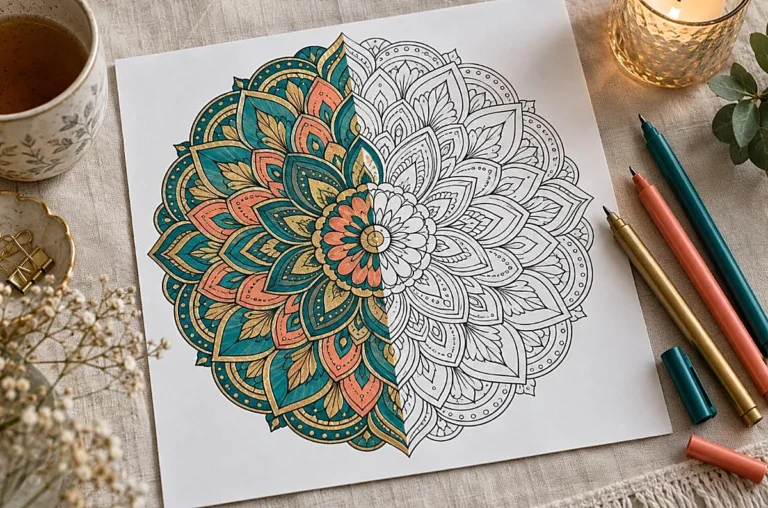
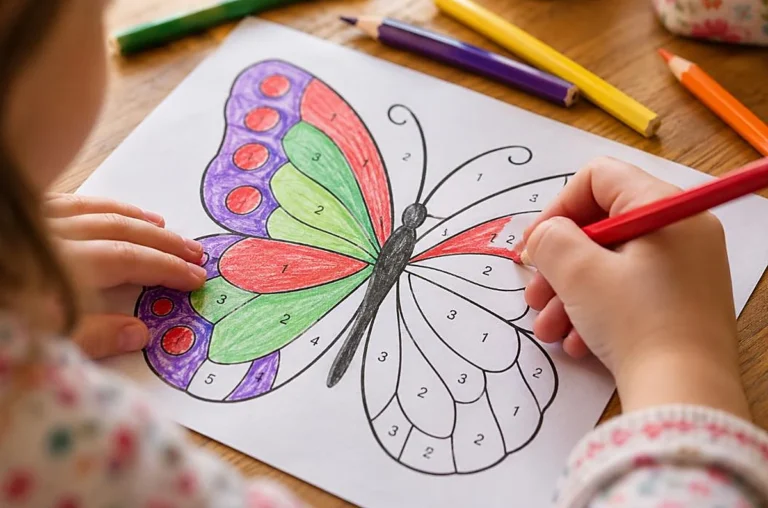
A coloring page needs to be a picture that is not yet colored, with spaces ready to be filled. Line art is exactly this, an outline drawing with white spaces between the lines, waiting for color. The lines define the picture and the areas to color, while leaving those areas open for you to fill. No other drawing style suits this purpose, since shaded or colored drawings are already finished, with no spaces to fill.
Line art also gives clear boundaries for coloring. The clean outlines show exactly where each area begins and ends, so you know where to color and can stay within the lines. Closed outlines, where the lines fully enclose each area, are important, since they define distinct spaces to color. This clarity is what makes a coloring page pleasant and easy to color. Our guide on how to color neatly covers coloring within these lines.
So line art is the natural and necessary base for coloring pages. Its outline only nature leaves the picture uncolored and provides clear areas and boundaries to fill. This is why every coloring page, whatever its subject, is line art. Understanding this connection, coloring pages are line art because line art leaves the coloring for you, clarifies what a coloring page fundamentally is. It is a picture reduced to colorable outlines. Our collection of free printable coloring pages is full of line art ready to color.
What makes good coloring line art
Not all line art is equally good for coloring, so it helps to know what makes it good.
Clear, closed outlines are the most important feature. The lines should fully enclose each area, so there are distinct spaces to color, with no gaps where color would escape. Closed outlines define the coloring areas cleanly, which makes the page pleasant and easy to color. Open or broken outlines make coloring frustrating, since the areas are not clearly defined. Good coloring line art has clean, closed outlines throughout.
Appropriate detail and spacing matter too. Good coloring line art has areas that are large enough to color comfortably, not so tiny and intricate that they are frustrating, unless intended for detailed adult coloring. The level of detail should suit the intended age and purpose, with simpler line art for children and more detailed for adults. Well judged detail makes line art enjoyable to color. Our guide on coloring and child development covers age appropriate pages.
Bold, clear lines also help. Line art with clear, well defined lines is easier to see and follow, and prints better, than faint or messy lines. The lines should be crisp and clean, defining the picture clearly. Good line art also depicts an appealing, recognizable subject that people want to color. Together, these features, closed outlines, suitable detail, bold clear lines, and an appealing subject, make good coloring line art. Our collection of free printable coloring pages is built from quality line art.

Line art versus sketches and shaded art
Line art differs from other drawing styles, so it helps to see the distinctions.
Line art versus sketches: a sketch is a rough, often loose drawing that may have messy, overlapping, or incomplete lines, and sometimes shading. Line art is clean and precise, with defined, deliberate outlines and no shading. A sketch might be an early stage that is later refined into clean line art. For coloring, clean line art is needed, not a rough sketch, since the areas must be clearly defined.
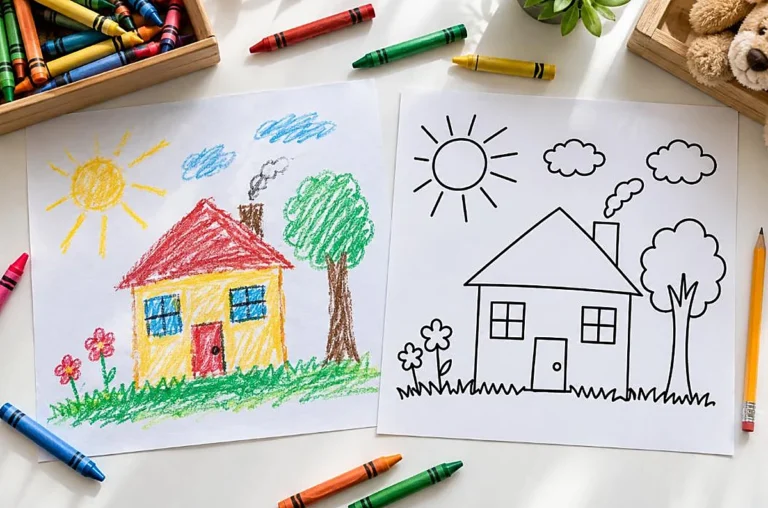
Line art versus shaded or colored art: shaded art includes tones and shadows that fill areas with varying darkness, and colored art includes color. Both are more finished than line art, with areas filled rather than left open. Line art, by contrast, is just the outlines, with areas left white. This is why line art suits coloring, it leaves the filling to you, while shaded or colored art is already filled. Coloring pages must be line art, not finished art.
Understanding these distinctions clarifies what line art is by contrast. It is cleaner and more precise than a sketch, and less finished than shaded or colored art, sitting at the clean outline stage that is perfect for coloring. This is exactly the stage a coloring page needs, defined outlines with open areas to fill. Recognizing line art among these styles helps you understand and identify good coloring pages. Our guide on coloring versus drawing covers the wider relationship between coloring and drawing.
Where line art comes from
It is worth knowing how coloring page line art is created, which sheds light on what it is.
Traditionally, line art is drawn by an artist, who creates the outline picture by hand or digitally. The artist draws the subject as clean outlines, deciding the composition, detail, and areas, to make an appealing, colorable image. Creating good coloring line art is a skill, balancing an appealing picture with clear, colorable areas. Much coloring page line art is made by illustrators this way.
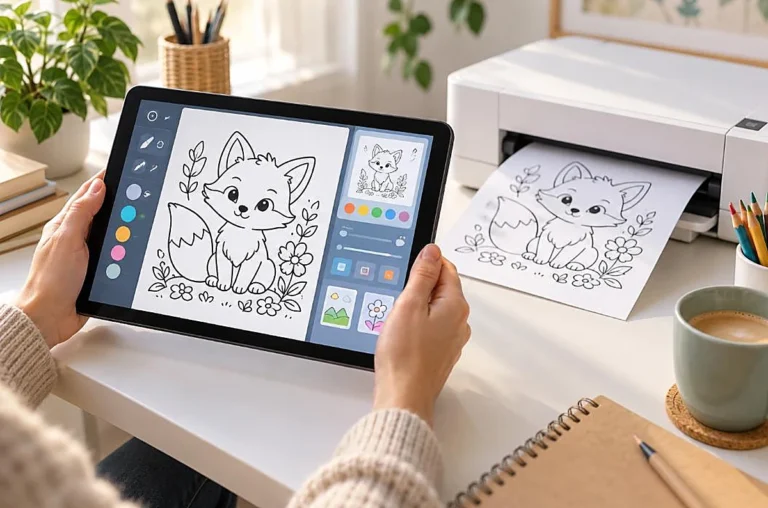
Increasingly, line art can also be generated with software, including tools that create line art from prompts or convert photos and images into line art. These tools produce line art automatically, which can then be used as coloring pages. This has made it easier to create line art and coloring pages, though hand drawn line art by skilled artists often has a quality and appeal that generated art may lack. Our guide on AI coloring page generators covers such tools.
You can also make your own line art, by drawing it, or by converting a photo or drawing into line art with software. Our guides on making a coloring page from a photo and turning a drawing into a coloring page cover these. Understanding that line art can be drawn or generated, and that you can make your own, shows how coloring pages come to be. From line art, whatever its source, comes every coloring page. Our collection of free printable coloring pages offers quality line art to color.

Using and appreciating line art
Understanding line art helps you use and appreciate coloring pages more fully.
Recognizing good line art helps you choose good coloring pages. Knowing that clear, closed outlines, suitable detail, and bold lines make good coloring line art lets you pick pages that will be pleasant to color. You can spot poor line art, with broken outlines or unsuitable detail, that would be frustrating. This helps you find quality coloring pages. Our collection of free printable coloring pages is built from quality line art you can trust.
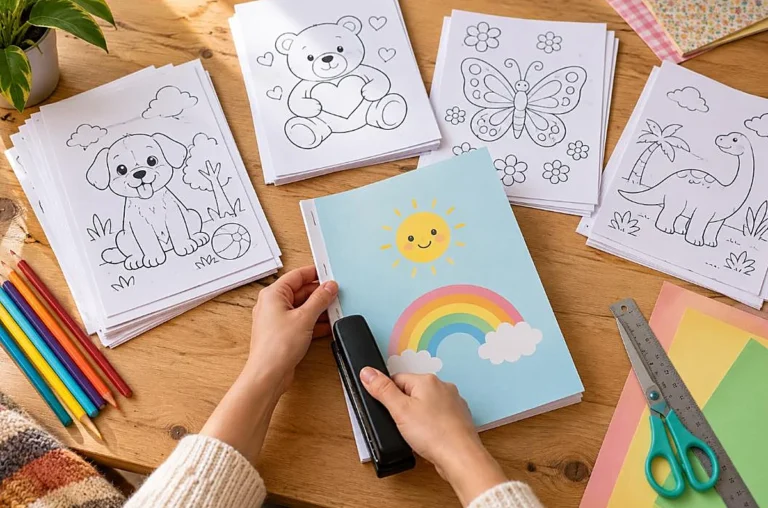
Understanding line art also helps you make your own coloring pages. Knowing what makes good coloring line art guides you in creating or converting pages, aiming for clear outlines and suitable areas. Whether drawing line art yourself or converting a photo, understanding the goal, clean, closed, appealing outlines, helps you make good coloring pages. Our guide on how to make your own coloring book covers creating pages.
Finally, appreciating line art enriches coloring itself. Recognizing the skill in good line art, the clean lines, the appealing composition, the well judged areas, adds to your enjoyment of coloring it. You are coloring a deliberately crafted outline picture, which is more satisfying to appreciate. Understanding line art, then, helps you choose, make, and appreciate coloring pages, deepening your enjoyment of coloring. It is the foundation of every coloring page you enjoy. Our collection of free printable coloring pages showcases quality line art.
Frequently asked questions about line art
What is line art?
Line art is a black and white drawing made of clean outlines with no shading or color. It depicts a picture purely through defined lines, leaving the areas between them white. Line art is the base of every coloring page.
Why do coloring pages use line art?
Coloring pages use line art because its outline only nature leaves the picture uncolored, with white spaces ready to fill, and its clear lines define the areas and boundaries to color. No other drawing style suits coloring, since shaded or colored art is already filled.
What makes good coloring line art?
Good coloring line art has clear, closed outlines that fully enclose each area, detail and spacing suited to the intended age, and bold, clean lines. It should also depict an appealing, recognizable subject. These features make line art pleasant and easy to color.
What is the difference between line art and a sketch?
A sketch is a rough, loose drawing with messy or incomplete lines and sometimes shading, while line art is clean and precise, with defined outlines and no shading. Coloring pages need clean line art, not a rough sketch, so the areas are clearly defined.
Where does coloring page line art come from?
Line art is traditionally drawn by artists, by hand or digitally, and increasingly can be generated by software or converted from photos. You can also make your own line art by drawing it or converting a photo or drawing with software.
The takeaway on line art
Line art is a black and white drawing made of clean outlines with no shading or color, and it is the base of every coloring page. Coloring pages use line art because its outline only nature leaves the picture uncolored with clear areas to fill. Good coloring line art has clear, closed outlines, suitable detail, and bold lines. Understanding line art, distinct from sketches and shaded art, helps you choose, make, and appreciate coloring pages. It is the essential foundation of the coloring you enjoy, and recognizing it changes how you see every coloring page.
Ready to color some quality line art? Browse our free printable coloring pages across countless subjects. Every one is free to download and print.