What Pens Don’t Bleed Through Coloring Pages?
Quick answer
Pens that resist bleeding are usually fine-tip gel pens, fineliners, and pigment liners with quick-drying, water-based ink — unlike alcohol markers, which soak through. To keep any pen from bleeding, pair it with thicker paper or cardstock and a scrap sheet underneath, and let each layer dry before going over it.
By the TheColoringPages.net team. Reviewed for accuracy, September 2026.
This guide to Bleed Through gives clear, practical answers, drawing on ink and bleed and years of hands on coloring.
Nothing ruins a coloring session faster than ink bleeding through the page onto the next one, or onto the table. If you love coloring with pens but hate the bleed, the good news is that some pens barely bleed at all, while others soak straight through. Knowing which is which lets you color cleanly on almost any paper.
This guide ranks pens by how much they bleed, explains why, and shows how to color with pens on thin paper without the mess.
Quick answer: Fineliners and gel pens bleed the least, and colored pencils do not bleed at all. Water based markers bleed a little, while alcohol markers bleed the most. On thin coloring book paper, stick to colored pencils, gel pens, or fineliners. Use heavier paper or a backing sheet for any marker.

Why pens bleed through paper
A quick understanding of the cause makes the rankings below make sense.
Bleed through happens when wet ink soaks through the paper to the other side. The wetter the ink and the thinner the paper, the more it bleeds. Pens that lay down a lot of wet ink, like alcohol markers, bleed readily. Pens that lay down a little ink in fine lines, like fineliners and gel pens, bleed far less. Dry tools like colored pencils never bleed, since there is no wet ink at all.
So two things decide bleed: how much wet ink the pen releases, and how thick the paper is. You can control both. Choose a pen that releases less ink, or use thicker paper, and bleed drops or disappears. Our guide on how to color with markers without bleeding through covers the paper side in detail.
With that in mind, here are the pens ranked from least to most bleed, so you can choose well. The ranking holds on any paper, though the exact amount of bleed depends on how thick your paper is.
Least bleed: colored pencils
Colored pencils are the safest choice of all, because they do not bleed at all.
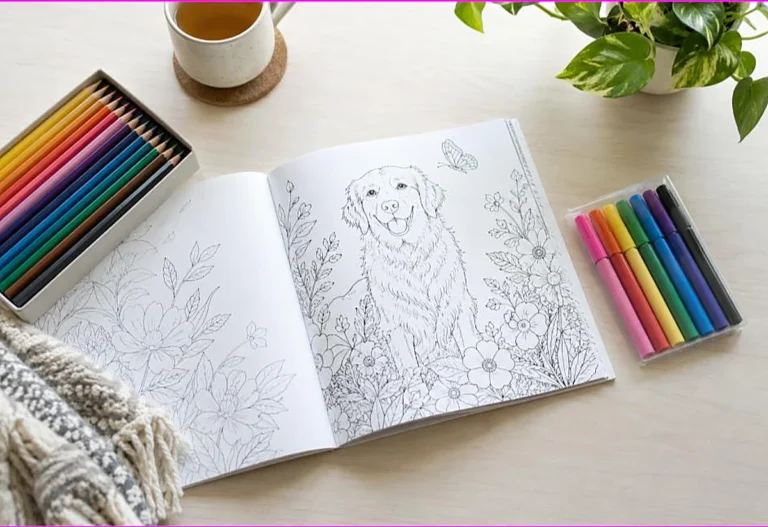
Colored pencils lay down dry pigment, not wet ink, so there is nothing to soak through the paper. You can use them on the thinnest coloring book page with no bleed whatsoever. This is one reason colored pencils are so popular for coloring books with thin pages.
Pencils also give control and blend well, so they suit detailed coloring. Their only downside is that filling large areas takes longer than with a pen or marker, and the color is less instantly bold. But for zero bleed on any paper, colored pencils are unbeatable. Our guide on the best colored pencils for adult coloring covers options.
If bleed through is your main worry and you want a tool that works on any paper, colored pencils are the answer. They sidestep the problem entirely, which is why they remain the go to tool for anyone coloring in books with thin, bleed prone pages.
Very low bleed: gel pens and fineliners
Among actual pens, gel pens and fineliners bleed the least, which makes them great for thin paper.
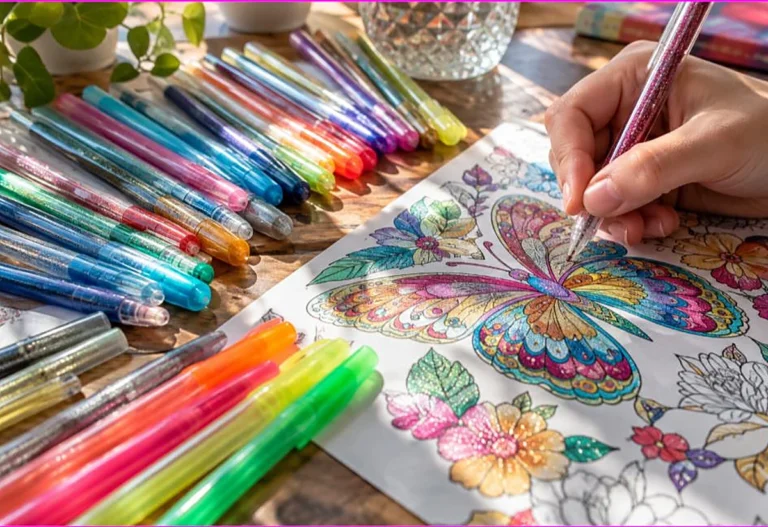
Gel pens lay down ink in fine lines, so they release little ink and rarely bleed through, even on thinner paper. They are excellent for details and accents, though slow for filling large areas. Our guide on whether gel pens are good for coloring covers their strengths.
Fineliners, the thin tipped pens used for outlining and detail, also bleed very little. Their fine tips and controlled ink flow keep the ink on the surface. They are ideal for detail work and small areas on ordinary paper.
Both of these pens suit detail and accents rather than filling big areas. For coloring within lines, adding patterns, or decorating on thin paper, gel pens and fineliners give clean results with minimal bleed. They are a safe pen choice when heavier paper is not an option.
Low to moderate bleed: water based markers
Water based markers sit in the middle, bleeding some but far less than alcohol markers.
Water based markers use water ink that sits more on the surface, so they bleed through less than alcohol markers. On heavier paper they usually cause little bleed, and even on ordinary paper the bleed is often manageable, especially with light coloring. Washable kids markers are water based and a reasonable choice for everyday coloring.
The trade off is that water based markers blend less smoothly than alcohol markers and can wet the paper enough to pill it with heavy use. But for a marker that gives bold color with modest bleed, water based is the safer pick. Our guide on alcohol versus water based markers compares them.
If you want marker color without the heavy bleed of alcohol markers, water based markers on decent paper are a good middle ground. Add a backing sheet for extra protection on thin paper.

Most bleed: alcohol markers
Alcohol markers bleed the most, so they need the most care, though they blend beautifully.
Alcohol markers use wet alcohol ink that soaks through paper readily. On ordinary or thin paper they bleed straight through, marking the page behind and the surface below. This is the price of their smooth blending, which is why artists love them despite the bleed.
To use alcohol markers cleanly, you must use heavier paper, cardstock, or special marker paper, and place a backing sheet behind the page. On the right paper, their bleed is contained and their blending shines. On thin paper, they will ruin your work. Our guides on how to color with markers without bleeding through and the best paper for coloring pages cover this.
So alcohol markers are wonderful for blended adult art, but only on suitable paper. They are the wrong choice for thin coloring book pages unless you protect the pages beneath with a sturdy backing sheet.
How to color with pens on thin paper
If you are stuck with thin paper, here is how to color with pens and avoid bleed.
Choose the least bleeding pens for thin paper: colored pencils, gel pens, or fineliners. These give clean results with little or no bleed, so they are your safest options when the paper is thin. Avoid alcohol markers on thin paper entirely.
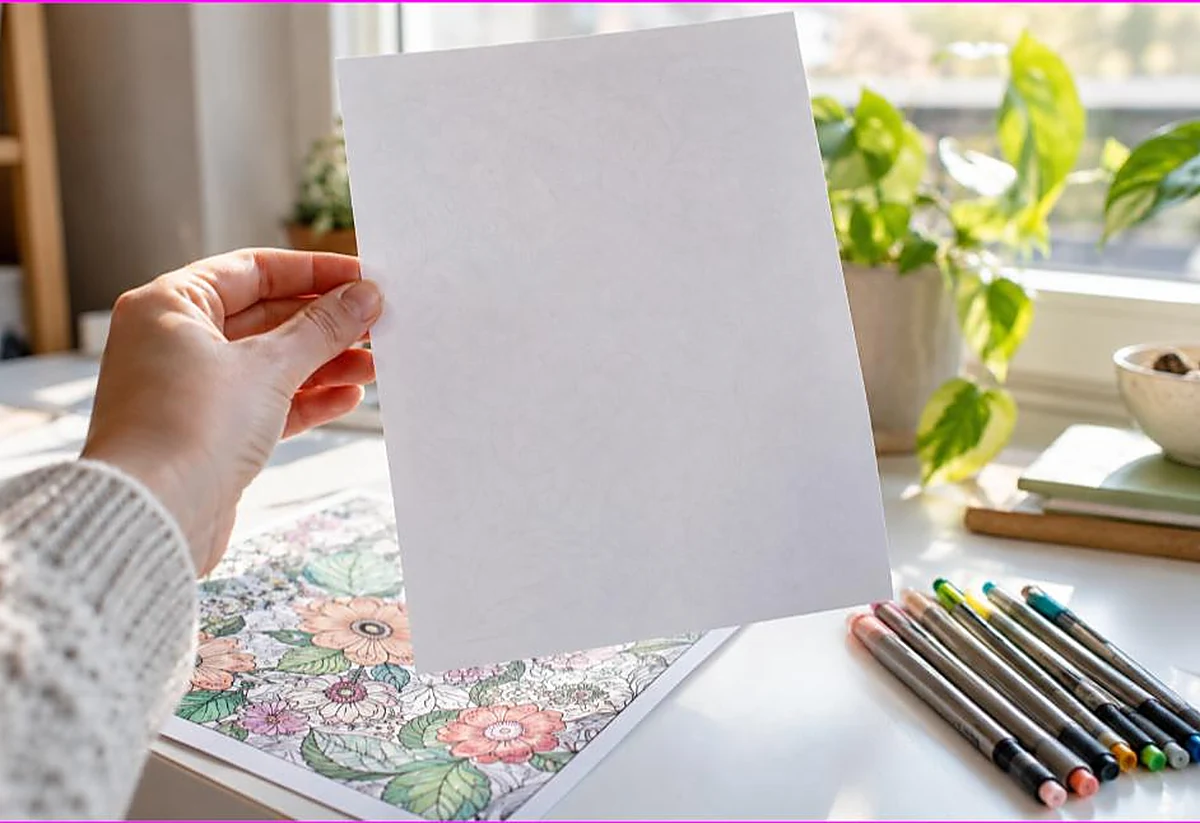
If you want to use markers on thin paper, always place a backing sheet, a spare sheet or cardstock, behind the page to catch bleed and protect what is underneath. Color in light layers rather than soaking the paper, and choose water based over alcohol markers.
Better still, print your pages on heavier paper when you can, so any pen works cleanly. A stack of 120 gsm paper or cardstock removes the bleed problem for good. For coloring books with thin pages, a backing sheet plus low bleed pens is the practical answer, and it lets you enjoy a whole book without ruining a single page. This small habit protects every page you have not yet colored.
Quick reference: pens ranked by bleed
Here is a summary to help you choose the right pen for your paper.
| Pen or tool | Bleed level | Best for | |—|—|—| | Colored pencils | None | Any paper, detail, blending | | Gel pens | Very low | Details, accents, thin paper | | Fineliners | Very low | Outlining, detail, thin paper | | Water based markers | Low to moderate | Bold color, decent paper | | Alcohol markers | High | Blended art, heavy paper only |

Testing a pen for bleed
Before you rely on any pen, a quick test tells you exactly how it behaves on your paper.
Take a scrap of the same paper you plan to color on, or a corner of the page, and make a few strokes with the pen. Wait a moment, then check the back of the sheet and the surface beneath. This shows you precisely how much that pen bleeds on that paper, so you can decide whether to use it, switch pens, or add a backing sheet.
The same pen can bleed on one paper and sit cleanly on another, so testing each new paper and pen combination matters. This is most important with markers, which vary a lot by paper, and least important with colored pencils, which never bleed. A test takes seconds and saves a whole page.
Make testing a habit whenever you try a new pen or a new paper. It removes the guesswork and the nasty surprise of turning over a finished page to find bleed. A few strokes on scrap paper is the surest way to know your pen and paper work together before you commit to a full page.
Building a low-bleed coloring kit
If bleed through frustrates you, you can build a kit that avoids it almost entirely.
Start with colored pencils as your main tool, since they never bleed and work on any paper. Add gel pens and fineliners for details and accents, both of which bleed very little. This combination lets you color detailed, decorated pages on even thin coloring book paper with no bleed worries. It is the cleanest kit for anyone who colors in books or on ordinary paper.
If you also want marker color, add water based markers rather than alcohol markers, and keep a piece of cardstock to use as a backing sheet. Reserve alcohol markers for when you have heavier paper, since they bleed the most. Our guides on the best markers for coloring and how to color with markers without bleeding through cover marker choice.
With a low bleed kit and a habit of testing new papers, you can color cleanly in almost any situation. Match your tools to your paper, keep a backing sheet handy for markers, and bleed through stops being a problem. Our collection of free printable coloring pages lets you print on the paper that suits your tools.
Frequently asked questions about bleed through
What pens don’t bleed through coloring pages?
Colored pencils do not bleed at all, and gel pens and fineliners bleed very little, making them safe for thin paper. Water based markers bleed a little, while alcohol markers bleed the most and need heavy paper.
Which markers don’t bleed through paper?
Water based markers bleed less than alcohol markers, so they are safer on ordinary paper. To stop bleed with any marker, use heavier paper or cardstock and place a backing sheet behind the page.
Do gel pens bleed through paper?
Gel pens bleed very little, since they lay down ink in fine lines and release little ink. They are a good choice for details and accents on thinner paper where markers would bleed through.
What should I use on thin coloring book paper?
Use colored pencils, gel pens, or fineliners on thin paper, since they bleed little or not at all. If you use markers, place a backing sheet behind the page and choose water based over alcohol markers.
How do I stop pens bleeding through?
Choose low bleed tools like colored pencils, gel pens, or fineliners, use heavier paper, and place a backing sheet behind the page. Color in light layers and avoid wet alcohol markers on thin paper.
The takeaway on bleed through
Not all pens bleed the same. Colored pencils never bleed, gel pens and fineliners bleed very little, water based markers bleed a little, and alcohol markers bleed the most, which need heavy paper. On thin coloring book paper, stick to pencils, gel pens, or fineliners, and always use a backing sheet and heavier paper for markers. Match the tool to the paper, and you can color cleanly every time, whatever you choose to color with.
Ready to color without the bleed? Browse our free printable coloring pages and print them on heavier paper for any pen. Every one is free to download and print, so you can match the paper to whichever pens you love.